
Israel continued military operations across southern Lebanon on Friday, May 16, killing at least 12 people including three paramedics, hours after Lebanese and Israeli negotiators agreed to extend a fragile ceasefire by 45 days. The extension, brokered by the United States in Washington, was meant to prevent the expiration of a cessation of hostilities that had already been violated repeatedly since it first came into effect. The agreement came as Iran’s Foreign Minister signalled openness to new diplomatic talks with Washington, even as a deadlock over Tehran’s nuclear programme remained unresolved.
The US State Department confirmed the ceasefire extension on Friday. State Department spokesperson Tommy Pigott said: “The April 16 cessation of hostilities will be extended by 45 days to enable further progress.”
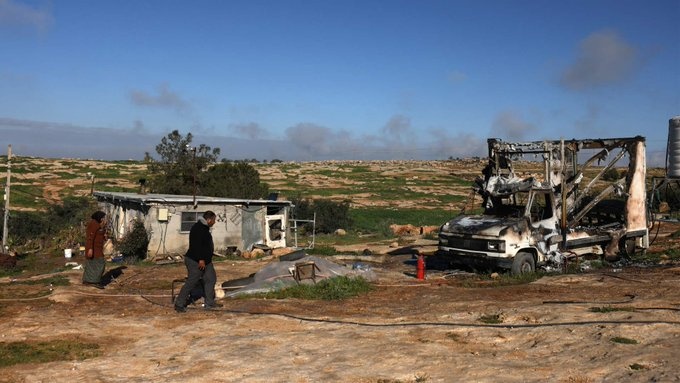
Despite the announcement, Israeli forces issued evacuation orders for nine towns and villages in southern Lebanon the same day, according to Al Jazeera. The affected areas included Ansar, al-Marwaniyah, and al-Baysariyah. An Israeli strike subsequently hit a building in the southern city of Tyre after the army issued an evacuation warning, Al Jazeera reported, with an AFP correspondent confirming the strike on one of the threatened structures.
The Israeli military said its forces killed more than 220 Hezbollah fighters over the past week and struck more than 440 targets across southern Lebanon during the same period.
Lebanon’s Ministry of Public Health said Israeli attacks have killed at least 2,951 people and wounded 8,988 others since renewed air raids and the ground invasion began on March 2. Some residents continued to refuse evacuation orders despite ongoing military operations, according to Al Jazeera.
Lebanon’s delegation at the Washington talks said on Friday that the truce extension and the establishment of a US-facilitated security track pave the way for “lasting stability.”
On the diplomatic front, Iranian Foreign Minister Abbas Araghchi said at a BRICS meeting on Friday that Tehran had received messages from the administration of US President Donald Trump indicating openness to resuming negotiations aimed at ending the broader conflict. Araghchi said a “deadlock” remained over the issue of Iran’s enriched nuclear material.
Araghchi said the US had sent messages indicating it was willing to continue talks, and that he was open to any support — including from China. “We appreciate any country who has the ability to help, particularly China,” he said.
Trump, for his part, suggested he could be open to Iran pausing its civilian nuclear programme for a period of two decades, provided Tehran demonstrates what he described as a genuine commitment to a broader agreement, according to Al Jazeera. The White House did not immediately confirm the specifics of that proposal.
China’s UN envoy Fu Cong criticised a proposed US-backed Security Council resolution on the Strait of Hormuz as “not right” in both timing and content, signalling Beijing would likely oppose the measure alongside Russia. The proposed resolution relates to the US blockade of the Strait of Hormuz, which Iran has used as a pressure lever throughout the conflict.
Iran’s state television reported that the country is allowing more ships to pass through the strategic Strait of Hormuz because “many countries have accepted the new legal protocols” it has put in place. Iran’s Foreign Minister also warned of further economic consequences for the United States over what Tehran has called a “war of choice,” according to Al Jazeera’s liveblog.
The war has left deep marks on Iran’s capital. Tehran’s municipal government said US-Israeli attacks during the war caused at least 650 impact incidents across the capital, killing more than 1,260 people and wounding at least 2,800. Officials also said about 51,000 homes were damaged, along with more than 10,700 cars and 754 motorcycles, including nearly 150 taxis.
In the Gulf, the United Arab Emirates moved to reduce its exposure to Hormuz-related disruptions. The UAE said it will accelerate construction of a new ADNOC pipeline linking Abu Dhabi to Fujairah to double oil export capacity outside the Strait of Hormuz by 2027, with operations expected to begin next year.
In the United States, federal prosecutors made a significant arrest linked to Iran-backed networks. US prosecutors charged Iraqi national Mohammad Baqer Saad Dawood al-Saadi, an alleged senior Kataib Hezbollah figure linked to Iran’s Islamic Revolutionary Guard Corps, over his alleged role in at least 18 attacks and attempted attacks in Europe and Canada. The FBI said al-Saadi was arrested in Turkiye before being transferred to the United States.
Background
The current conflict entered its 78th day on Saturday, May 16. Israel launched renewed air raids and a ground invasion of Lebanon on March 2, following an earlier cessation of hostilities that broke down. The Strait of Hormuz, through which a significant share of global oil supply passes, has been a central point of leverage for Iran throughout the war, with the US imposing a naval blockade. Iran has maintained a nuclear enrichment programme that Western governments say exceeds what is needed for civilian purposes; Tehran disputes that characterisation. BRICS — the grouping of major emerging economies including Brazil, Russia, India, China, and South Africa — has provided a multilateral forum where Iranian officials have engaged diplomatically during the conflict.
What Happens Next
The 45-day ceasefire extension gives Lebanese and Israeli negotiators until late June to reach a more durable arrangement through the US-facilitated security track. Iran has indicated it is prepared to receive further communications from Washington and has not ruled out a new round of formal talks. The US-backed Security Council resolution on the Strait of Hormuz faces likely vetoes from China and Russia, according to Fu Cong’s remarks. The UAE’s Fujairah pipeline is expected to begin initial operations in 2026, with full doubled capacity targeted for 2027. US prosecutors have not yet announced a trial date for al-Saadi following his transfer from Turkiye.