

US Army Seeks Sub-$1 Million Patriot Interceptor to Counter Drones and Ballistic Missiles
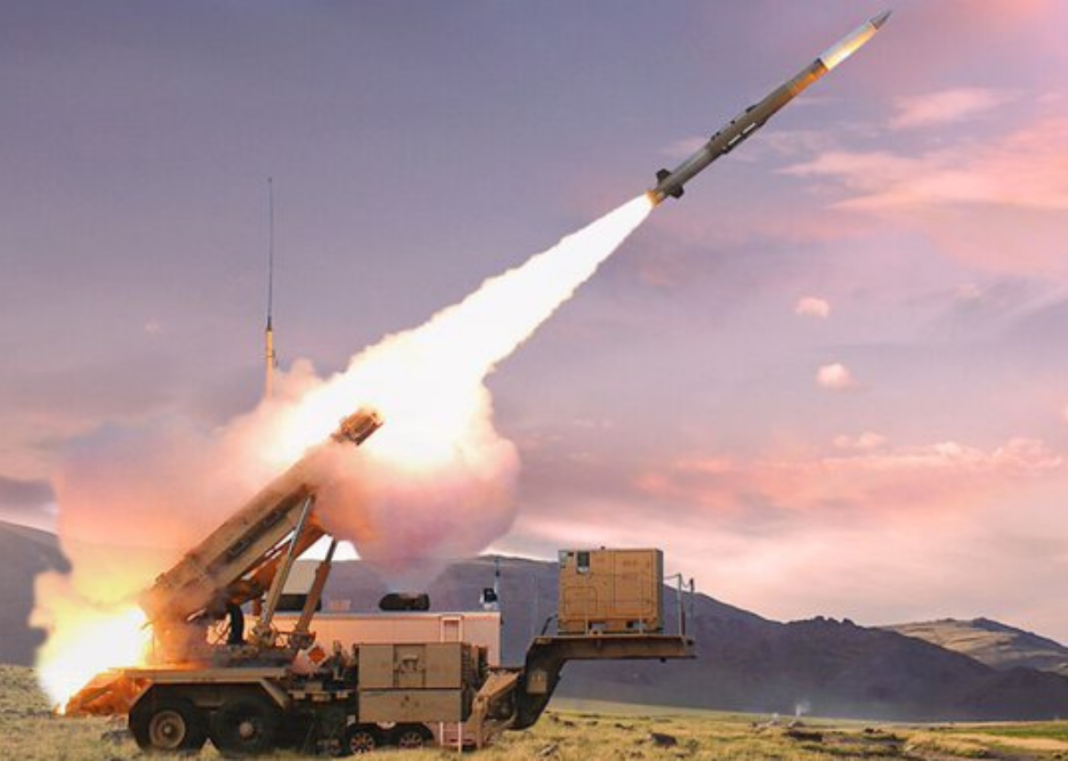
The U.S. Army is pressing defense contractors to develop a new interceptor for the Patriot surface-to-air missile system with a unit cost under $1 million — roughly a fifth of the price of current-generation PAC-3 Missile Segment Enhancement interceptors. The Army’s Capability Program Executive for Defensive Fires issued a call for information on May 16, seeking proposals for a low-cost interceptor designed to engage drones, cruise missiles, and short-range ballistic missiles. Global Banking and Finance
The move represents a formal reset of the Army’s Patriot modernisation strategy, driven directly by the cost and supply pressures exposed during the 2026 Iran war.
What the Army Is Asking For
The contracting notice breaks the $1 million unit price target into four component groups, each costing no more than $250,000. These are: Low-Cost Interceptor All-Up Round and Fire Control, Low-Cost Rocket Motor, Low-Cost Seeker, and Fire Control and Flight Guidance Implementation. The Army is also seeking information about a potential contractor to serve as a central integrator for all four elements, which could come from different sources. Global Banking and Finance
The interceptors must plug into existing Army infrastructure. The Army wants to integrate the missiles into existing M903 trailer-based launchers and leverage the service’s new Integrated Battle Command System network. The M903 is already capable of accommodating newer PAC-3 series interceptors, including the MSE variant, as well as older PAC-2 types that remain in inventory. Global Banking and Finance
The new low-cost interceptors are intended to “serve as supplementals to the Integrated Fires Air and Missile Defense mission against Air Breathing Threats, Cruise Missiles, Close-Range Ballistic Missiles, and Short-Range Ballistic Missiles,” according to the contracting notice. Short-range ballistic missiles are typically defined as ballistic missiles with maximum ranges under 620 miles. The U.S. military uses the term close-range ballistic missile to categorise threats that can hit targets out to no more than 186 miles. Global Banking and Finance
The Generals and the Secretary Speak
Army Major General Frank Lozano, the Army’s Portfolio Acquisition Executive for Fires, announced the effort publicly the day after the contracting notice went out. “We are running a very aggressive Low Cost Interceptor missile and missile sub-system competition,” Lozano wrote in a post on LinkedIn on Sunday. “We will be holding an Industry Day in DC in the very near future. We are looking to generate the greatest amount of interest and participation across the entirety of the missile technology industrial base as possible.” Global Banking and Finance
Secretary of the Army Dan Driscoll told reporters at the Pentagon earlier this month that the service wanted to develop an interceptor it could own the intellectual property for, and then pursue contract manufacturing. “We want to see if we can bring, from scratch, an interceptor that we can own the IP for, then go find contract manufacturing,” Driscoll told reporters, according to The Wall Street Journal. Driscoll indicated at that time that the target price per component was $250,000 — a figure now confirmed by the formal contracting notice. Global Banking and Finance
The Cost Problem Behind the Push
The price of existing Patriot interceptors is a direct driver of this initiative. The unit price of each PAC-3 MSE interceptor has risen to approximately $5.3 million, according to the Army’s latest proposed budget for the 2027 Fiscal Year — up from a historical average of around $4 million for each missile. These are also exquisite munitions that take years of lead time to produce. Global Banking and Finance
A lower-cost alternative would improve Patriot’s cost-per-intercept ratio, especially against lower-tier threats like drones and cruise missiles. Not everything threat facing Patriot requires a PAC-3 MSE. The price associated with using the system to knock down lower-tier threats, particularly long-range kamikaze drones with unit prices measured in tens or hundreds of thousands of dollars, has become a major talking point in the past decade. Global Banking and Finance
The Iran war made that calculation even harder to ignore. The recent conflict with Iran and other crises in the Middle East in recent years, along with support to allies and partners, particularly Ukraine, have exposed the need for new steps to ensure sufficient numbers of interceptors and other critical munitions remain in U.S. inventory. Global Banking and Finance
From LTFI to LCI
This is not the Army’s first attempt to find an affordable Patriot follow-on. In 2024, the Army announced that it had axed plans for a new interceptor for Patriot previously called Lower-Tier Future Interceptor, in large part due to projected costs. “That was going to be a very expensive endeavor. Interceptors in that family or class of interceptors are very capable, but also very expensive,” then-Brigadier General Lozano said in a live interview with Defense News at the Association of the U.S. Army’s main annual conference that year. Global Banking and Finance
Signs of a follow-on programme emerged by December 2025. Army Lieutenant Colonel Steven Moebes, Product Manager for Lower Tier Interceptors, told Secretary Pete Hegseth during a visit to Redstone Arsenal last December: “This year we’re starting a new interceptor program that will have longer range and higher altitudes.” Global Banking and Finance
Regional and Global Impact
The push for lower-cost interceptors carries implications well beyond the Army’s own budget. The Navy is now working to integrate PAC-3 MSE into the Mk 41 Vertical Launch System, adding a new anti-air interceptor to its sea-based arsenal, but also further increasing demand on an already strained supply chain. Growing U.S. demand around the Patriot, including as a result of heavy use of the system in the latest conflict with Iran, has had second-order impacts on other customers globally. Global Banking and Finance
Partner nations are already feeling the squeeze. Reuters reported on May 13 that the United States had informed Switzerland of delays and a price increase in its Patriot delivery.
The Army’s Patriot force continues to be inadequate to meet existing demands, let alone what would be required in a future major conflict against an adversary like China’s People’s Liberation Army. A sub-$1 million interceptor, if achievable, would allow more units to be fielded and stockpiled at a pace that current PAC-3 MSE production cannot match. Global Banking and Finance
Background
The Patriot system currently has the ability to engage air-breathing threats, cruise missiles, and short-range ballistic missiles, but that capability comes at a cost. The PAC-3 MSE is Lockheed Martin’s premium interceptor and the most capable variant in the Patriot family. The Army has been working to expand the total size of its Patriot force, as well as improve the system through the addition of new radars and other functionality. The Pentagon has also reached deals with Lockheed Martin to ramp up production of PAC-3 MSE interceptors. Northrop Grumman’s Integrated Battle Command System was designed from the outset with a modular, open-systems approach to make it easier to integrate new systems and functionality over time. Global Banking and Finance + 2
What Happens Next
Major General Lozano confirmed that an Industry Day will be held in Washington, D.C., “in the very near future,” at which contractors will be invited to present proposals. The Army’s stated intention is to issue multiple awards, resulting in multiple different capable yet affordable missile interceptor solutions. Secretary Driscoll’s stated goal of Army ownership over the intellectual property of the new interceptor is aimed at preventing vendor lock, allowing new competitions to be run for complete missiles and subcomponents alike. The Army is also separately exploring new containerised launchers for Patriot that could be carried by future uncrewed trucks, though those programmes remain in earlier stages of development. Global Banking and Finance + 2


