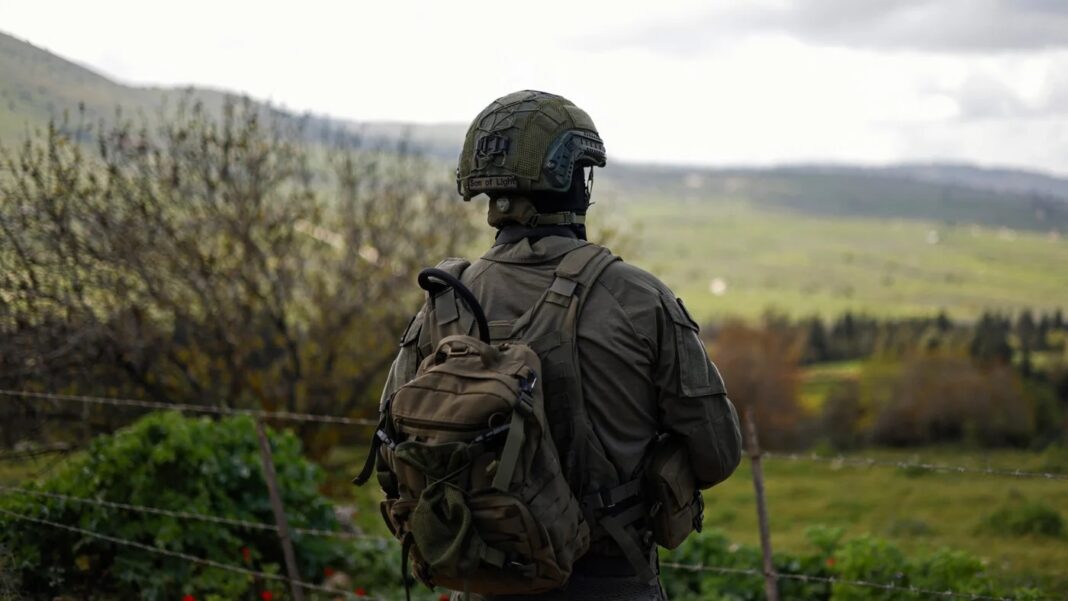

Israeli army reservists have described systematic looting and the deliberate destruction of civilian homes in southern Lebanon as central activities of their deployments, according to testimonies published by Israeli newspaper Haaretz on Wednesday, May 21. The soldiers said commanders at multiple levels tolerated or ignored the conduct, and in some cases participated in it. No soldiers have been punished for looting, according to the testimonies.
The accounts detail how goods stripped from Lebanese villages were transported back into Israel, with one reservist telling Haaretz that alongside the official military mission, there was always “another mission — an unofficial one: taking out all the loot.”
The reservist said the stolen goods would be unloaded at the outpost so they would be waiting for soldiers when they returned home.
“The Primary Mission”
The reservist said his unit operated in a wealthy village where soldiers first fired at homes to check for Hezbollah fighters inside. Once the area was cleared, he told Haaretz, troops focused on “locating valuable things.”
Items taken from private homes included rugs, armchairs, motorbikes and heaters. Shops were stripped of expensive goods. “Even the hand soap at the outpost came from Lebanon,” the reservist told Haaretz.
“At any given moment, you could see soldiers walking around the village carrying civilians’ belongings,” he said. “It felt like the primary mission.”
The reservist said his commander, after public reports of looting emerged, ordered soldiers to stop — before entering shops himself and smashing items “so the soldiers would have nothing left to loot.” According to the testimony, no soldier was punished.
Command Tolerance and a Refused Letter
Israeli army Chief of Staff Eyal Zamir addressed the issue last month at a military conference, saying: “The phenomenon of looting, if it exists, is disgraceful and could stain the entire military. If such incidents occurred, we will investigate them. I am not willing for us to become an army of looters.”
Israeli broadcaster Channel 14 subsequently reported that Zamir had asked commanders operating in Lebanon to sign a letter committing to preventing looting. One commander refused.
“I will not sign the letter,” that commander told the channel, adding that “the discipline problems in the IDF begin at the highest ranks.”
The reservist who spoke to Haaretz gave a similar account of senior attitudes on the ground. “The attitude was that there was no problem with looting as long as you didn’t get hurt. The higher command didn’t really try to stop us either,” he said.
Some troops offered religious justifications for the stealing, the reservist told Haaretz, while others argued that since homes and shops were already being demolished, there was no reason to leave valuables behind. He said it felt like the army “had become a Viking army,” allowing looting to keep soldiers “satisfied and keep fighting.”
Destruction Without Military Justification
A second reservist told Haaretz that destroying homes — not engaging Hezbollah fighters — was the army’s dominant activity in the villages he entered.
“When we entered the village, there were no militants. The houses were empty. There was no fighting there at all — only operations to flatten homes,” he said.
He described a pre-invasion speech by a commander as “a pagan ritual” and said he had heard similar rhetoric during previous operations in Gaza and Lebanon. Homes, schools and clinics were destroyed without any stated military justification, he told the newspaper.
Much of the demolition work, he said, was carried out by private contractors, including what he described as “extreme settlers” as well as Bedouin and Druze workers.
“There was no reason other than revenge,” he said.
For religious soldiers in the unit, he added, destroying homes was treated as “the ultimate mission.” Whenever soldiers spoke of returning to Israel, the battalion commander would reply: “This is Israel too.”
Rights Groups and a Pattern Across Fronts
Euro-Med Human Rights Monitor said last month that reports from Lebanon pointed to “a clear pattern of theft during Israeli military operations.” The rights group said Israeli forces had been “raiding houses, rummaging through belongings, and looting residents’ money and personal effects,” adding that the practice appeared to have become “an effective policy of the state and the army.”
Euro-Med said it had also documented looting in Gaza and the occupied West Bank.
Adam Raz, an Israeli historian who has written about the looting of Palestinian property during the 1948 Nakba, placed the current reports in a broader pattern. “Looting was part of every Israeli war,” Raz said last month. “What’s new is the total indifference. The senior command turns a blind eye, the criminality continues, and the crime achieves its goals.”
In January, Israeli forces were reported to have seized approximately 250 goats from Syrian territory and transferred them to Israeli settlement outposts in the occupied West Bank.
The Ceasefire That Isn’t Holding
Despite a US-announced ceasefire between Israel and Hezbollah declared on April 17, fighting has continued. According to the United Nations Office for the Coordination of Humanitarian Affairs, approximately 100,000 Lebanese have fled their homes in recent days due to Israeli strikes.
Israeli forces have killed at least 3,020 people since the latest assault began in March, including 824 since the April 17 ceasefire announcement, according to the Lebanese health ministry. Hezbollah has killed at least 21 Israeli soldiers since March, including eight since April 17, the majority of them troops stationed inside Lebanon.
Israeli news outlet Ynet reported earlier this month that military leaders were struggling to manage the scale of the looting. The Haaretz testimonies published Wednesday represent the most detailed soldier accounts to date of how those operations unfolded on the ground.
Background
Israel escalated its military campaign against Hezbollah in Lebanon in March 2026, following a joint Israeli-US war on Iran. A ceasefire was announced on April 17 but has not stopped hostilities. Israel has conducted ground operations in southern Lebanon, deploying both regular and reserve units. Haaretz reported last month that Israeli troops had looted sofas, televisions and motorbikes from homes in southern Lebanon while army commanders largely turned a blind eye. The looting allegations now span multiple active fronts, with rights organisations documenting cases in Lebanon, Gaza and the West Bank.
What Happens Next
Israeli army Chief of Staff Zamir has said any incidents of looting will be investigated, though no formal proceedings have been announced and no soldiers have been charged. Channel 14 reported that Zamir asked field commanders to sign anti-looting commitments, a process that has already encountered resistance. Euro-Med Human Rights Monitor and other rights organisations are continuing to document reported incidents across Lebanon, Gaza and the West Bank. The Lebanese health ministry will continue tracking casualties as fighting persists despite the April 17 ceasefire announcement.