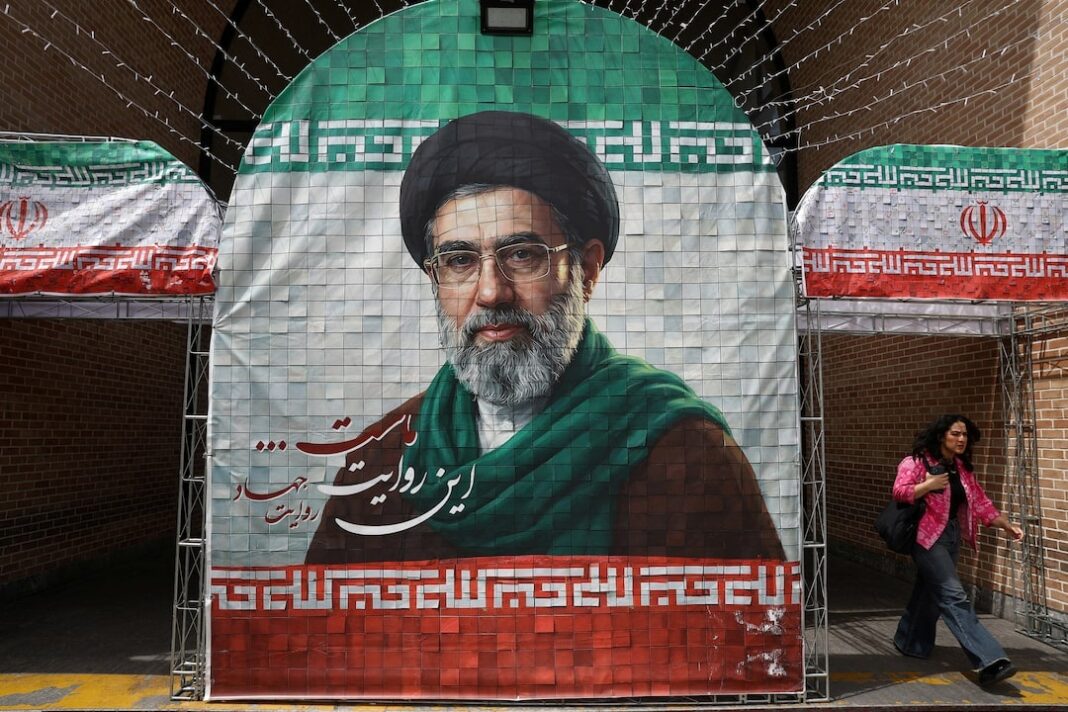

Iran’s Supreme Leader Ayatollah Mojtaba Khamenei has issued a directive prohibiting the transfer of the country’s near-weapons-grade enriched uranium abroad, two senior Iranian sources told Reuters on Thursday, May 21. The order directly contradicts one of Washington’s core demands in ongoing peace negotiations aimed at ending the US-Israeli war on Iran. The directive was issued in Tehran and applies to Iran’s stockpile of uranium enriched to 60% purity.
“The Supreme Leader’s directive, and the consensus within the establishment, is that the stockpile of enriched uranium should not leave the country,” one of the two Iranian sources told Reuters, speaking on condition of anonymity due to the sensitivity of the matter.
Iran’s top officials believe that sending the material abroad would leave the country more vulnerable to future attacks by the United States and Israel. Khamenei holds final authority on the most important state matters.
The White House and Iran’s foreign ministry did not respond to requests for comment, Reuters reported.
The directive sharpens a divide that has already brought peace negotiations to a standstill. Israeli officials have told Reuters that US President Donald Trump has assured Israel that Iran’s stockpile of highly enriched uranium — material needed to manufacture an atomic weapon — will be sent out of Iran and that any peace deal must include a clause on this.
Israeli Prime Minister Benjamin Netanyahu has said he will not consider the war over until enriched uranium is removed from Iran, Tehran ends its support for proxy militias, and its ballistic missile capabilities are eliminated.
Iran’s lead peace negotiator, Parliamentary Speaker Mohammad-Baqher Ghalibaf, signalled earlier this month that Washington’s demand on uranium transfer posed an insurmountable obstacle. “But if the US wants to continue its demands, like Iran exporting its highly enriched uranium to the US or suspending enrichment for a long time, I think this could make any agreement impossible,” Ghalibaf told Al Jazeera.
Trump said on Wednesday that the US was ready to proceed with further attacks on Tehran if Iran did not agree to a peace deal, but suggested Washington could wait a few days to “get the right answers.”
The uranium stockpile question is not the only obstacle. The two sides have started to narrow some gaps, the sources said, but deeper splits remain over Tehran’s nuclear programme — including the fate of its enriched uranium stockpiles and Tehran’s demand for recognition of its right to enrichment.
Iran’s foreign ministry spokesman Esmaeil Baghaei reinforced that position on May 18. “Our right to enrich uranium will not be raised in the negotiations. We take Iranian principles in the negotiating process seriously,” Baghaei said, according to Israel Hayom.
Iranian officials have repeatedly said Tehran’s priority is to secure a permanent end to the war and credible guarantees that the US and Israel will not launch further attacks. Only after such assurances are in place, they said, would Iran be prepared to engage in detailed negotiations over its nuclear programme.
Suspicion runs deep on both sides. The two senior Iranian sources said there was deep suspicion in Iran that the pause in hostilities was a tactical deception by Washington to create a sense of security before it renews airstrikes. Ghalibaf stated on Wednesday that “obvious and hidden moves by the enemy” showed the Americans were preparing new attacks, according to Reuters.
The Uranium Stockpile
The International Atomic Energy Agency estimated that Iran had 440.9 kg of uranium enriched to 60% when Israel and the United States attacked Iranian nuclear facilities in June 2025. How much of that has survived is unclear.
IAEA Director General Rafael Grossi said in March that what remained of that stock was “mainly” stored in a tunnel complex at its Isfahan nuclear facility, and that his agency believed slightly more than 200 kg of it was there. The IAEA also believes some is at the sprawling nuclear complex at Natanz, where Iran had two enrichment plants.
Iran says some highly enriched uranium is needed for medical purposes and for a research reactor in Tehran which runs on relatively small amounts of uranium enriched to around 20%.
Uranium enriched to 60% sits well above the roughly 20% threshold for civilian use but below the approximately 90% level required for a nuclear weapon. Tehran has long denied seeking an atomic bomb. Before the war, Iran had signalled willingness to ship out half of its 60%-enriched stockpile. That position changed after repeated threats from Trump to strike Iran, sources said.
Regional and Global Impact
A shaky ceasefire is in place in the war that began with US-Israeli strikes on Iran on February 28, after which Iran fired at Gulf states hosting US military bases and fighting broke out between Israel and Iran-backed Hezbollah in Lebanon.
There has been no major breakthrough in peace efforts, with a US blockade of Iranian ports and Tehran’s grip on the Strait of Hormuz — a vital global oil supply route — complicating negotiations mediated by Pakistan. Iranian foreign ministry spokesman Baghaei confirmed that Iranian and Omani technical teams had met separately to coordinate on the Strait of Hormuz question, according to Israel Hayom.
Iran’s parliamentary national security commission spokesman Ebrahim Rezaei said earlier this month that lawmakers would consider the possibility of enriching uranium to weapons-grade levels if conflict resumed. “One of Iran’s options in the event of another attack could be 90 percent enrichment. We will examine it in parliament,” Rezaei wrote on X.
Israeli officials told Reuters it remains unclear whether Trump will decide to attack and whether he would give Israel a green light to resume operations. Tehran has vowed retaliation if strikes resume.
Background
Ayatollah Mojtaba Khamenei became Iran’s Supreme Leader following the death of his predecessor, and his directive on enriched uranium is now one of the most significant obstacles in peace negotiations. The war began on February 28, 2026, when the United States and Israel launched strikes on Iranian nuclear facilities. A ceasefire took hold on April 8, but no formal peace agreement has been reached. Pakistan has served as the primary mediator between Washington and Tehran. Following the collapse of direct talks in Islamabad on April 11–12, Washington and Tehran continued exchanging proposals through Pakistani intermediaries. Iran laid out five preconditions for renewed talks, including an end to all hostilities, sanctions relief, the release of frozen assets, and war compensation, according to Al Jazeera.
What Happens Next
Pakistan’s Interior Minister Mohsin Naqvi travelled to Tehran last week for a two-day visit, meeting President Masoud Pezeshkian, Interior Minister Eskandar Momeni, and Parliamentary Speaker Ghalibaf as Islamabad worked to prevent ceasefire negotiations from collapsing entirely. Trump indicated on Wednesday that Washington could allow a few more days for Iran to respond to US terms before taking further action. Iranian officials said detailed nuclear negotiations would only begin after credible guarantees against further US and Israeli attacks were secured. The US naval blockade of Iranian ports, which began on April 13, remains in place and continues to act as a pressure lever in negotiations. No date for a new round of formal talks has been publicly confirmed by either side.