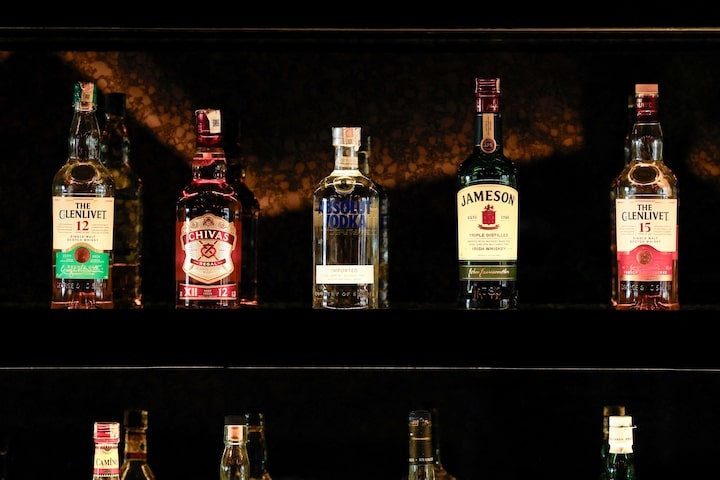

The people in charge of New Delhi are against what Pernod Ricard wants. Pernod Ricard asked the Delhi High Court for something. They want to be able to sell liquor in New Delhi. The company is, from France. They used to be able to sell liquor in New Delhi. Now they cannot. Reuters said this on May 13. New Delhi authorities do not want Pernod Ricard to get what they want. Pernod Ricard wants the Delhi High Court to say they can sell liquor again. Delhi city officials argued the court petition was not maintainable, while Pernod told the court that the ongoing ban had left its India business “hopelessly” compromised. The dispute marks the latest escalation in a regulatory battle that has kept Pernod’s brands off Delhi shelves since late 2022.
Pernod Ricard, the French group behind Chivas Regal, Absolut vodka, and Blenders Pride, has been denied a Delhi retail and wholesale license repeatedly since late 2022, when city authorities first declined to renew its licence citing investigations into alleged violations of the capital’s excise policy. The company has denied wrongdoing on each occasion.
Delhi city authorities filed their opposition to the petition in the Delhi High Court on May 13, according to Reuters. City officials contended that ongoing investigations into Pernod’s conduct during 2021 provided sufficient grounds to withhold a licence, and that Pernod’s court challenge should be dismissed at the threshold stage.
Delhi Excise Commissioner Sunny K. Singh stated in a previous rejection order, dated May 9, 2025, that “mere existence of allegations and investigation justifies administrative caution in licensing matters.” Delhi authorities have cited that standard consistently in subsequent proceedings.
Pernod argued in its court filing that the ban has inflicted severe commercial harm. A 332-page filing submitted by Pernod to the Delhi High Court on April 23 stated that the New Delhi city authorities denied its request for a liquor sale license based on allegations of criminal activity without sufficient proof of wrongdoing. “Merely because there may be certain allegations … cannot be equated with a criminal or be considered as having a criminal background,” the filing stated. “There is no criminal conviction.”
The company’s position has received partial support from at least one Indian appellate body. Financial Commissioner Chetan B. Sanghi stated in a written ruling that “there has to be a conviction beyond doubt by a court of law before any adverse opinion or action can be taken,” and recommended that the Commissioner of Excise revisit Pernod’s licence application. Delhi authorities proceeded to reject the application again despite that guidance.
The license dispute is one of several legal fronts Pernod faces in India simultaneously. India’s Competition Commission of India ordered a formal investigation into Pernod Ricard on May 9, 2026, over alleged exclusive deals with retailers to promote the company’s brands at the expense of rivals. The complaint alleges that Pernod provided $24 million in corporate guarantees to its bankers in 2021 to help city retailers secure loans, with retailers in turn required to ensure 35 per cent of the stock in their shops comprised Pernod brands.
An internal probe commissioned by Pernod itself found that senior executives in its India unit had violated the law by colluding with retailers in New Delhi. The company has publicly and in court denied corporate wrongdoing, describing the allegations as without merit.
Pernod stated in a response to Reuters: “We operate to the highest standards of compliance and governance, and we are confident that our business practices fully adhere to the laws and regulations of the country. We view any allegations to the contrary as without merit.”
Regional and Commercial Impact
India is very important, for Pernod Ricard. They have 17 percent of the market. They compete with Diageo there. New Delhi, as an urban tourist hub considered a showcase market for premium spirits brands, previously contributed approximately 5 per cent of Pernod’s total India sales.
India accounts for a tenth of Pernod Ricard’s global group sales. The suspension of Delhi retail operations since 2022 has removed a strategically visible market from Pernod’s reach at a time when the company is simultaneously contesting a separate tax dispute in India valued at approximately $250 million, relating to alleged undervaluation of bulk imports from its UK affiliate Chivas Brothers.
The Indian Supreme Court on May 13, 2026, directed the Delhi High Court to take up Pernod’s customs valuation writ petition by May 19 and conclude proceedings within two weeks, noting that the dispute had been pending since 2011.
Background
Pernod Ricard has operated in India for decades and holds a 17 per cent share of a spirits market valued at $65 billion, according to Devdiscourse. Delhi adopted a liberalised excise policy in November 2021 allowing private retailers to sell alcohol, a system it scrapped by September 2022 amid a Central Bureau of Investigation probe into alleged corruption. Delhi Lieutenant Governor V.K. Saxena recommended a CBI probe, and the Delhi government subsequently reverted to its previous state-controlled excise policy. Pernod’s license was not renewed when the old system was reinstated. The Enforcement Directorate, India’s federal financial crime agency, has been investigating Pernod’s conduct during the 2021 liberalisation period since that time.
What Happens Next
The Delhi High Court will decide if Pernods petition can be considered. Then they will listen to the arguments, about Pernods petition. The Delhi High Court has to figure out if they should even think about Pernods petition before they start talking about the parts of Pernods petition. The Supreme Court has separately directed the Delhi High Court to constitute an appropriate bench to hear Pernod’s customs valuation writ petition around May 19, 2026. The Competition Commission of India’s antitrust investigation, ordered on May 9, 2026, will proceed on a separate track. Pernod has stated it intends to pursue all available legal remedies to secure its Delhi license and resume operations in the capital.