
WHO Declares Ebola Outbreak in Congo and Uganda a Public Health Emergency of International Concern
The World Health Organization declared an Ebola outbreak in the Democratic Republic of the Congo and Uganda a public health emergency of international concern on Sunday, after more than 300 suspected cases and 88 deaths were reported across the two countries. The declaration covers an outbreak caused by a rare strain of the virus for which no approved vaccine or treatment currently exists. Al Jazeera
The speed with which the emergency was issued was unusual. African health officials only confirmed the outbreak on Friday, making the Saturday declaration exceptionally fast. WHO Director-General Tedros Adhanom Ghebreyesus also issued the declaration without first seeking the advice of an expert panel, known as an emergency committee — the first time a public health emergency of international concern had been declared without such a recommendation. Statnews
In a social media post on Sunday, Tedros said the outbreak does not meet the criteria for a pandemic emergency, but that neighbouring countries are at high risk of further spread. Al Jazeera
The Outbreak: Scale and Geography
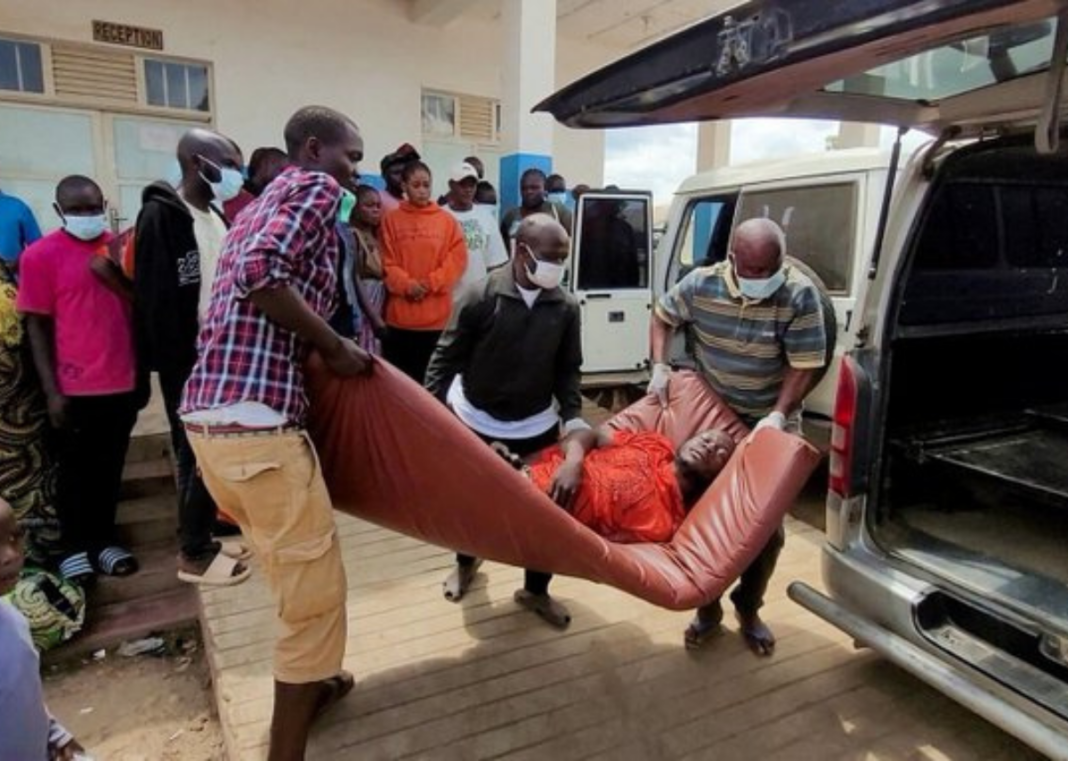
As of May 16, eight laboratory-confirmed cases, 246 suspected cases and 80 suspected deaths had been reported in Ituri Province in eastern DRC, across at least three health zones: Bunia, Rwampara and Mongbwalu. WHO
The virus has already crossed borders. Two laboratory-confirmed cases, including one death, were reported in Kampala, Uganda, within 24 hours of each other on May 15 and 16, among individuals who had travelled from the DRC. WHO
A positive case in the major DRC city of Goma was also confirmed by laboratory tests. Professor Jean-Jacques Muyembe, director of the Congolese National Institute for Biomedical Research, told AFP: “It involves the wife of a man who died of Ebola in Bunia, who travelled to Goma after her husband’s death whilst already infected.” Goma is currently under the control of the Rwanda-backed M23 militia, adding a further layer of logistical complexity to containment efforts, according to Al Jazeera. Al Jazeera
An earlier report of a case in DRC’s capital, Kinshasa, was later ruled out. Confirmatory tests on a sample from the individual came back negative, the WHO said Sunday. Statnews
The Bundibugyo Strain: Why It Is Different
The outbreak is caused by the Bundibugyo strain of Ebola virus, which the WHO described as “extraordinary” because there are no approved Bundibugyo-specific therapeutics or vaccines, unlike for the better-known Ebola Zaire strains. CNN
This is only the third time Bundibugyo virus disease has been reported. Health authorities have less experience dealing with this strain. Al Jazeera
At least four healthcare workers have died of suspected cases, with those deaths occurring within a four-day span. The first known suspected case was a healthcare worker who developed symptoms on April 24 in Bunia and subsequently died. The WHO noted that four weeks elapsed between that event and the formal confirmation that Ebola was circulating in northeastern DRC, which it said suggested a low clinical index of suspicion among healthcare providers and dangerous gaps in infection prevention. Statnews
The high positivity rate of initial samples — eight positives among 13 samples collected across various areas — points toward a potentially much larger outbreak than currently being detected and reported, the WHO said, with significant local and regional risk of spread. Ongoing insecurity, a humanitarian crisis, high population mobility, the urban and semi-urban nature of the current hotspot, and a large network of informal healthcare facilities all compound the risk. WHO
Regional Response
In Uganda, the government moved quickly to contain the two confirmed Kampala cases. Al Jazeera’s Catherine Soy, reporting from Kampala, said health workers at the hospital where one of the Congolese patients died were testing people, checking for fever, sanitising, and distributing masks. Government officials said they had managed to trace the contacts of the confirmed cases and were monitoring them closely. Al Jazeera
Ugandan President Yoweri Museveni said “there is no need for alarm, as the situation is under control.” The border with the DRC had not been closed as of Sunday, though government officials said they were monitoring it closely. Al Jazeera
The DRC-Rwanda border closure had put everyone in the region on high alert, Al Jazeera’s Alain Uaykani reported from Goma. Al Jazeera
The WHO told all countries sharing land borders with the DRC to activate their national disaster and emergency management mechanisms, and to undertake cross-border screening and screening at main internal roads, according to Al Jazeera.
Regional and Global Impact
The Bundibugyo ebolavirus met the threshold for WHO’s highest level of alarm under international health regulations because of cross-border transmission, unexplained clusters of deaths, and major uncertainty about the true scale of the epidemic, Bloomberg reported. Bloomberg
The area where the outbreak is centred — Ituri Province — was the site of the second-largest Ebola outbreak in history, which ran from 2018 to 2020, involving 3,470 cases and 2,287 deaths. That outbreak was caused by the Zaire strain of Ebola, for which vaccines and treatments do exist. The absence of equivalent tools for the Bundibugyo strain makes any new spread significantly harder to control, the WHO said. Statnews
The WHO said an emergency committee would be convened as quickly as possible to offer advice on how to contain the outbreak, STAT News reported. Statnews
Background
The Ebola virus spreads through direct contact with the bodily fluids of infected persons, contaminated materials, or individuals who have died from the disease, according to the Africa Centres for Disease Control and Prevention. The DRC’s dense tropical forests are a natural reservoir for the Ebola virus. More than 20 Ebola outbreaks have taken place in the DRC and Uganda. The affected area of Ituri Province also borders both South Sudan and Uganda, making cross-border movement a persistent challenge in any containment effort. CNN + 3
What Happens Next
The WHO said it would convene an emergency committee as quickly as possible to advise on containment measures. The WHO advised countries to activate national disaster and emergency management mechanisms and to implement cross-border and road screening. Uganda’s government said it was monitoring contacts of the two confirmed Kampala cases and had not yet closed the border with the DRC, though officials said they were watching the situation closely. WHO expressed gratitude to both the DRC and Uganda for their commitment to taking necessary actions and for their transparency in assessing the risk to other member states. Statnews + 3