
Hezbollah FPV Drones Threaten Lebanon Peace Talks
Hezbollah has launched more than 45 First Person View drone attacks against Israeli forces in southern Lebanon since March, with 28 of them occurring after a ceasefire took effect on April 16, according to a Reuters investigation published on May 12. Hezbollah is still sending these First Person View drones to attack forces. The fiber-optic-guided kamikaze drones — assembled for less than $400 each — are evading Israeli jamming technology, wounding as many as 40 Israeli soldiers and killing three troops and one contractor. The escalating strikes are now directly threatening the fragile U.S.-brokered peace framework taking shape between Washington and Tehran.
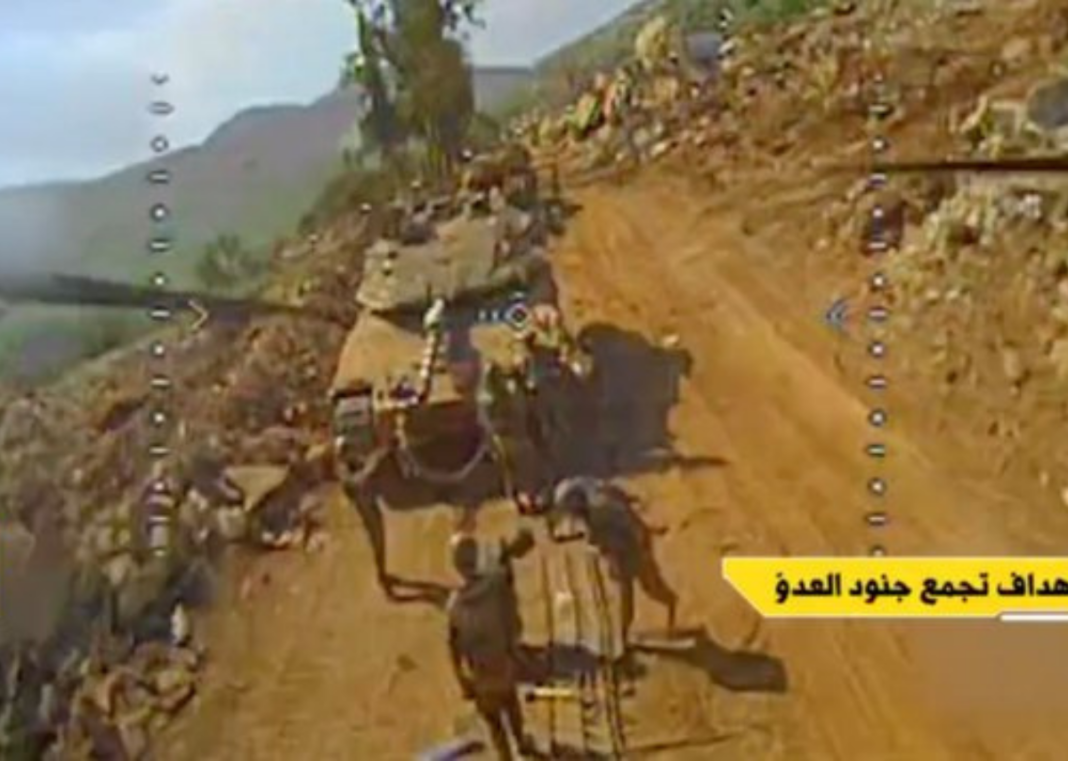
The drone campaign marks a sharp tactical shift since Hezbollah opened fire on Israel on March 2, days after U.S.-Israeli forces struck Tehran and killed Iran’s supreme leader. The drone campaign is really different, from what we have seen. In the weeks that followed, the group moved from targeting static positions and armoured vehicles to directing drones at groups of soldiers. Reuters geolocated the attacks to towns spread across the full length of Lebanon’s border strip, documenting the scale of the deployment.
The drones are controlled through fiber-optic cable spools — consistent with roughly 10 kilometres of wiring — which cut off the radio signal that Israel’s electronic jamming systems rely on to disable aerial threats, according to a drone operator in Ukraine who reviewed the footage. The use of fiber-optic guidance is a direct counter-measure to some of the most sophisticated battlefield technology Israel fields.
Each drone is assembled from commercially available Chinese components, Reuters reported. Konrad Iturbe, a drone expert based in Spain with experience flying and modifying commercial quadcopters, said: “The drones shown in the imagery all show systems assembled from parts commonly made by Chinese enterprises and sold freely on the online marketplaces.” WHBL
A Russian PG-7L anti-tank warhead was fitted onto a drone shown in footage dated April 11, according to a Ukraine-based drone operator and a foreign security official who track Hezbollah’s arsenal. The foreign official told Reuters that Hezbollah already held those warheads in its stockpile, but mounting them on drones converted them into longer-range precision strike weapons.
Hezbollah has been deliberate in recording and publishing its attacks. The Iran-backed group released videos of more than 45 FPV strikes between late March and mid-May. ALMA, an Israeli think tank, assessed that the dissemination of this footage during the ceasefire created “significant psychological impact.” AOL
Youssef el-Zein, Hezbollah’s head of media relations, was direct about the group’s strategic calculation. “We know the enemy’s supremacy, but we also know their points of weakness. We are taking advantage of the points of weakness to create that balance,” he told reporters. El-Zein added that the group assessed drone strikes could force an Israeli military withdrawal from southern Lebanon more effectively than the ongoing peace negotiations — talks that Hezbollah formally opposes. WHBL
Israel has acknowledged the problem but has not yet deployed an effective counter. On May 3, Prime Minister Benjamin Netanyahu said publicly: “A few weeks ago, I ordered the establishment of a special project to thwart the drone threat… It will take time, but we are on it.” WHBL
An Israeli defence official, speaking on condition of anonymity to discuss sensitive operational matters, told Reuters the drones were difficult to intercept because they are small, and are flown “low and slow” by Hezbollah operators who have intimate knowledge of the border terrain. A newly developed drone interception system was tested by the Israeli Air Force in April but failed, the official said. In the interim, Israel has been using Iron Dome interceptors, enhanced radar detection, low-tech netting, and rifle modifications to try to bring the drones down. Counter-drone measures including higher-technology solutions could be deployed within weeks to months.
A Ukrainian drone warfare expert reviewed Hezbollah’s published footage and offered a measured assessment of the group’s operators. “They are amateurs, but they are learning,” said Dmytro Putiata, a drone warfare expert serving in Ukraine’s Unmanned Systems Brigades. Putiata noted that Hezbollah pilots appeared to have received several weeks of training, based on their technique and the spools visible in the footage. WHBL
Forensic imagery analyst William Goodhind offered a more cautious reading of the campaign’s military impact. “Individual clips of vehicles being struck are great for political videos, but do not necessarily translate into military effect,” he said. Goodhind noted that most of Hezbollah’s footage shows drones targeting armoured vehicles, with limited consecutive attacks on a single target or coordinated multi-drone strikes. WHBL
Regional and Global Impact
The drone war in southern Lebanon is directly entangled in the broader U.S.-Iran diplomatic process. Iran and mediator Pakistan have said that any U.S.-Iranian peace agreement must include a halt to Israeli strikes in Lebanon, to prevent escalation there from restarting the wider Iran war. AOL
U.S.-mediated direct talks between the Lebanese government and Israel are scheduled to resume on Thursday and Friday, May 14 and 15, Reuters reported. However, progress has been slow. Israel is insisting that Lebanon fully disarm Hezbollah — a demand that carries serious domestic risk for a country that endured a 15-year civil war between 1975 and 1990 and remains fractured along sectarian and political lines.
Israeli ground forces remain inside southern Lebanon, occupying a buffer zone extending up to 10 kilometres from the border. That positioning, in confined and familiar terrain, is what Hezbollah’s drone units have been exploiting. El-Zein described the continued Israeli troop presence as “an opportunity, and not a threat.”
The escalation also creates uncertainty for the broader U.S.-Iran ceasefire framework that took effect on April 8 after Pakistani mediation. Trump administration officials have stated that the Lebanon conflict is not formally covered by that deal. Vice President JD Vance described the truce at the time as a “fragile truce.”
Background
Hezbollah was founded in 1982 with support from Iran’s Islamic Revolutionary Guards Corps and began developing drone capabilities in 2004, deploying them in the 2006 and 2024 wars with Israel. The current conflict opened on March 2, 2026, when Hezbollah fired missiles and drones at northern Israel after U.S.-Israeli strikes killed Iran’s supreme leader in Tehran. Israel launched a ground campaign into southern Lebanon weeks later, with its stated aim of disarming Hezbollah and establishing a security zone. A ceasefire covering the Iran war took effect on April 8, with a separate Lebanon ceasefire following on April 16. Israel’s campaign in Lebanon was explicitly excluded from the Iran truce terms. Since the 2024 pager-bomb operation, in which thousands of Hezbollah communication devices were detonated by Israel, the group has maintained strict supply-chain security protocols including checking drone components for signs of tampering.
What Happens Next
U.S.-mediated talks between Israel and the Lebanese government are scheduled to continue on May 14 and 15, though Reuters reported progress has been slow. According to Reuters things have been moving slowly. Israel’s defence establishment is developing new counter-drone measures, with an Israeli defence official saying deployment could come within weeks to months. The Israeli military is also pursuing offensive targeting of Hezbollah drone crews as its primary near-term defensive strategy. Iran and Pakistan have stated that any durable U.S.-Iran peace agreement must address the situation in Lebanon. Hezbollah has stated it will not participate in or accept the Lebanon-Israel negotiations.