
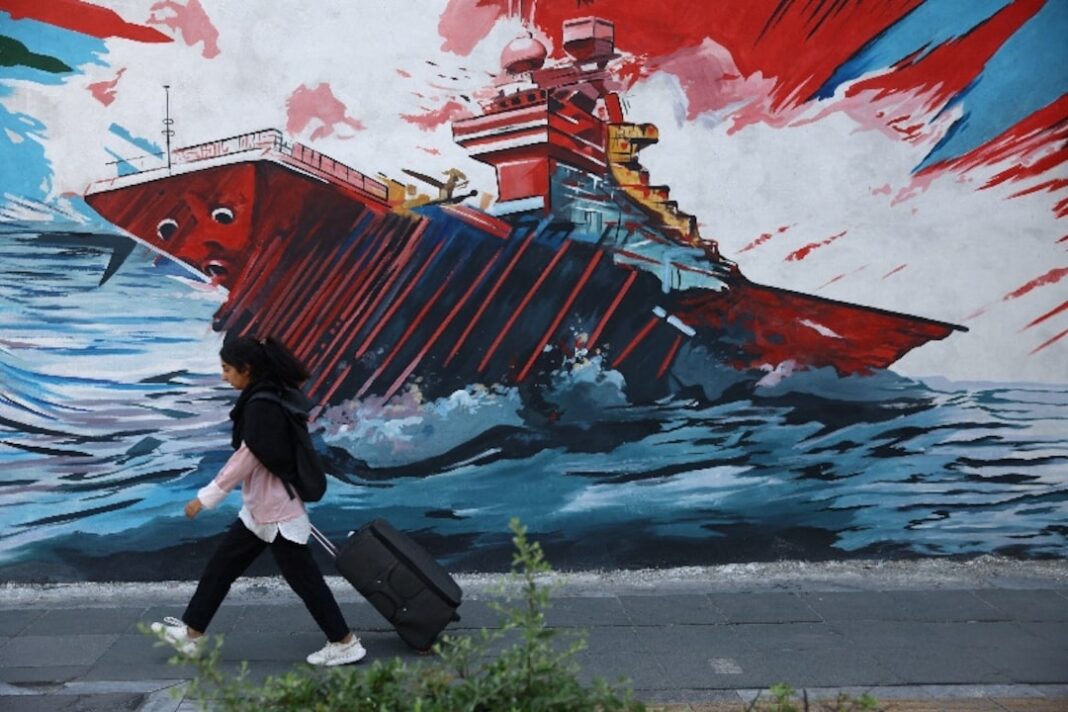

U.S. President Donald Trump said on Friday that Chinese President Xi Jinping had agreed that Iran must reopen the Strait of Hormuz, following two days of summit talks in Beijing. China’s foreign ministry, however, gave no indication it would intervene directly, instead calling the conflict one “which should never have happened” and has “no reason to continue,” according to Reuters.
Trump made the claim while speaking to reporters aboard Air Force One on his return flight from Beijing on May 16. The summit, held on May 14 and 15, was the highest-level meeting between the two leaders since the United States and Israel launched coordinated airstrikes on Iran in late February under Operation Epic Fury.
“We don’t want them to have a nuclear weapon, we want the straits open.”— U.S. President Donald Trump, speaking in Beijing alongside President Xi Jinping
Trump said he was also considering lifting U.S. sanctions on Chinese oil companies that purchase Iranian crude. China is the world’s largest buyer of Iranian oil and has continued purchasing it despite existing American sanctions. The White House readout of the summit stated that both sides agreed the Strait of Hormuz must remain open to support the free flow of energy, and that Xi expressed opposition to the militarization of the strait or any attempt to charge tolls for its use.
When asked by a reporter on Air Force One whether Xi had made a firm commitment to pressure Iran into reopening the waterway, Trump was careful to frame the outcome in limited terms. “I’m not asking for any favours because when you ask for favours, you have to do favours in return,” he said, according to Reuters.
Trump told Fox News, in an interview aired Thursday, that Xi had offered to help negotiate an end to the war with Iran. “He said, ‘I would love to be a help, if I can be of any help whatsoever,'” Trump said, as reported by Time. Trump also said Xi assured him China would not supply military equipment to Iran — a significant statement, though one that stopped short of addressing questions about intelligence sharing or electronics exports, Time noted.China’s Position
The Chinese government’s official readout of the summit did not mention Iran directly. Chinese Foreign Minister Wang Yi said on Friday that the strait should be opened to shipping as soon as possible, according to state-run Xinhua News Agency, as reported by Bloomberg. Xi did not publicly comment on his discussions with Trump regarding Iran.
Trump also said Xi told him China intended to keep purchasing Iranian oil, even as Beijing opposed Iran’s effort to militarize or toll the strait. “He said, you know, they buy a lot of their oil there and they’d like to keep doing that,” Trump told Fox News, as reported by Time.
“We hope that, with the advancement of negotiations, we will reach a good conclusion so that the Strait of Hormuz can be completely secured and we can expedite the normalisation of traffic through the strait.”— Iranian Foreign Minister Abbas Araghchi, speaking to reporters in New Delhi, as reported by ReutersIran’s Response
Iranian Foreign Minister Abbas Araghchi, speaking to reporters in New Delhi on Friday, said Tehran had received messages from the U.S. indicating Washington was willing to continue talks. Araghchi added that Iran would welcome Chinese involvement, but that Tehran did not trust the United States, which he said had curtailed previous negotiating rounds by launching airstrikes, according to Reuters.
Peace talks have been stalled since last week, when Iran and the United States each rejected the other’s most recent proposals, Reuters reported. Trump, in his Fox News interview aired Thursday, said he was losing patience and that Tehran “should make a deal.”Regional and Global Impact
The Strait of Hormuz carried one-fifth of the world’s oil and liquefied natural gas supply before Iran effectively shut it in early March 2026, according to Reuters. Saudi Aramco Chief Executive Amin Nasser said on an earnings call, as reported by CNBC, that “if the current disruptions continue at this rate, the market will lose around 100 million barrels for every week the Strait of Hormuz remains closed,” and that global stockpiles could be “critically low” by this summer.
Nasser also said that even if the strait reopened immediately, it would still take months for the oil market to rebalance, with a delayed opening potentially pushing normalisation into 2027, CNBC reported. That timeline does not account for the time needed to clear mines Iran may have placed in the waterway.
The summit also touched on Taiwan. Trump said Xi told him he opposed Taiwan’s independence, according to Reuters. Xi, in the Chinese state media readout, warned that Taiwan remained the most dangerous flashpoint in the bilateral relationship and that “the U.S. must handle the Taiwan issue with utmost caution,” as reported by Time.Background
The United States and Israel launched Operation Epic Fury on February 28, 2026, targeting Iranian military facilities, nuclear sites, and leadership, resulting in the death of Supreme Leader Ali Khamenei, according to Wikipedia’s account of the 2026 Strait of Hormuz crisis. Iran responded with missile strikes on Israeli cities and U.S. bases across the Gulf. On March 4, Iran announced a closure of the Strait of Hormuz. A temporary ceasefire in April collapsed, and the U.S. Navy subsequently began blockading Iranian ports from April 13.
China had previously invoked a “blocking rule” — for the first time on record — to push back against U.S. sanctions on Chinese refiners buying Iranian crude, directing those companies not to comply with American restrictions, CNBC reported. Before the Trump-Xi summit, U.S. advisors had urged Beijing to pressure Iran on restoring commercial shipping through the strait.
The May 14–15 Beijing summit had itself been delayed by more than a month due to the outbreak of the Iran war, CNBC noted. Analysts at the Center for Strategic and International Studies described the meeting as likely to represent “a relatively modest step toward greater stability” in U.S.-China relations.What Happens Next
Peace talks between Iran and the United States remain on hold following the mutual rejection of proposals last week, Reuters reported. Trump is weighing whether to lift sanctions on Chinese oil firms buying Iranian crude, a decision that could affect Beijing’s economic incentives in the dispute. Iranian Foreign Minister Araghchi indicated that Tehran is prepared to continue diplomatic engagement if Washington demonstrates good faith. The U.S. congressional midterm elections in November, which analysts at CNBC have described as a referendum on Trump and the Republican Party, add domestic political pressure on the administration to reach a resolution before global oil inventories deteriorate further.