
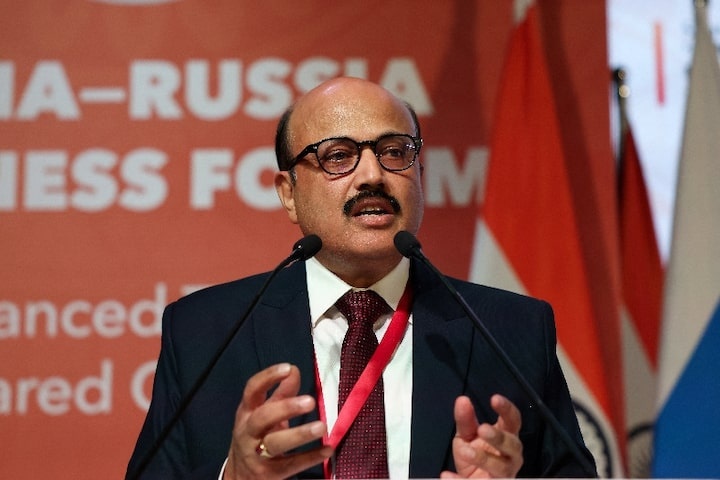

Indias free trade agreement with Britain has hit a problem. This problem came up because Britain just made its rules for importing steel tougher. Indian officials talked about this on Friday. They said this is the big hurdle before the free trade agreement between India and Britain can actually start. The new rules from Britain are causing trouble, for the India and Britain free trade agreement. India’s Trade Secretary Rajesh Agrawal told reporters in New Delhi that both governments were working to resolve the dispute and operationalise the agreement as soon as possible.
According to Reuters, the India-UK free trade agreement had initially been expected to come into force by May 2026 after both sides concluded negotiations last year. The latest disagreement emerged after Britain announced new measures in March to protect its domestic steel sector from rising global supply.
Rajesh Agrawal said the steel restrictions were introduced after negotiations had already been completed. “On the India-UK FTA we are very near to operationalising that. There are a few sticking points as you are aware,” he told reporters, according to Reuters.
Britain’s revised safeguards will take effect on July 1. Reuters reported that the measures will sharply reduce tariff-free steel import quotas and impose higher duties on shipments exceeding those limits. The UK government said the policy is intended to shield domestic producers from oversupply in international markets.
The British measures could reduce the expected benefits for Indian steel exporters under the trade pact. Indian steel producers had anticipated wider market access and lower tariffs once the agreement entered into force, according to Reuters and NDTV Profit.
Agrawal said officials from both countries were holding discussions to prevent the steel issue from delaying the broader agreement. “We are working together to find a creative solution around the steel measure and operationalise the agreement at an early date,” he said.
It took them a while to finalize the deal. The agreement is, between India and Britain. They talked for three years to get it done. Reuters reported that the deal is expected to increase bilateral trade by £25.5 billion annually by 2040 and expand market access for goods and services in both countries.
Under the agreement, India agreed to reduce tariffs on 90% of British products, including whisky, medical devices, automobiles, cosmetics, aerospace components, and food products. Britain, meanwhile, agreed to make 99% of Indian exports duty-free, benefiting sectors such as textiles, marine products, leather, and auto parts.
Reuters reported that Britain’s steel sector has faced mounting pressure from high energy costs and global overcapacity, particularly linked to rising exports from China. The UK government announced in March that tariff-free steel quotas would be reduced by 60% while tariffs on excess imports would rise to 50%.
The British government has also increased support for domestic steel production. Reuters reported that London plans to invest up to £2.5 billion through its National Wealth Fund and raise the share of domestically sourced steel used in public projects.
India has simultaneously been seeking broader access for its steel exports through multiple trade negotiations. Reuters reported earlier that New Delhi has pursued free trade talks with partners including the European Union, the United States, and Britain as part of efforts to support India’s steel industry and manufacturing exports.
The dispute arrives during a wider period of international trade tensions involving steel and industrial goods. Reuters reported that both the European Union and the United States have introduced stronger measures aimed at protecting domestic industries from global oversupply and low-cost imports.
For Britain, the delay risks slowing implementation of one of its largest post-Brexit trade agreements. Reuters described the India deal as Britain’s most economically significant trade pact since leaving the European Union in 2020.
For India, the disagreement could affect export sectors that were expecting immediate tariff advantages under the agreement. Steel manufacturers in particular may face uncertainty over quotas and duties if no compromise is reached before the UK rules take effect in July.
Background
India and Britain concluded negotiations on the free trade agreement in 2025 after years of talks. Reuters reported that the agreement covers goods, services, investment, and temporary worker arrangements. The pact also includes reductions in tariffs on British whisky and cars entering India, while expanding duty-free access for Indian textiles and industrial products entering the UK market.
Britain announced new steel import safeguards in March 2026 after domestic producers warned about rising global oversupply. The measures include lower tariff-free quotas and higher duties on imports above those quotas.
What happens next
Indian and British officials are still talking to each other to fix the steel problem before the new rules, in the United Kingdom start on July 1. Rajesh Agrawal said that the Indian government and the British government want to find a way to solve the steel dispute so they can move forward with the bigger agreement. The steel dispute is an issue and the Indian government and the British government are working hard to resolve the steel dispute.
The free trade agreement still requires final operational steps before implementation. Reuters reported that both countries remain committed to bringing the pact into force despite the current disagreement over steel imports.