
Published: May 9, 2026 |
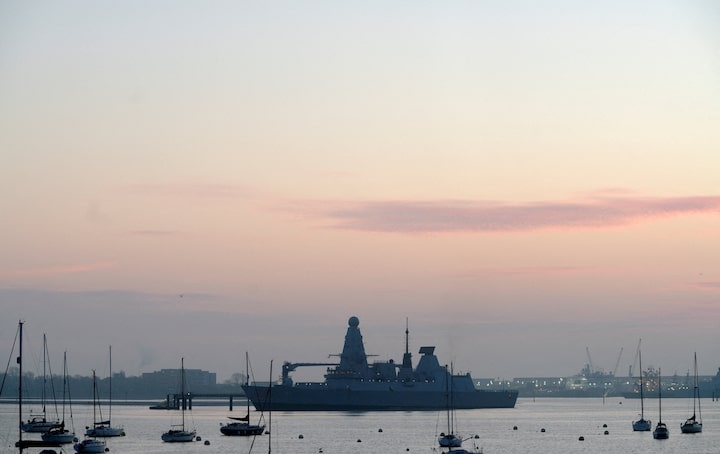
On May 9, 2026, United Kingdom announced the deployment of the HMS Dragon from the eastern Mediterranean to the Middle East as part is positioning for a multinational mission focused on safeguarding commercial shipping routes through the Strait of Hormuz. The deployment follows France’s recent repositioning of its Charles de Gaulle carrier strike group to the southern Red Sea, and comes as the United States maintains a naval blockade targeting Iranian maritime traffic in the waterway. The strait has been largely closed to commercial shipping since February 28, 2026, when U.S. and Israeli forces launched air strikes against Iran, triggering a global energy crisis now described by the International Energy Agency as the largest supply disruption in the history of the global oil market.
The Deployment: What the UK Ministry of Defence Confirmed
The UK Ministry of Defence confirmed the redeployment on Saturday, framing the move as precautionary rather than offensive. A ministry spokesperson stated that HMS Dragon would “pre-position” in the region and stand ready to join a defensive coalition once hostilities between Iran and U.S.-Israeli forces cease.
“We can confirm that HMS Dragon will deploy to the Middle East to pre-position ahead of any future multinational mission to protect international shipping when conditions allow them to transit the Strait of Hormuz,” the ministry spokesperson said, according to Reuters.
The spokesperson added: “The pre-positioning of HMS Dragon is part of prudent planning that will ensure that the UK is ready, as part of a multinational coalition jointly led by the UK and France, to secure the strait, when conditions allow.”
The Ministry of Defence stated that deploying HMS Dragon would both strengthen commercial shipping confidence and support mine clearance efforts once hostilities end. The decision to move the destroyer from Cyprus reflects a British government assessment that the island now has sufficient defensive coverage to allow the Type 45 vessel to relocate, according to Portsmouth’s military affairs outlet.
HMS Dragon had been stationed off Cyprus since March 10, 2026, guarding the RAF’s Akrotiri air base from Iranian drone attacks in the weeks following the outbreak of the U.S.-Iran conflict. The ship had departed HM Naval Base Portsmouth on that date, as reported by AFP.
France’s Parallel Repositioning
HMS Dragon’s movement does not stand alone. It follows France’s decision on May 6 to deploy the Charles de Gaulle carrier strike group — built around France’s sole nuclear-powered aircraft carrier — through the Suez Canal into the southern Red Sea. France’s Joint Staff described the move as aimed at “reassuring and strengthening regional security” and as “a resolutely defensive initiative, fully in line with international law,” according to Defense News.
A French presidency official elaborated on the rationale in a briefing to reporters following the announcement.
“The reason why we must make a renewed effort today is simply that the blockade of Hormuz continues, the damage to the world’s economy is therefore becoming more and more pronounced, and the risk of a prolongation of hostilities is too serious for us to accept it,” the official stated, as reported by Military Times.
The French official emphasized the coalition’s readiness while acknowledging that political consent from both Washington and Tehran remains a prerequisite. “We collectively want to send the signal that not only are we ready to secure the Strait of Hormuz, but that we are also capable of doing so,” they said. “The question now will be to obtain Iranian consent, American consent.”
Britain and France are co-leading a coalition of more than 40 countries drawing up plans to restore freedom of navigation through the strait. That mission, championed by Prime Minister Keir Starmer and French President Emmanuel Macron, will only formally begin once a sustained ceasefire or peace agreement is in place between Iran and U.S.-Israeli forces, according to Bloomberg.
The Hormuz Crisis: Scale and Stakes
The strategic and economic significance of the Strait of Hormuz cannot be overstated. In 2025, approximately 20 million barrels per day of oil flowed through the passage, representing around 25 percent of global seaborne oil trade and 20 percent of global liquefied natural gas trade, according to the U.S. Energy Information Administration. China and India together received 44 percent of those crude exports. Up to 30 percent of internationally traded fertilizers also transit the strait, according to Wikipedia’s documentation of the 2026 Hormuz crisis.
The strait’s closure, which began on February 28, caused immediate commodity shocks. Brent crude surged past $120 per barrel following the formal blockade on March 4, according to Wikipedia’s economic impact article on the 2026 Iran war. Vitol CEO Russell Hardy stated on April 21 that one billion barrels of oil production would be lost due to the war, with current losses already estimated between 600 and 700 million barrels. Major container shipping firms — including Maersk, CMA CGM, and Hapag-Lloyd — suspended strait transits at the outset of the conflict.
The disruption has cascaded into food security. Gulf Cooperation Council states, which rely on the strait for more than 80 percent of their caloric intake, faced a concurrent grocery supply emergency by mid-March, with 70 percent of the region’s food imports disrupted and consumer prices spiking 40 to 120 percent in some markets, according to Wikipedia’s economic impact article.
The U.S. imposed a formal naval blockade of Iranian ports beginning April 13, which CENTCOM described as targeting ships entering or leaving Iranian ports and coastal areas — distinct from broader commercial transit through the strait. Iran’s own restrictions had already been in force since late February. The situation was described by The Guardian as a “dual blockade,” with both parties simultaneously restricting the waterway.
Trump announced a temporary pause to “Project Freedom,” a U.S. effort to restore commercial navigation through the strait, and stated that the American blockade would remain in full force during diplomacy. U.S. forces struck two Iranian-flagged ships on May 8 that attempted to breach the blockade, according to the Washington Post.
Regional and Global Implications
Since the early stages of the Iran nuclear standoff in 2019, Britain and France’s coordinated deployments signal a major expansion of Europe’s self-directed military role in Gulf security affairs. European governments have deliberately kept their distance from U.S. and Israeli strike operations against Iran, refusing Washington’s calls to support military action. Trump responded by calling European allies “cowards” before walking back the comment and stating the United States does not need their assistance.
The deployment of HMS Dragon and the Charles de Gaulle strike group signals that European powers — facing oil prices hovering around $100 per barrel, aviation disruptions, and inflation pressure — have concluded that passive observation is no longer politically tenable.
For Asia-Pacific economies, the stakes are acute. In 2025, around 84 percent of crude oil and 83 percent of LNG passing through the strait was destined for Asian markets, with China, India, Japan, and South Korea accounting for nearly 70 percent of those flows, according to Wikipedia. Japan and South Korea, both IEA member states, are particularly exposed, with IEA data confirming those countries’ heavy reliance on strait-dependent supply chains.
UNCTAD, in its March 2026 assessment of Hormuz disruptions, warned that higher energy, fertilizer, and transport costs — including surging freight rates, bunker fuel prices, and insurance premiums — risk intensifying food cost pressures globally, with the most severe consequences for developing economies already carrying high debt burdens and limited fiscal space.
Background: How the Crisis Began
The 2026 Strait of Hormuz crisis traces directly to the collapse of U.S.-Iran nuclear negotiations in Geneva and a prior 12-day air conflict in 2025 that had preceded full-scale hostilities. On February 28, 2026, U.S. and Israeli forces launched coordinated air strikes against Iran in an operation the U.S. military codenamed “Operation Epic Fury,” which involved precision-guided munitions and stealth aircraft. Iran’s supreme leader, Ali Khamenei, was assassinated in the strikes, according to Wikipedia’s account of the 2026 Hormuz crisis.
In retaliation, Iran’s Islamic Revolutionary Guard Corps closed the strait, boarded and attacked merchant vessels, and laid sea mines in the passage. A temporary ceasefire brokered through Pakistani mediation took effect April 8. However, Iran began charging tolls of over $1 million per ship for transit rights, and talks in Islamabad failed to produce a lasting agreement. Subsequent U.S. naval operations and continued Iranian restrictions maintained the effective dual blockade into May.
The crisis has precedents. Britain deployed warships to escort British-flagged vessels through the Strait of Hormuz in 2019, following Iranian seizures of two tankers. That standoff, involving HMS Montrose and HMS Defender, was resolved without broader coalition action. The scale of the current crisis, however, dwarfs those earlier episodes.
What Happens Next
With the HMS Dragon already stationed near the region, the UK-France coalition can transition from preparation to active operations within days rather than weeks. The coalition’s stated trigger — a sustained ceasefire or peace deal between Iran and U.S.-Israeli forces — remains unmet. U.S.-Iran diplomatic contacts are ongoing, with the Trump administration awaiting Tehran’s reply to its latest peace terms as of May 9, according to the Washington Post.
Whether Iran will consent to a European-led maritime security presence in the strait is an open question. Tehran has previously distinguished between vessels from countries it regards as hostile and those from neutral states, granting passage rights to ships flagged by China, Russia, India, Iraq, Pakistan, Malaysia, and Thailand at various points during the crisis. A European security mission would require either Iranian acquiescence or the kind of ceasefire framework that has so far proved elusive.
Mine clearance operations in the strait present a separate technical challenge. According to one report cited in Wikipedia’s Hormuz crisis article, Iran itself lost track of some of the mines it planted in the waterway, complicating any rapid reopening regardless of political agreements. The Ministry of Defence explicitly cited mine clearance support as one of HMS Dragon’s planned contributions once active operations begin.
For global energy markets, shipping companies, and the populations most dependent on Gulf crude, the question is not whether the strait will reopen but when — and under what terms Britain, France, and their 40-plus coalition partners will be prepared to enforce freedom of navigation through one of the world’s most consequential chokepoints.