
May 9, 2026 | Manama, Bahrain
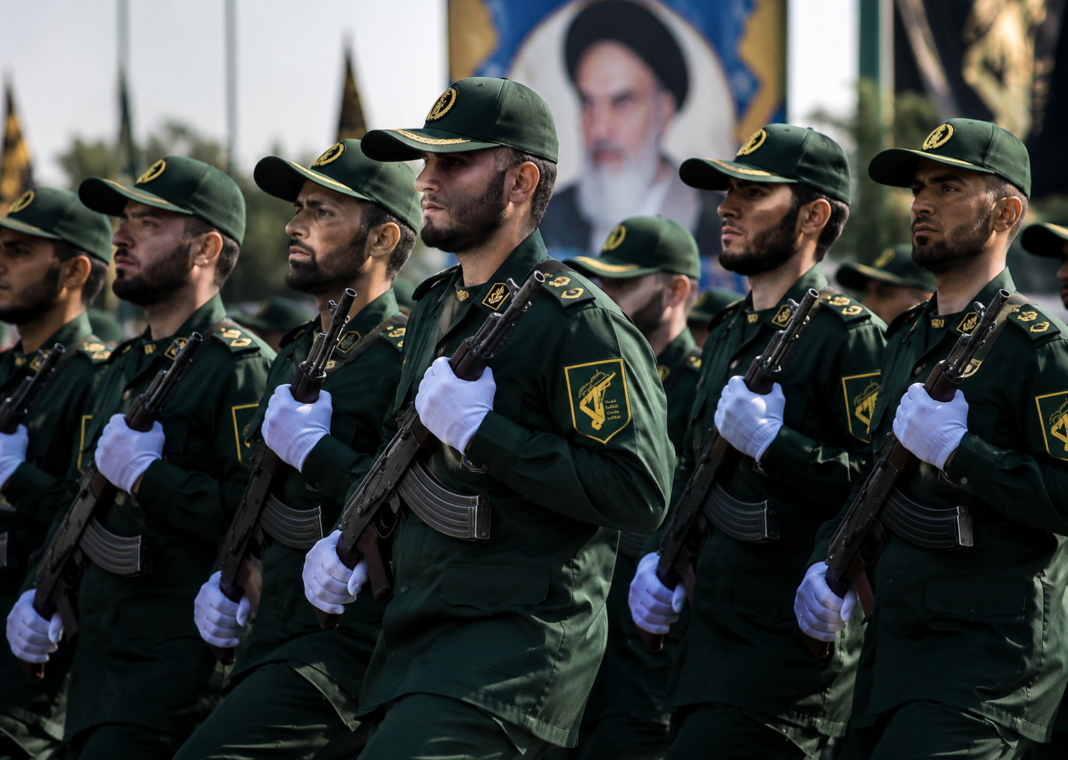
Bahrain’s Interior Ministry announced on Saturday that authorities had detained 41 suspects allegedly connected to Iran’s Islamic Revolutionary Guard Corps (IRGC), dismantling what officials called a covert network aimed at threatening the kingdom’s national security and stability. The cell, uncovered in Manama, operated under the ideology of Velayat al-Faqih — the doctrinal foundation of the Iranian theocratic state — and was exposed following extensive investigations by the Public Prosecution into espionage and foreign interference. The arrests mark the single largest IRGC-linked detention operation Bahrain has announced since the outbreak of the Iran war in late February 2026.
Scale and Scope of the Operation
The 41 individuals identified as primary members have been apprehended, according to the Ministry of Interior statement. Legal proceedings are being finalized as the detainees are referred to prosecution. The ministry confirmed that specialized security units remain active in the field, continuing search and investigation operations to locate additional accomplices and anyone who provided material or ideological support to the network.
The Bahraini Ministry of Interior described the cell as having aimed to destabilize the kingdom through organized covert activity. Investigations originated in cases of espionage with foreign entities and documented expressions of support for Iranian military aggression against Bahrain. The ministry statement, cited by Roya News, warned that “any person proven to be involved in the activities of this or any similar organization will face the full weight of the law, as the security of the nation remains a non-negotiable priority.”
Officials also announced a broader institutional review. According to Gulf Daily News, the Interior Ministry is conducting a comprehensive security and legal assessment of unlawful activities linked to what it described as the exploitation of ideological and religious movements through media platforms, social institutions, charitable organizations, and educational establishments — including schools and kindergartens.
A Cascade of Arrests Since February
Saturday’s announcement is not an isolated event. It is the latest in a sustained wave of IRGC-linked arrests Bahrain has carried out since Iran launched retaliatory missile and drone strikes on Gulf states beginning February 28, 2026, following US and Israeli air operations against Tehran.
In March 2026, four Bahraini nationals — three men and one woman — were arrested for passing intelligence to the IRGC through intermediaries based in Iran, according to Bahrain’s Ministry of Interior. A fifth suspect fled the country. Days later, authorities announced a second round, arresting five more individuals accused of collecting and transmitting precise information on sensitive locations to IRGC-linked elements, as well as recruiting operatives for planned attacks on state institutions and energy infrastructure, the Jerusalem Post reported.
By late March, Bahrain’s Public Prosecution had charged 14 individuals across separate cases with spying for the IRGC, planning hostile acts against the kingdom, receiving funds from Iran, and — in at least one case — undergoing military training at IRGC facilities, The National reported. Courts have since handed down life sentences in at least one related case: Bahrain’s High Criminal Court sentenced five defendants to life imprisonment in late April after convicting them of espionage for the IRGC, Voice of Emirates reported. The convicted included four Bahraini nationals and two Afghan nationals, with the court ordering permanent deportation for the Afghans upon completion of their sentences.
Expert View: The IRGC’s Gulf Playbook
Regional security analysts said that “methods exposed in Bahrain closely resemble the covert operational patterns long associated with IRGC-linked networks across the Gulf”.
“They do traditional secret service work: espionage, collecting data, recruiting spies, doing sabotage in countries they deem as enemies, helping create and manage proxies for Iran in strategic spaces,” Mohanad Seloom, an analyst cited by Al Jazeera in March 2026, said of the IRGC’s broader regional operations. Seloom noted that by publicly naming the IRGC in cell-related announcements, governments in the Gulf are “making a deliberate distinction” between Iran’s civilian intelligence arm and its military intelligence apparatus — a distinction that carries significant diplomatic and legal weight.
King Hamad bin Isa Al-Khalifa addressed the security situation directly in April, stating that Bahrain is “proceeding with determination to manage the consequences of recent regional developments,” according to Arab News. The king announced a review of citizenship entitlements where grounds exist, and instructed the crown prince to oversee the next phase of national security measures.
The Bahraini government has designated the IRGC as a terrorist organization, placing it in the same legal category as groups such as Hezbollah. Any cooperation with the corps, however indirect, is prosecutable under Bahraini law.
Regional and Global Implications
The arrest of 41 individuals in a single cell — the largest such operation announced by Manama to date — signals that Bahrain’s security services believe the scale of IRGC infiltration extends further than previously disclosed. The kingdom hosts the US Navy’s Fifth Fleet at Naval Support Activity Bahrain in the Juffair district of Manama. That base was directly struck by Iranian drones in the early days of the conflict, making Bahrain one of the most strategically exposed US partner states in the Gulf.
By late March, analysts at the Jewish Institute for National Security of America estimated that Bahrain had expended up to 87 percent of its Patriot interceptor missile stockpile defending against incoming Iranian strikes, according to Wikipedia’s compiled data on the conflict. The kingdom’s air defense systems had, by earlier tallies, intercepted 194 ballistic missiles and 523 drones since Iran’s attacks began, Roya News reported in a separate dispatch. That level of air defense expenditure means Bahrain’s capacity to absorb future barrages is limited — adding urgency to its parallel effort to neutralize ground-based IRGC networks before they can provide targeting data for future strikes.
The arrests also carry implications beyond Bahrain’s borders. Qatar announced its own IRGC cell dismantlement earlier in 2026, and Kuwait has faced repeated Iranian drone strikes. Across the Gulf Cooperation Council, the exposure of Iranian sleeper networks is reshaping how member states assess internal threats. Omar Al Qasim argued in April 2026 that the Iranian strikes had permanently altered the Gulf states’ security calculus, concluding that united GCC pressure must push the United States toward a “comprehensive resolution of underlying threats” — defined as Iran’s ballistic missile capabilities, drone networks, proxy infrastructure, and mechanisms of regional interference.
Saudi Arabia, whose Ras Tanura refinery suffered fire damage from Iranian drone strikes, has coordinated closely with Bahrain on counterterrorism measures throughout the crisis. A joint condemnation statement issued March 26 by Bahrain, Saudi Arabia, the UAE, Kuwait, Qatar, and Jordan collectively condemned Iran’s attacks on Gulf infrastructure and sovereignty.
Background: Bahrain and Iran’s Decades-Long Rivalry
The enmity between Manama and Tehran is not new. Bahrain, a Sunni-ruled monarchy with a majority Shia Muslim population, has accused Iran of exploiting sectarian tensions to destabilize the kingdom for decades. The IRGC-linked Abdali cell uncovered in Kuwait in an earlier period demonstrated that the corps has established weapons caches and intelligence networks across the Gulf. In Bahrain specifically, Iran was accused of supporting and coordinating with opposition groups during the 2011 Arab Spring uprisings, which prompted Saudi Arabia to deploy forces to the island under the Gulf Shield operation.
The ideology of Velayat al-Faqih — the political doctrine of supreme clerical rule developed by Ayatollah Khomeini and institutionalized in Iran’s 1979 constitution — serves as the ideological glue binding IRGC-affiliated networks abroad. Bahrain’s Ministry of Interior has now repeatedly named this doctrine in connection with arrested individuals, indicating that prosecutors intend to treat ideological affiliation as evidence of organizational membership, not merely personal belief.
Bahrain normalized relations with Israel under the 2020 Abraham Accords, a move that deepened the rift with Tehran and placed the kingdom in the crosshairs of Iran’s regional deterrence strategy. Since the onset of the 2026 war, that strategic exposure has translated directly into kinetic attacks on Bahraini soil.
What Happens Next
Investigations and specialized units are actively pursuing further arrests stated by the Bahraini Ministry of Interior. Given the scale of the 41-person cell — and the pattern of sequential, escalating arrests since February — additional prosecutions are likely in the weeks ahead.
Bahrain’s High Criminal Court has already demonstrated willingness to hand down maximum sentences in IRGC-related espionage cases. Life imprisonment for five defendants in April sets a precedent that will shape how future cases are prosecuted and adjudicated.
At the strategic level, the breadth of the Velayat al-Faqih ideological review — spanning schools, charities, and media — suggests Bahrain intends to use the current crisis to conduct a long-term restructuring of civil society oversight, not merely a short-term security operation. Whether that approach will be confined to institutions with demonstrable IRGC ties, or will widen to encompass broader Shia civil society, will be a critical question for human rights observers and regional analysts in the months ahead.
The trajectory of the US-Israel-Iran conflict will ultimately determine how long Bahrain’s security environment remains this acutely pressured. Until a durable ceasefire or resolution takes shape, Manama’s courts, prisons, and intelligence services will remain on a war footing.