
May 9, 2026 | Moscow, Russia
For the first time since President Vladimir Putin on May 9, 2026, Russia held Victory Day, stripping tanks, missiles, and armored vehicles from Red Square. The Kremlin cited “the current operational situation” — a reference to the ongoing war in Ukraine — and threats of Ukrainian drone strikes as the reasons for the reduced format. Military academy personnel marched on foot, and an aerial display proceeded as planned, but the mechanized columns that have defined the parade for years were absent entirely.
A Parade Without Its Armor
The change was stark. In 2025, modern tanks, TOS-2 Tosochka heavy flamethrower systems, and Iskander ballistic missiles rolled across Red Square, watched by 27 heads of state including Chinese President Xi Jinping. This year, according to Russia’s Defense Ministry, no military hardware appeared on the ground at all — the first such omission in approximately 18 years.
The aerial portion of the program remained in place. Sukhoi Su-25 fighter jets painted the sky in the red, white, and blue of the Russian flag, and an aerobatic display team performed overhead. Higher-level military academy cadets marched through the square. But the symbolic weight of the armored column — the parade’s traditional centerpiece — was gone.
Security measures around the capital were visibly tightened in the days before the event. Anti-aircraft systems appeared around Moscow. One of Russia’s largest telecoms operators warned residents they could face restrictions on mobile internet and text messaging in the capital “to ensure security during the festive events,” according to messages reviewed by CNN. Mobile internet has been periodically suspended in Moscow and Saint Petersburg in the run-up to sensitive national events since Ukrainian drone strikes began reaching Russian territory in 2023.
International press access was also curtailed dramatically. Multiple international outlets, including CNN, which had received prior accreditation, were informed by the Kremlin on May 7 that they would no longer be permitted to attend. Only “host broadcasters” — Russian state media — would cover the ceremonies from Red Square. Kremlin spokesman Dmitry Peskov denied that accreditation had been revoked, stating that “the number of journalists allowed is also limited” due to the “somewhat limited” format of this year’s parade, and that “there has not been a single case of anyone being stripped of their accreditation.”
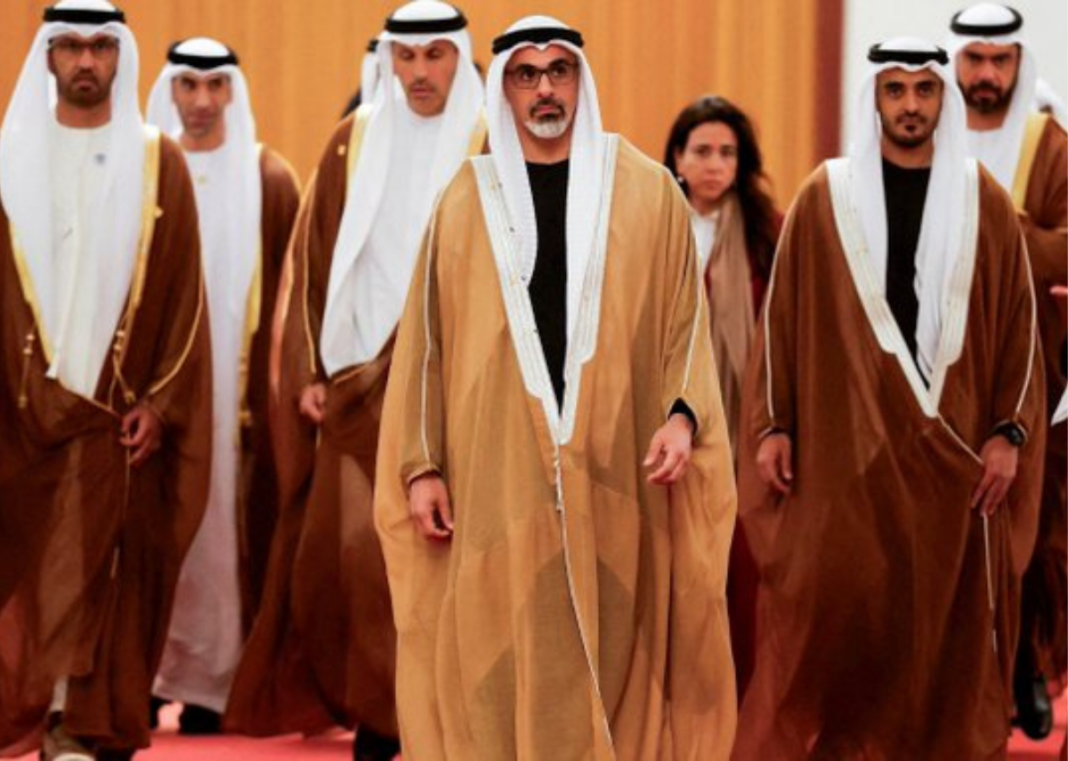
The guest list for this year’s ceremony also contracted significantly. Belarusian President Alexander Lukashenko, Malaysia’s King Sultan Ibrahim Iskandar, and Laos President Thongloun Sisoulith attended. NATO and EU member Slovak Prime Minister Robert Fico traveled to Moscow for a bilateral meeting with Putin but publicly declined to attend the parade.
Experts: Security Fears, Not Military Weakness, Drive the Decision
Experts stated that the growing frequency of Ukrainian drone attacks deep inside Russian territory as the main reason behind the scaled-back format of the event.
“Drones are indeed the primary means to attack Russia’s territory,” said Olha Polishchuk, research manager for Europe, Central Asia and the Caucasus at Armed Conflict Location & Event Data (ACLED). “They are relatively cheap, modifiable and can travel long distances. Both Ukraine and Russia have switched to using primarily drones for their attacks.” Polishchuk added that since 2025, drone strikes have “completely overshadowed other attacks,” and that while most drones are intercepted, a large enough swarm ensures some reach their targets.
The concentration of troops and heavy equipment required for a traditional parade creates a specific vulnerability — both on the day itself and in the storage and staging period preceding it. In 2025, Ukraine’s Operation Spiderweb targeted Russian aircraft at airfields deep inside Russian territory. A drone struck a high-rise apartment building in western central Moscow on May 5, days before this year’s parade, causing no casualties but adding to security anxieties.
Oleg Ignatov, senior Russia analyst at Crisis Group, told Al Jazeera that the Kremlin’s concern goes beyond long-range drones from Ukraine. “They are more afraid of groups of people using small drones which are delivered to Russia, and used against targets inside Russia,” he said. “Even if one or a couple of small drones hit a military parade, it may not cause a casualty, but it will have a demonstrative and psychological effect. I think what they care about is the political and psychological consequences of this.”
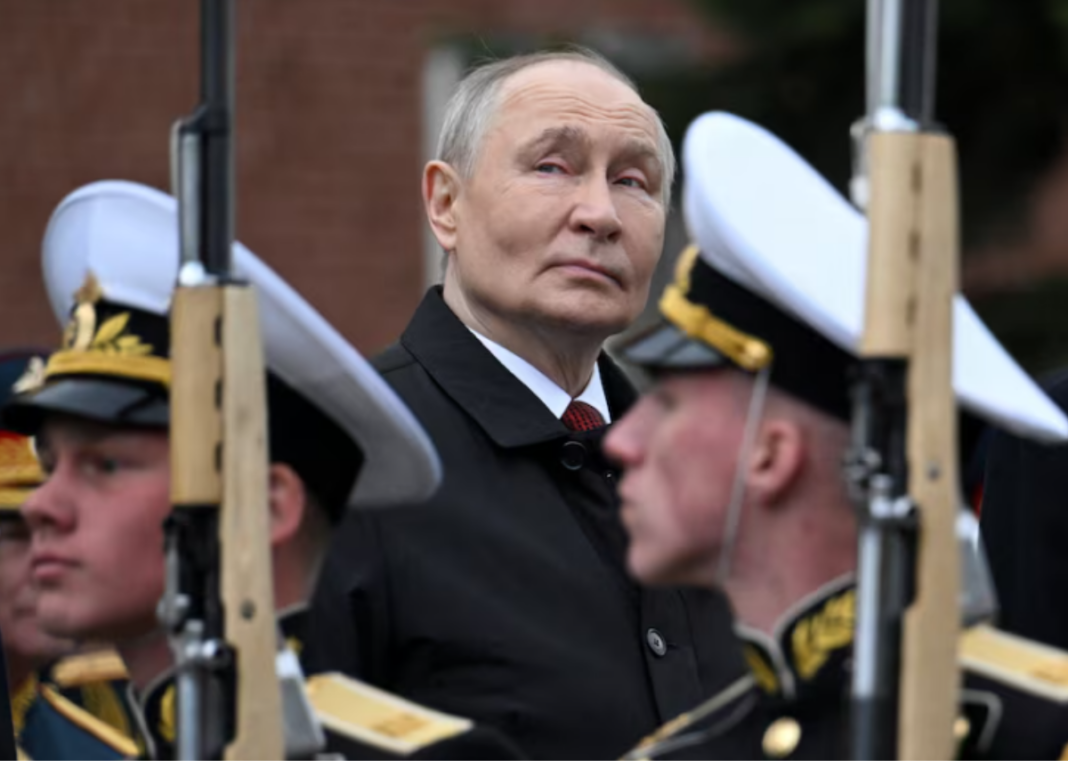
Sam Greene, professor of Russian politics at King’s College London, was direct in his assessment of what the scaled-back format signals internationally. “Putin likes to look in control and wants the Russian state to look strong, and that is not the message this sends,” Greene told CNN. He described the decision as “out of character” for the Russian leader.
Competing Ceasefires, Mutual Accusations
The parade took place against a backdrop of dueling ceasefire announcements that neither side honored in practice. Russia’s Defense Ministry declared a unilateral ceasefire effective May 8–9, tied to the Victory Day commemorations. Ukrainian President Volodymyr Zelensky stated that Kyiv had not received an “official appeal” regarding Moscow’s ceasefire and in turn announced his own unilateral ceasefire beginning May 6. Each side subsequently accused the other of violations.
Russia’s Foreign Ministry went further, issuing a warning to diplomatic missions to evacuate personnel from Kyiv if the Ukrainian government targeted the May 9 celebrations. The statement indicated Moscow was prepared to carry out a “massive strike” in retaliation for any attack on the parade.
Polishchuk assessed the threat calculus Ukraine faced around the event. “Ukraine is generally more level-headed than Russia in sticking to targets that have a military objective,” she said, “but this is indeed one of the instances where the potential attack appears largely symbolic. Ukraine may decide to save resources this time and not attack Moscow — it could be a sane choice since air defence will be on high alert.”
Regional and Global Implications
The format of this year’s parade carries meaning well beyond Russia’s borders. For years, the composition of the guest list and the hardware displayed on Red Square have served as informal indicators of Russia’s diplomatic standing and military confidence. The absence of Xi Jinping — who sat beside Putin at last year’s ceremony in a display of strategic alignment — and the presence of only a handful of heads of state signals that Moscow’s capacity to project influence through ceremonial statecraft has narrowed under the pressure of a prolonged war.
The contrast with 2025 is particularly notable. Last year, Russian troops marched alongside Chinese soldiers. This year, the guest list consisted largely of leaders from smaller states with limited international leverage. The divergence illustrates how the war in Ukraine continues to shape Russia’s diplomatic environment — even on its most symbolically charged national holiday.
Within Russia, the mood in Moscow ahead of the celebrations appeared subdued. A resident named Mikhail, who declined to give his surname, told CNN that the toll of the conflict had become increasingly difficult to ignore. “People are dying, finances are disappearing, and all sorts of restrictions are being introduced,” he said. “War has never been good.”
Nina Khrushcheva, professor of International Affairs at the New School — who was recently labeled a foreign agent by Russian authorities — told CNN that Putin and Russia’s security apparatus have grown increasingly anxious in the context of recent international events. “There is paranoia at every turn,” she said. “Putin was thoroughly freaked out by seeing what happened to the leadership in Iran, Venezuela, and even the shootings targeted at US President Donald Trump. On top of that, you have hundreds of drones launched from Ukraine daily.”
Background: Victory Day and the Weight of Soviet Memory
May 9 holds a unique place in Russian national consciousness. The date marks the formal surrender of Nazi Germany in 1945, a moment that arrived at a cost of approximately 27 million Soviet lives — the highest national toll of any country in the Second World War. The annual parade is rooted in Soviet-era tradition and serves simultaneously as a memorial, a political statement, and a military showcase.
British historian Geoffrey Roberts described the holiday’s layered significance in comments to Al Jazeera. “A celebration of the Soviet and Allied defeat of Hitler’s Nazi-Fascist alliance, Victory Day is the most sacred date on Russia’s political calendar,” he said. “As ever, Victory Day will be celebrated as a Soviet as well as a Russian victory — the result of the common struggle of all the peoples of the multinational USSR, not least millions of Ukrainians.”
Putin revived the full parade format in 2008, after it had been suspended for much of the post-Soviet era. Since Russia’s full-scale invasion of Ukraine in February 2022, the celebrations have contracted year by year. In 2023, just one tank — a Soviet-era T-34 — rolled across Red Square. In 2024, a small number of armored personnel carriers and mobile missile launchers appeared, but no modern tanks. The 2026 parade marks the most stripped-back edition since the tradition’s revival.
According to the open-source intelligence project Oryx, Russia has lost more than 14,000 tanks, armored personnel carriers, and other combat vehicles — destroyed, captured, or abandoned — since the start of the full-scale invasion. That figure provides context for the progressive reduction of hardware at successive parades.
Modern Ukraine views the Russian state’s contemporary use of Victory Day as a manipulation of shared history. Kyiv has consistently discouraged foreign leaders from attending and sought to reframe the holiday in ways that separate Soviet sacrifice from Russian state militarism. Polishchuk noted that within Russia the holiday has taken on a different character: “The more common ‘never again’ in reference to WWII became ‘we can do it again’ in Russia as a popular Victory Day slogan.”
What Happens Next
The reduced scale of the parade does little to ease the deeper strategic challenges behind the decision. Ukrainian drone strikes on Russian territory — targeting oil refineries, airfields, and infrastructure — have continued at high frequency and show no sign of abating. A recent strike on the Tuapse oil refinery on Russia’s Black Sea coast triggered an ecological emergency and the evacuation of local residents, Al Jazeera reported.
Peace negotiations remain stalled. Both sides have used ceasefire announcements as instruments of pressure rather than as genuine steps toward a settlement. The mutual accusations of ceasefire violations on May 8–9 reinforce the pattern.
For Russia, the coming months present a compounding challenge: sustaining the war effort while managing economic strain, internet restrictions, and the increasingly visible gap between the triumphalist narrative of Victory Day and the realities of an unresolved conflict. Whether the 2027 parade returns to its pre-war format will depend entirely on whether the war in Ukraine reaches a resolution — and on what terms.