
Israeli Prime Minister Benjamin Netanyahu pledged to deepen his military’s advance into Lebanon on Sunday after Israeli forces seized Beaufort Castle, a medieval hilltop fortress in the country’s south, declaring the operation a “dramatic shift” in the campaign against Hezbollah. The capture, confirmed by Israeli Defence Minister Israel Katz, came as Israeli ground forces expanded their operations northward and issued sweeping evacuation orders across a broad stretch of southern Lebanon.
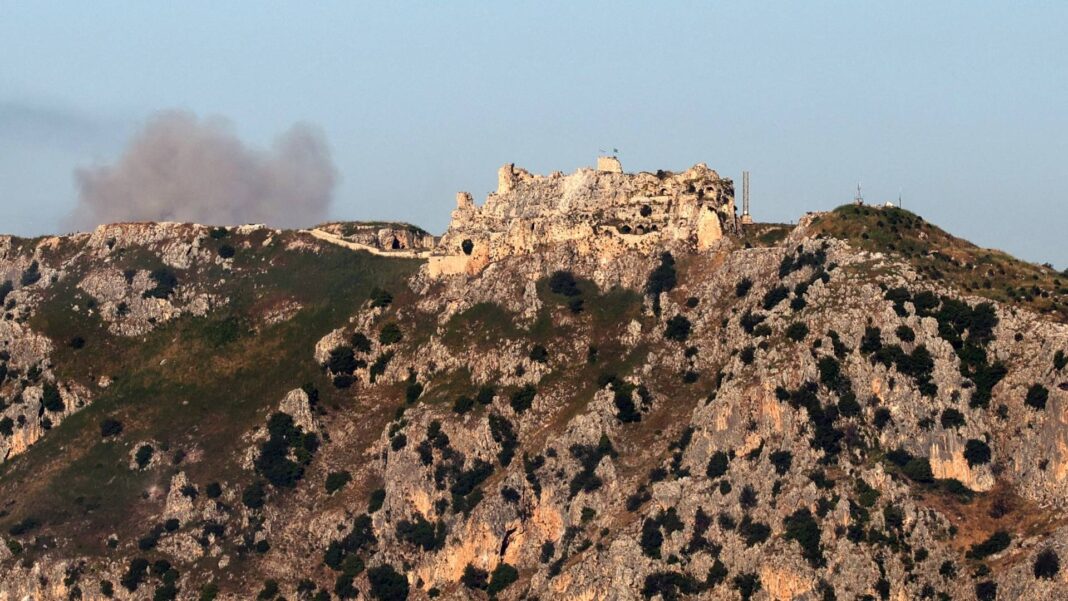
An Israeli flag now flies over the medieval fortification, known locally as Qalaat al-Shaqif or Shaqif Arnoun. Shelling was audible in surrounding areas and smoke rose from the hillside as AFP journalists reported observing the Israeli flag above the castle walls.
In a video statement released hours after the military took Beaufort, Netanyahu said: “We have returned united, determined and stronger than ever. Now my directive is to deepen and expand our hold in places that were under Hezbollah’s control. The capture of Beaufort is a dramatic stage and a dramatic shift in the policy we are leading.”
Defence Minister Israel Katz marked the moment in a social media post, writing: “Forty-four years after the heroic Battle of Beaufort, and on this day commemorating the soldiers who fell in the First Lebanon War in 1982, our troops have returned to the summit of Beaufort and once again raised the Israeli flag there.”
The Israeli military simultaneously issued a sweeping evacuation order to areas south of the Zahrani River, north of the Litani River and around 40 kilometres from the border. The military said it was targeting Hezbollah infrastructure in Tyre and several additional areas in southern Lebanon, according to Roya News. Lebanon’s state-run National News Agency reported a series of strikes on the area.
An Israeli strike near a hospital in Tyre wounded 13 staff members, according to the Lebanese health ministry.
Hezbollah said on Sunday it targeted Israeli army positions and infrastructure in Shlomi and Nahariya in northern Israel, while air raid sirens sounded in the Acre area. The Iran-backed group did not provide casualty figures.
The Israeli army said one of its soldiers had been killed a day earlier by a Hezbollah explosive drone, bringing to 25 the number of Israeli military deaths in Lebanon since early March. The Lebanese health ministry reported that Israeli attacks have killed more than 3,371 people since early March.
The diplomatic response was immediate. France said on Sunday it requested an emergency meeting of the United Nations Security Council, alarmed by Israel’s ever-deeper occupation of Lebanese territory. French Foreign Minister Jean-Noël Barrot said on Sunday that “nothing can justify the continuation of Israeli military operations in Lebanon and its ever-deeper occupation of Lebanese territory.”
Lebanese Prime Minister Nawaf Salam had accused Israel on Saturday of pursuing a “scorched-earth policy and collective punishment” in the south, urging a halt to the fighting.
Regional and Global Impact
France’s call for an emergency UN Security Council session signals mounting international concern over the scope of Israel’s ground operations in Lebanon. The evacuation orders covering a corridor stretching 40 kilometres from the border indicate Israel is pressing further north than at any previous point in this campaign. Lebanon’s government has framed the advance as an occupation, a characterisation that is shaping its diplomatic posture in ongoing international negotiations.
Background
Lebanon was drawn into the broader Middle East conflict on March 2 when Hezbollah fired rockets toward Israel in retaliation for the killing of Iran’s supreme leader in a US-Israeli operation. A ceasefire agreement was reached on April 17, but it has never been observed, with both sides accusing each other of daily violations. Israeli forces used Beaufort Castle as a base during a previous two-decade occupation of southern Lebanon that ended in 2000. The fortress commands sweeping views across south Lebanon, giving it both strategic and symbolic importance to both sides of the conflict.
What Happens Next
Military delegations from Lebanon and Israel held security talks in Washington on Friday, with further US-brokered negotiations planned for the following week. France’s push for an emergency UN Security Council session could produce a formal resolution or statement pressing for restraint, though the outcome of that meeting has not been confirmed. Netanyahu’s directive to “deepen and expand” Israeli positions suggests further ground movement into areas currently or formerly under Hezbollah’s control, according to his own statement