
Israel Strikes 30 Iranian Universities Since War Began
Israeli and US airstrikes have damaged or destroyed at least 30 Iranian universities and research centres since the outbreak of the US-Israeli war on Iran, according to Iran’s Ministry of Science and Technology. The Israeli and United States airstrikes have really hurt the universities and research centres. The strikes, which have targeted some of Iran’s most prestigious engineering and scientific institutions, have prompted academics, international scholarly bodies and Iranian officials to warn of a deliberate effort to dismantle the country’s higher education infrastructure.
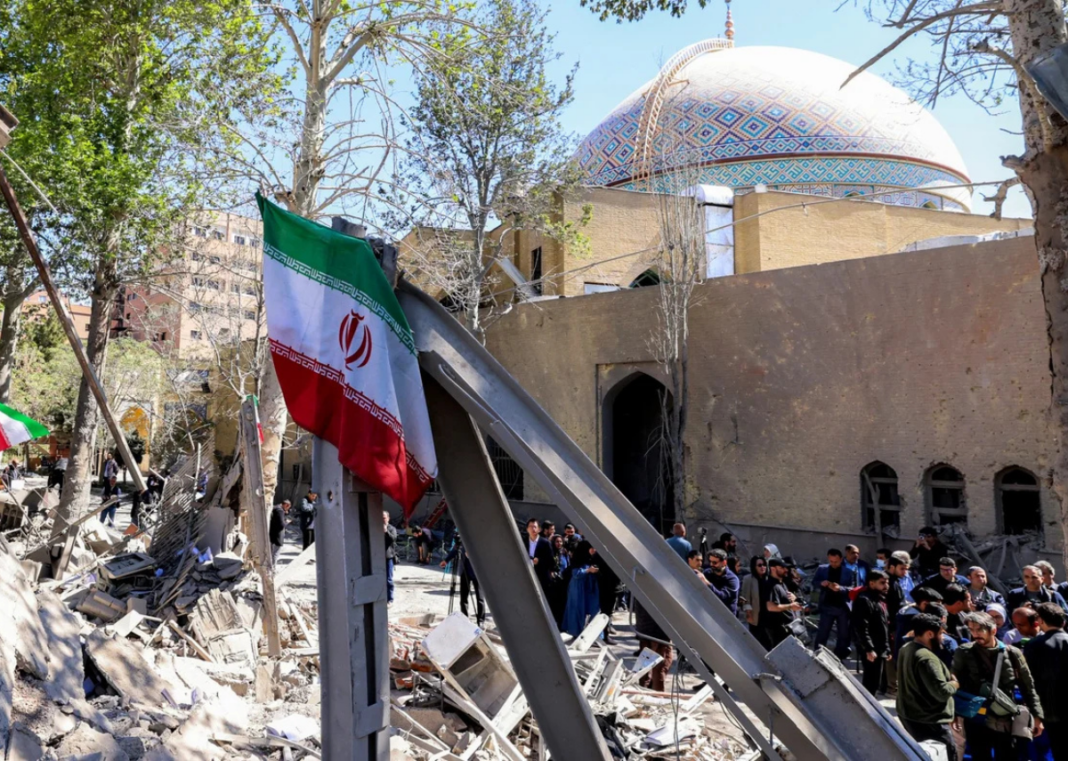
On 6 April, a blast struck Sharif University of Technology in Tehran — widely regarded as one of the leading engineering schools in West Asia and often likened to the Massachusetts Institute of Technology (MIT) in the United States. Sharif University of Technology is a deal and people respect it a lot. No casualties were reported, but multiple buildings, notably those housing an artificial intelligence centre, were damaged. middleeasteye + 2
The university is not an isolated case. Iran’s science and technology ministry reported that at least 30 universities came under fire during the ongoing conflict. According to the British Society for Middle Eastern Studies (BRISMES), at least 16 universities and research centres have sustained damage. middleeasteyemiddleeasteye
The scale of the destruction has drawn comparisons, from scholars and rights bodies, to what happened in Gaza. Lewis Turner, chair of the BRISMES Committee on Academic Freedom, said the pattern was familiar. “There appears to be a widespread disregard for universities’ protected status under international law,” Turner told Middle East Eye. “These actions may well amount to war crimes.”
The targeted institutions are not peripheral. On 28 March, the Iran University of Science and Technology, founded in 1929 to train engineers, was struck in a US-Israeli attack, local media reported. A day later, Isfahan University of Technology (IUT) was attacked for a second time, with Iran’s Fars News Agency reporting that several of its buildings sustained damage and four members of staff were wounded. middleeasteyemiddleeasteye
IUT produced the country’s national radar project and designed and implemented the first Iranian submarine. In 2015, according to Middle East Eye, Sharif University and IUT were ranked 40th and 63rd respectively in the Times Higher Education rankings of the top 100 world universities under 50 years of age. middleeasteyemiddleeasteye
On 2 April, a missile struck the century-old Pasteur Institute of Iran, a key public health and research facility, reducing its vaccine-producing laboratories to rubble. Days later, a plasma and laser research lab at Shahid Beheshti University in Tehran was also hit. middleeasteyemiddleeasteye
The strikes have also killed academics directly. Iran’s Islamic Republic News Agency reported that Dr Saeed Shamghadri, an associate professor at the electrical engineering department at Isfahan University of Technology, was killed in an air strike along with his family on 22 March. middleeasteye
The Sharif University strike drew particular attention because of what was destroyed. The university’s president said the targeted artificial intelligence centre housed critical databases, and that its staff had spent the last two years training AI models in Persian. A student who worked at the centre, identified by Middle East Eye as Amirhossein, described what was lost. “We were developing data processing services and knowledge-based platforms for universities across the country,” he said, adding that the centre had no military connection. “Attacks like this suggest the goal is to push Iran backwards scientifically.” middleeasteye
Another Sharif student, 42-year-old Morteza, a philosophy of science student, put it differently. “Can someone explain why philosophy of science should be targeted?” he told Middle East Eye. “Is the problem with philosophy or with science itself? It feels like the real target is the ability to think.”
Iranian officials responded publicly. Iran’s First Vice President Mohammad Reza Aref accused the United States of dropping a bunker-buster bomb on Sharif University. He said that US President Donald Trump “fails to understand that Iran’s knowledge is not embedded in concrete to be destroyed by bombs; the true fortress is the will of our professors and elites,” according to Middle East Eye.
Despite the destruction, students and faculty have continued working. Footage of a mathematics professor setting up his laptop in the bombed-out shell of his classroom to hold an online lecture circulated on social media in the days following the Sharif strike. middleeasteye
Academics outside Iran have framed the strikes within a broader strategic pattern. Asma Abdi, a postdoctoral fellow at the Institute of Arab and Islamic Studies at the University of Exeter, told Middle East Eye that the attacks extend what sanctions could not accomplish. “Whatever technological capabilities could not be disabled and curtailed through sanctions are now being completely annihilated through bombardment,” she said. “It is a longer, indeed colonial, pattern of attempting to sabotage knowledge sovereignty and technological autonomy, ultimately undermining a country’s long-term capacity to remain sovereign in knowledge production and technological development.”
Turner, of BRISMES, warned the damage would extend far beyond the physical. “How many generations will be denied access to education because of the damage to university infrastructure?” he said to Middle East Eye. “This kind of destruction is going to have potentially long-term and profound effects on Iranian society.”
The debate over what is happening in Iran has been joined by scholars in the United States, including Professor Hamid Dabashi, Hagop Kevorkian Professor of Iranian Studies and Comparative Literature at Columbia University in New York. Writing in Middle East Eye on 13 May 2026, Dabashi argued that the physical strikes on Iranian campuses and the political pressures applied to American universities — through initiatives such as Project Esther, a domestic programme advanced by The Heritage Foundation — represent two fronts of the same campaign. “Targeting American and European universities through censorship, intimidation, silencing and curricular control is the political equivalent of physically bombing Iranian and Palestinian universities into ruin,” he wrote. Dabashi described the combined assault on higher education as what scholars now call “scholasticide.”
Abdi drew a similar connection to the conflict in Gaza, telling Middle East Eye that the strikes in Iran “seek to foreclose possibilities for political alternatives and political imaginaries, ultimately undermining the prospects for democracy in Iran.”
Background
Iranian universities have long been subject to US economic sanctions, which restricted international academic collaborations and barred students from travelling abroad to attend conferences. Sharif University of Technology counts among its alumni Maryam Mirzakhani, who in 2014 became the first woman and the first Iranian to receive the Fields Medal, the most prestigious award in mathematics. US sanctions had already cut Iran off from global AI research networks, leading Iranian engineers to develop independent AI models in Persian. Iranian universities have historically served as centres of political as well as scientific life: throughout modern Iranian history, student movements and universities have been central to anti-authoritarian mobilisations, according to Abdi. During the ongoing conflict, the Iranian government announced it was transferring university classes online, a move many observers interpreted as an attempt to suppress student organising. middleeasteye + 4
What Happens Next
Iran has announced plans to convert at least one bombed university — Isfahan University of Technology — into a museum, according to The Times of Israel. The Times of Israel reported this news, about Iran and the Isfahan University of Technology. BRISMES has called on the international academic community to document ongoing damage and engage with questions of legal accountability under international humanitarian law. Iranian students and faculty, according to Middle East Eye, are continuing their academic work remotely using unstable internet connections. Reza Sohrabi, a research fellow at the University of Tehran, told Middle East Eye that producing a thesis under these conditions is extremely difficult, citing lack of library access and unreliable connectivity. International scholarly bodies, including University World News, are continuing to document the destruction across Iran’s academic sector.