
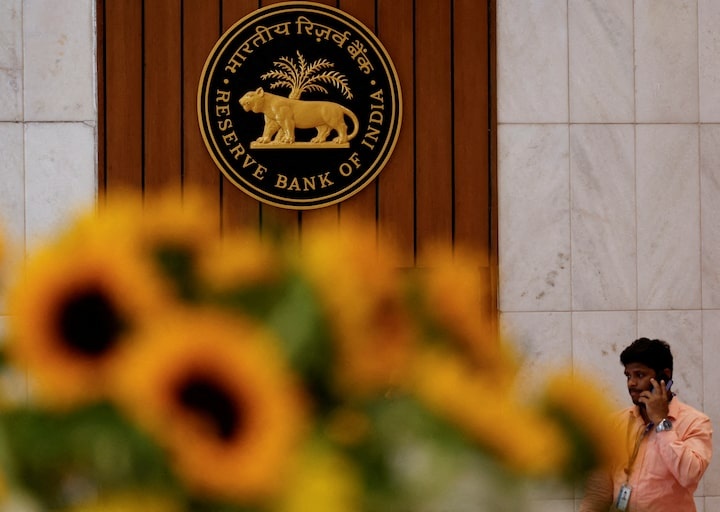

India’s central bank is facing growing pressure from investors and policymakers as the Indian rupee approaches the psychologically significant level of 100 against the U.S. dollar ahead of a key monetary policy decision this week. According to Reuters, the Reserve Bank of India (RBI) is expected to announce its latest interest rate decision on Friday amid concerns over currency stability, inflation risks, and capital outflows.
The challenge comes as rising global oil prices and persistent foreign investor withdrawals have weakened the rupee, increasing scrutiny of RBI Governor Sanjay Malhotra and the central bank’s policy response. Reuters reported on June 2 that financial markets are looking for clear signals from the RBI on how it intends to address mounting pressure on the currency.
Market participants have increasingly focused on whether the central bank will introduce additional measures to support the rupee. According to Reuters, policymakers are considering several options, including encouraging foreign currency deposits from non-resident Indians and adjusting short-term interest rates. However, the RBI has not announced a specific plan.
Governor Sanjay Malhotra said the central bank remains prepared to act if needed. “We will do whatever is required to ensure an orderly foreign exchange market,” Malhotra told Mint, according to Reuters.
The RBI’s upcoming decision is being closely watched because it follows months of currency market intervention. Reuters reported that the central bank has repeatedly sold dollars in foreign exchange markets to slow the rupee’s decline and limit volatility. Traders cited by Reuters said the RBI likely intervened again on May 29 through state-run banks to support the currency.
The pressure on the RBI has drawn comparisons with the situation faced by former RBI Governor Raghuram Rajan in 2013, when India experienced sharp currency depreciation during the so-called “taper tantrum.” Reuters reported that Rajan restored investor confidence through a combination of monetary tightening and measures designed to attract foreign currency inflows.
Economists remain divided over whether interest rate increases are necessary. Inflation remains relatively contained, giving policymakers room to avoid immediate tightening. However, some analysts believe a stronger response could be required if the rupee continues to weaken.
According to a Reuters poll published on May 29, most economists expect the RBI to leave its benchmark repo rate unchanged at 5.25% during the June meeting. The same survey found that a majority of economists now anticipate at least one interest rate increase before the end of the year because of elevated oil prices and currency pressures.
Reuters also reported that some officials within the central bank are reluctant to use interest rate hikes solely to defend the rupee. Sources familiar with the RBI’s thinking told Reuters that policymakers continue to prioritize inflation management rather than targeting a specific exchange rate.
Additional challenges have emerged from weather forecasts. Reuters reported that expectations of a weak monsoon season could raise food prices and affect rural incomes, creating another source of inflation risk for policymakers. Higher food costs would complicate the RBI’s efforts to maintain price stability while supporting economic growth.
The broader economic environment has become more difficult because of external shocks. Reuters reported that higher energy prices linked to conflict in the Middle East have increased costs for India, one of the world’s largest oil importers. Rising import bills have added pressure on the rupee and widened concerns about inflation.
For investors, the RBI’s credibility is becoming a central issue. Analysts told Reuters that market confidence depends not only on policy decisions but also on the central bank’s ability to communicate a consistent strategy. Some investors remain cautious after previous unexpected policy actions that created uncertainty about the RBI’s approach.
Regional and Global Impact
A weaker rupee increases the cost of imports for India, particularly crude oil, which can contribute to higher inflation across the economy. According to Reuters, continued currency weakness could also influence foreign investment flows and affect broader financial market sentiment.
Developments in India are being monitored by international investors because the country remains one of the world’s largest emerging economies. Reuters reported that the RBI’s response may influence perceptions of how emerging-market central banks manage external shocks stemming from higher energy prices and geopolitical tensions.
Background
The RBI reduced interest rates aggressively during 2025 as inflation eased and economic growth remained a priority. According to Reuters, the benchmark repo rate currently stands at 5.25%.
The rupee has come under pressure in 2026 due to rising oil prices, foreign capital outflows, and uncertainty linked to conflict in the Middle East. Reuters reported that the RBI has intervened several times in foreign exchange markets to limit excessive volatility.
The central bank transferred a record dividend to the Indian government in fiscal year 2025-26, supported by strong foreign exchange trading gains generated through its market operations, Reuters reported.
What Happens Next
The RBI’s Monetary Policy Committee is scheduled to announce its interest rate decision on Friday. Reuters reported that most economists expect rates to remain unchanged, though investors will closely examine the central bank’s guidance for future policy.
Markets will also monitor whether the RBI introduces additional measures to support the rupee or strengthen foreign currency inflows. Updated forecasts for inflation and economic growth are expected to provide further insight into the central bank’s assessment of risks facing the Indian economy.