
South Korea Presses EU for Favourable Steel Terms as July Tariff Overhaul Looms
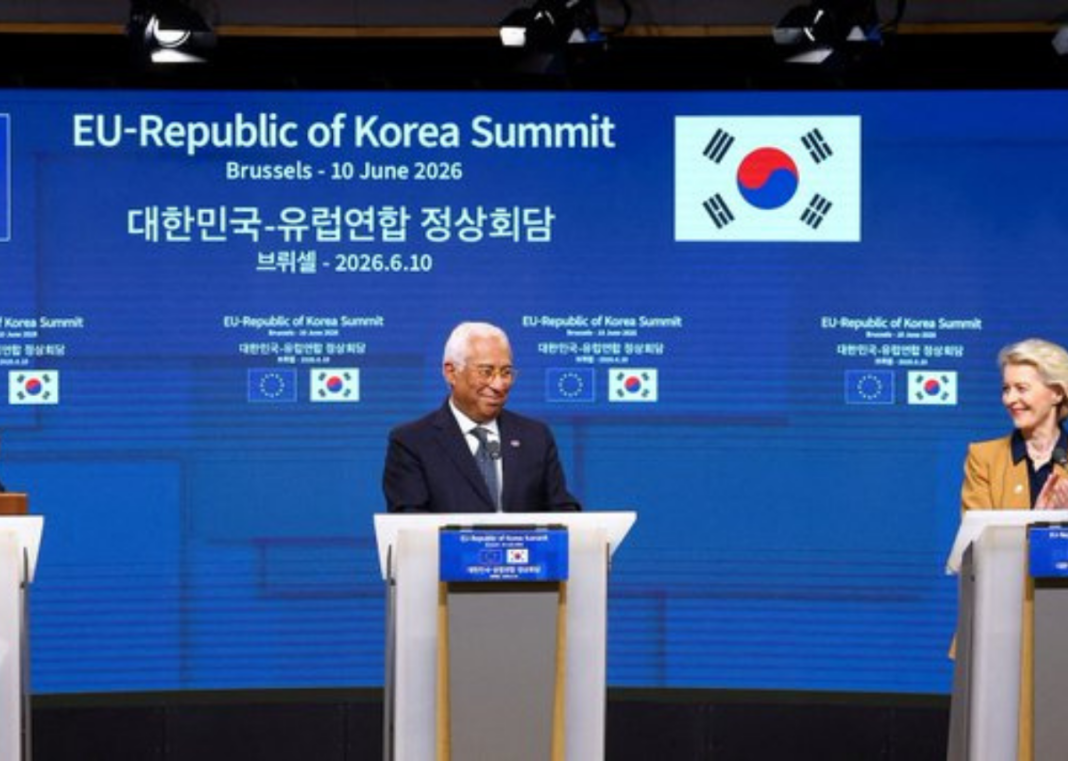
South Korean President Lee Jae Myung asked the European Union to give Korean steel makers “favorable consideration” as the bloc prepares to raise steel import tariffs on July 1, his office said on Thursday, June 11. Lee made the request at an EU-South Korea summit in Brussels on Wednesday, meeting European Council President Antonio Costa and European Commission President Ursula von der Leyen. fxstreet
At the meeting, Lee asked the EU to ensure South Korean steel makers can access the bloc’s market on terms no less favourable than those offered to competitors, citing South Korea’s status as a strategic and free trade partner with the EU, his office said in a statement. fxstreet
What Changes on July 1
The request comes weeks before a sweeping overhaul of EU steel trade rules takes effect. With the existing EU steel safeguard expiring on June 30, 2026, a new tariff-rate quota regime is set to replace it on July 1. Tariff-free import volumes will be cut by roughly 50% from current levels, and the out-of-quota duty will double from 25% to 50%. Wikipedia
The European Commission’s proposal, unveiled in October 2025, would reduce the total duty-free annual steel import quota from 33 million tonnes to 18 million tonnes, and expand the product categories covered from 28 to 30. A new “melt and pour” documentation requirement will also be introduced, under which importers must provide evidence of the country in which the steel was originally produced — a measure designed to prevent steel made in overcapacity countries from entering the EU through further processing elsewhere. WikipediaThreads
Legal analysts have described the regime change as a structural tightening, not a marginal adjustment, noting that significantly more shipments will fall outside quota limits and trigger the higher duty rate. Wikipedia
Stakes for South Korea
The scale of the exposure facing South Korea’s steel sector is substantial. South Korea exported $4.48 billion in steel products to the EU in 2025, according to the Korea International Trade Association, making the EU the country’s largest steel export market. South Korea sold 3.8 million tons of steel to the EU in the 12 months to June 2025, of which 2.63 million tons were shipped under its duty-free country-specific quota, with the remainder under the global quota — also tariff-free. serviceservice
Under the new regime, both those channels tighten simultaneously. With quota volumes roughly halved and above-quota duties doubling to 50%, Korean producers face the prospect of a significant share of current shipments attracting far higher costs from the third quarter of 2026.
The EU pressure compounds an already difficult year for Korean steelmakers. The United States imposed 25% tariffs on South Korean steel products earlier in 2025, and a subsequent US-South Korea trade deal that lowered duties on most Korean exports excluded the steel sector entirely. POSCO and Hyundai Steel, South Korea’s two largest producers, are estimated to have paid a combined $281 million in U.S. tariffs between March and December 2025. A Federation of Korean Industries survey found that steel producers expected their exports to decline 2.3% year-on-year in 2026, with a majority of respondents citing U.S. tariff policies as the greatest threat, followed by exchange rate volatility and Sino-American trade tension. tradingeconomicstradingeconomics
Context of the Summit
The steel exchange took place in the margins of a broader EU-South Korea summit in Brussels, which covered trade, security, and strategic partnership issues. The summit brought together the two sides’ top officials at a moment when Seoul is simultaneously navigating tariff pressure from both its largest and second-largest steel export markets. Lee’s government, which took office in mid-2025, has moved to deepen ties with the EU as a hedge against trade uncertainty elsewhere.
The EU’s new steel measures are formally driven by global overcapacity concerns rather than bilateral trade tensions, but their effect falls unevenly on major exporters. The new regulation applies to all countries outside the European Economic Area, meaning South Korea faces the same regime as China — despite their fundamentally different relationships with the EU, including a longstanding free trade agreement between Seoul and Brussels. That is precisely the tension Lee’s request sought to highlight. Global Banking and Finance
Background
The EU steel safeguard has operated since 2018 as a tariff-rate quota mechanism, introduced in response to trade diversion triggered by U.S. Section 232 tariffs. When the United States restricted steel imports, large volumes — particularly from China — were redirected toward Europe, prompting the EU to erect its own import barrier. A political agreement on the new regime was reached in April 2026, replacing the existing safeguard that had operated across 28 product categories. The agreed text is now being formally adopted by the European Parliament and the Council. The European Steel Association, Eurofer, described the new measures as “a major leap forward to save EU steel” and called for fast-track implementation. South Korea’s steel industry has been undergoing government-backed restructuring, including planned production cuts and a push toward higher-grade specialty products, to respond to margin pressure from global oversupply and Chinese competition. Global Banking and Finance + 2
What Happens Next
The European Commission is preparing two implementing acts: one covering the country-by-country allocation of quotas, and one specifying the documentary evidence needed to satisfy the melt-and-pour requirement. Both must be in place before the July 1 effective date. The Brussels summit did not yield a public EU commitment to adjust quota allocations for South Korea, and no formal announcement followed Lee’s request. Whether Seoul secures any preferential treatment in the quota-allocation implementing act — which the Commission is still finalising — is expected to become clear in the days before the June 30 deadline. Devdiscourse