
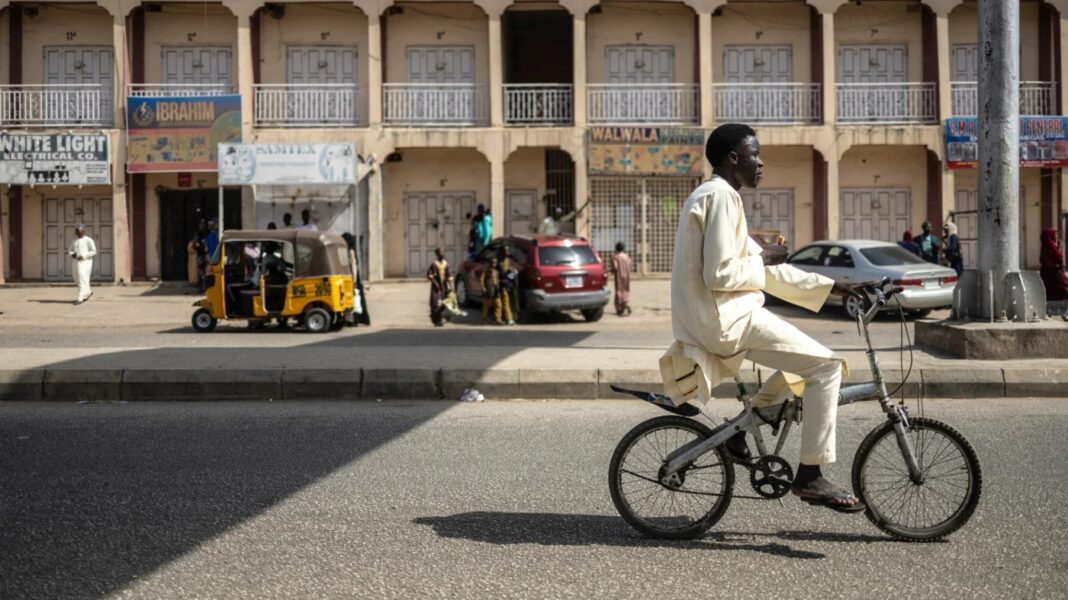

Hundreds of members and sympathisers of the Islamic Movement in Nigeria have staged pro-Iran demonstrations across multiple Nigerian cities since US and Israeli strikes on Iran began on February 28, 2026. The protests, held in Kano, Sokoto, Gombe and Abuja, were organised largely by the Islamic Movement in Nigeria — known as the IMN — a Shia organisation that the Nigerian government proscribed in 2019. Nearly 100 days after the strikes that triggered a wider conflict in the Middle East, the rallies continue, drawing participants who describe the war as a direct affront to their religious identity.
The demonstrations are small relative to Nigeria’s population of over 200 million, and the country’s Muslim majority is predominantly Sunni. But for the country’s Shia minority, which maintains deep ideological ties to Tehran, the conflict thousands of kilometres away carries domestic meaning that extends well beyond foreign policy.
A Community With Deep Ties to Tehran
The IMN was founded under the leadership of Sheikh Ibrahim el-Zakzaky in the late 1970s and 1980s, inspired directly by Iran’s 1979 Islamic Revolution. According to Middle East Eye, the movement built its identity around social welfare initiatives, religious activism and opposition to western political influence. Over subsequent decades, the IMN developed formal educational and religious connections with Iran, with some members travelling to Tehran to pursue Islamic studies.
Those links hardened the community’s identification with Iran as a symbol of Shia resistance. Today, that symbolism drives the street protests in northern Nigerian cities, where demonstrators carry portraits of Iranian leaders alongside images of Zakzaky and wave Iranian flags as they march.
“We believe Iran is standing against oppression and foreign domination,” Ibrahim Musa, a 32-year-old trader who joined one of the demonstrations in Kano, told Middle East Eye. “As Shia Muslims, we feel connected to their struggle.”
The emotional pull of the conflict is not unique to Nigeria. Shia communities in India, Senegal and Tanzania have held similar vigils since the February 28 attacks. But the Nigerian case is shaped by a specific domestic history of state repression that gives the protests an additional dimension.
Domestic Grievances Feeding International Solidarity
The IMN has been in direct conflict with the Nigerian state for more than a decade. In December 2015, soldiers killed hundreds of the movement’s members in the city of Zaria following a road dispute between an IMN procession and a military convoy. Human Rights Watch documented the killings and called on the Nigerian government to end impunity. The government proscribed the movement in 2019, a designation that remains in force.
Since then, IMN members and supporters have staged regular demonstrations demanding justice for those killed in 2015 and formal recognition of the movement. International events involving Iran have historically served as additional rallying points, allowing members to situate their domestic grievances within a broader narrative of Shia resistance.
Political scientist Abdulqodir Yunus told Middle East Eye that the demonstrations place the Nigerian government in a delicate diplomatic position, given its concurrent relationships with western countries, Israel, Gulf states and Iran. He said the government is expected to “balance freedom of expression with security concerns,” adding that “these protests show that international conflicts now have local dimensions.”
Expert Warnings on Social Fragmentation
Moses Abolade, a peacebuilding consultant with the Peace Education and Practice Network and an expert on African geopolitics, told Middle East Eye that Iran has spent decades cultivating influence across Africa through scholarships, religious institutions, humanitarian projects and diplomatic outreach. While Tehran’s reach on the continent remains more limited than that of China, the United States or Russia, it has built durable loyalty among specific Shia communities.
Abolade said the protests reflect a broader pattern in which global conflicts reshape local identities. “For many, Iran represents not just a country but a symbol of religious and political solidarity,” he told Middle East Eye. “While such protests may not have direct geopolitical impact, they can still offer symbolic morale and reinforce narratives of international solidarity that strengthen Iran’s ideological posture against Western powers.”
But Abolade cautioned against reading the demonstrations as broadly representative. He stressed that they do not reflect the views of all Nigerians or all Nigerian Muslims, and warned of the risks of importing external conflicts into a society already under significant pressure.
“The deeper concern is how transnational narratives, social media, and political tensions can deepen polarisation, misinformation, and sectarian mistrust within already fragile societies,” he told Middle East Eye. “Nigeria’s diversity requires that such issues be approached with caution and responsibility to avoid importing external conflicts into local realities.”
Security Concerns in Northern Nigeria
Not all Nigerians view the demonstrations as a straightforward expression of religious solidarity. Retired Colonel AY Gwandu, a chief security officer at Usmanu Danfodiyo University, told Middle East Eye there is “concern whenever foreign conflicts begin to influence local religious groups,” adding that residents fear the protests could “deepen divisions or create security risks.”
Nigeria has been managing violent insurgencies in the north and northeast for well over a decade, with Boko Haram and the Islamic State West Africa Province responsible for tens of thousands of deaths and mass displacement. The IMN is ideologically distinct from those Sunni extremist groups, and Nigerian security agencies have treated them separately. Recent IMN demonstrations linked to the Iran conflict have remained largely peaceful, Middle East Eye reported. But the geographical and religious overlap — northern cities, Muslim populations, grievances against state authority — means security agencies continue to monitor IMN activities closely.
Abdullahi Sani, a Shia cleric in Sokoto, framed the protests in terms that go beyond politics. “Supporting Iran is not only about politics,” he told Middle East Eye. “Many people see it as defending Muslim dignity against powerful countries.”
What the Protests Signal for Iran’s Reach in Africa
For Tehran, which faces diplomatic isolation and extensive international sanctions following the February 28 strikes, displays of solidarity in West African cities carry symbolic value. They signal that its revolutionary message retains resonance outside the Middle East, particularly among communities that feel excluded or persecuted within their own national contexts.
That resonance did not arrive by accident. According to Abolade, Iran has systematically cultivated ties across Africa for decades, targeting communities through religious education, cultural exchange and humanitarian provision. The result is a network of ideological affinity that activates when Tehran comes under direct military pressure.
At the National Mosque in Abuja, Fatima Aliyu, a university student, told Middle East Eye what drew her to the demonstration. “These protests give us a voice,” she said. “Even though we are far away, we want Iran to know they are not alone.”
Background
The IMN was founded in northern Nigeria in the late 1970s under Sheikh Ibrahim el-Zakzaky, who drew direct inspiration from Iran’s 1979 Islamic Revolution. The movement grew through the 1980s and 1990s as a welfare and activist organisation with formal links to Iranian religious institutions. In December 2015, Nigerian soldiers killed hundreds of IMN members in Zaria after a confrontation between an IMN procession and a military convoy. The Nigerian government proscribed the movement in 2019. The broader conflict that triggered the current wave of protests began on February 28, 2026, when US and Israeli forces struck Iran in what officials described as strikes targeting Iran’s military and nuclear infrastructure.
What Happens Next
The Nigerian government has not issued a formal response to the protests, and authorities have allowed the recent demonstrations to proceed without significant intervention, according to Middle East Eye. IMN members are expected to continue holding rallies so long as the conflict in the Middle East persists, given the movement’s record of using international events to reinforce domestic solidarity. Security agencies in northern Nigeria will continue monitoring IMN gatherings, retired Colonel Gwandu indicated, particularly in cities already affected by existing insurgencies. Whether the protests produce any shift in Nigeria’s official foreign policy posture toward Iran, the United States or Israel remains unclear; political observers cited by Middle East Eye said open expressions of support for Tehran by domestic groups have not historically altered Nigerian government positions.


