
UAE’s Ruling Family Collected Over €71 Million in EU Farming Subsidies, Investigation Finds
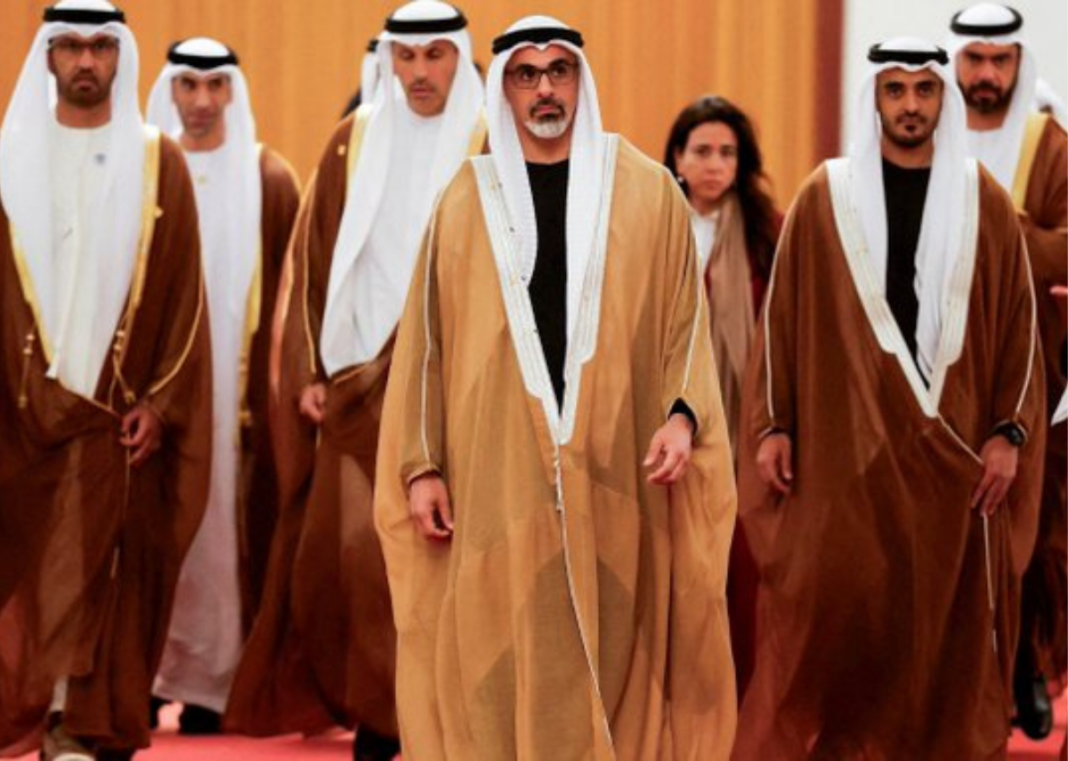
The Al Nahyan dynasty — rulers of the United Arab Emirates and the second-wealthiest family in the world — received more than €71 million in European Union agricultural subsidies over six years, according to a cross-border investigation published on May 6, 2026. DeSmog, in partnership with The Guardian, Spain’s El Diario, and Romania’s G4Media, traced 110 separate EU subsidy payments flowing to a network of companies and subsidiaries controlled by the Al Nahyans and Abu Dhabi’s state-linked investment firm ADQ, across farmland in Romania, Spain, and Italy.
A Subsidy System Built for Small Farmers — Captured by a Gulf Dynasty
The EU’s Common Agricultural Policy (CAP) distributes roughly €54 billion each year to farmers and rural communities across the bloc. That figure represents one-third of the EU’s entire annual budget, and its purpose is to support food production, rural livelihoods, and agricultural sustainability within member states.
But the DeSmog investigation exposes a structural flaw in how that money is distributed. CAP payments are allocated largely on the basis of land area, meaning the larger the farm, the larger the check. Foreign investors and sovereign-linked entities can own qualifying farmland within EU borders and receive payments without restriction. The investigation reviewed data on thousands of CAP beneficiaries between 2019 and 2024 and found no mechanism barring payments to firms controlled by foreign governments or royal families.
The biggest single beneficiary identified in the inquiry is Agricost, a Romanian agricultural company that owns the largest farm in the entire European Union — a 57,000-hectare operation roughly five times the area of Paris. In 2024 alone, Agricost received more than $10 million in direct CAP payments. According to DeSmog’s analysis, that sum was more than 1,600 times the amount received by the average EU farm in the same year.
The Al Nahyans acquired Agricost in 2018 for an estimated €230 million, routed through Al Dahra, the UAE agribusiness group. Al Dahra was founded by Hamdan bin Zayed Al Nahyan, a brother of UAE President Mohammed bin Zayed. Abu Dhabi’s sovereign wealth fund, ADQ, subsequently purchased a 50 percent stake in Al Dahra in 2020. DeSmog reported that the firm’s board continues to be chaired by Hamdan, with his son Zayed bin Hamdan — who is married to President Mohammed bin Zayed’s daughter — also serving on the board. No public documentation of the company’s current full ownership structure is available.
Since 2012, Al Dahra has also acquired multiple farming companies in Spain covering more than 8,000 hectares of agricultural land. Those Spanish subsidiaries collectively received over €5 million in CAP subsidies between 2015 and 2024, according to the investigation. Additionally, ADQ’s 2022 acquisition of Unifrutti, an Italian fruit producer valued at approximately $830 million, added another node to the network. DeSmog’s analysis found that Unifrutti’s Italian farms received at least €186,000 in CAP payments in the three years following that purchase.
Taken together, the investigation traced more than €71 million in total subsidy payments to the Al Nahyan-linked network between 2019 and 2024.
” Scrutiny Mounts
The Al Nahyan family and all companies named in the investigation did not respond to multiple requests for comment from DeSmog. ADQ declined to provide a statement.
Critics of the CAP system have been vocal about what the findings represent. Marc Olivier Herman, a senior agriculture policy adviser at Oxfam, told The Guardian that the revelations illustrate a deep structural problem in how EU farm subsidies are governed.
“The CAP is supposed to support farmers and rural communities — not underwrite the food security strategies of some of the world’s wealthiest autocratic governments,” Herman said. “What this investigation shows is that without transparency and effective ownership checks, European taxpayers are inadvertently funding the agricultural expansion of a Gulf dynasty.”
Brid O’Brien, head of the Irish Rural Link advocacy network, told DeSmog that the subsidy structure disproportionately rewards scale over stewardship. “When a single farm can receive 1,600 times what a family farm receives, the policy is not delivering for the people it was designed to serve,” she said, describing the findings as evidence that CAP reform must address land concentration and beneficial ownership transparency.
Food Security Strategy Drives Global Land Accumulation
The EU subsidy flows cannot be separated from the broader strategic context driving UAE agricultural investment worldwide. The Emirates imports up to 90 percent of its food. Extreme heat, water scarcity, and the near-absence of arable soil make domestic food production an existential vulnerability for a country of more than 10 million people.
In response, Abu Dhabi has pursued one of the most aggressive sovereign farmland acquisition programs in the world. Over the past 15 years, UAE-linked entities have purchased approximately 960,000 hectares of agricultural land globally — spanning Africa, South America, and Europe. The crops grown on the EU farms identified in the investigation — primarily alfalfa and other animal feed crops in Spain and Romania — are largely destined for export to Gulf markets. Al Dahra holds a long-term government contract to supply animal feed to the UAE, in part supporting the country’s rapidly expanding dairy sector.
Sudan has also become a critical node in this strategy. The UAE’s International Holding Company (IHC) and Jenaan Investment together farm more than 50,000 hectares of Sudanese land. A further 162,000 hectares fall under the Abu Hamad farming project, a joint venture between IHC and Dal Group, Sudan’s largest private conglomerate. That project is linked to Abu Amama port on the Red Sea, constructed and operated by Abu Dhabi’s AD Ports Group, creating an integrated supply chain from farmland to export terminal.
Human rights organizations have noted that the UAE’s documented support for Sudan’s Rapid Support Forces (RSF) — a paramilitary group that has been widely accused of genocide in the ongoing Sudanese civil war — has coincided with Abu Dhabi’s deepening agricultural interests in the country.
Regional and Global Implications
For the European Union, the findings present a significant transparency and governance challenge. EU member states are obligated to publish data on CAP beneficiaries, but the beneficial ownership structures behind large agricultural firms — particularly those with foreign sovereign links — often remain opaque. The investigation found that no EU-level rule currently bars foreign state-linked entities from receiving agricultural subsidies, provided they hold qualifying farmland within the bloc.
For Romania in particular, the implications are substantial. Agricost’s 57,000-hectare holding represents a concentration of land and subsidy entitlement unprecedented in EU agriculture. Romanian civil society groups and agricultural unions have previously raised concerns about foreign ownership of the country’s farmland, which accelerated sharply after EU accession in 2007.
For Gulf states broadly, the investigation underscores how sovereign food security strategies have matured into sophisticated global supply chains — ones that increasingly draw on the financial architecture of host countries, including their subsidy programs, to reduce acquisition and operating costs. The UAE is not alone in this approach; Qatar and Saudi Arabia operate similar foreign farmland programs, though on smaller scales.
For European legislators and the European Commission, the investigation adds pressure to an already fraught debate over CAP reform ahead of the next multi-year EU budget cycle. Calls for mandatory beneficial ownership disclosure for large subsidy recipients — long resisted by agricultural lobby groups — are likely to intensify in the aftermath of the DeSmog report.
Background: The CAP and the Land Ownership Debate
The Common Agricultural Policy has existed since 1962 and remains the EU’s largest single spending program. Its original purpose was to stabilize food supplies in postwar Europe and support farm incomes. Over subsequent decades, the policy shifted from production-linked payments toward area-based direct payments, inadvertently creating an incentive structure that rewards landowners rather than active farmers.
Critics have argued for years that this model disproportionately funnels public money to the largest landholders — including investment funds, aristocratic estates, and, now demonstrably, sovereign-linked foreign entities. A 2020 European Court of Auditors report found that EU member states lacked effective controls over who ultimately benefits from CAP payments, particularly in cases involving complex corporate structures.
The 2023–2027 CAP framework introduced some modest transparency requirements, but beneficial ownership disclosure — the mechanism that would make investigations like DeSmog’s unnecessary — remains voluntary in most member states.
What Happens Next
The DeSmog investigation, published in partnership with The Guardian and European outlets, is expected to prompt formal inquiries from several EU member-state governments and possibly from the European Parliament’s Committee on Agriculture and Rural Development. The European Commission has faced previous pressure to tighten CAP eligibility rules around foreign state-linked entities but has not acted legislatively on the issue.
Advocacy groups including Oxfam and a coalition of European farming unions are expected to use the findings to advance calls for mandatory beneficial ownership transparency as a condition of CAP eligibility — a measure that would require legislative change within the existing CAP framework or through a future reform cycle.
The Al Nahyan family, Al Dahra, and ADQ have not indicated any intention to divest their European agricultural holdings or alter their subsidy claims. Agricost’s operations in Romania, Al Dahra’s Spanish subsidiaries, and Unifrutti’s Italian farms are expected to remain active CAP beneficiaries into the next budget cycle, absent regulatory intervention.
The EU’s next multi-year financial framework — covering the period after 2027 — will be negotiated in the coming years, and agricultural subsidy reform will be a central battleground. Whether the Al Nahyan investigation becomes a catalyst for meaningful structural change, or joins a long list of prior exposés that produced symbolic outrage and no legislative action, remains to be seen.