
UK and Japan Agree £18 Billion Investment and Technology Partnership at Downing Street
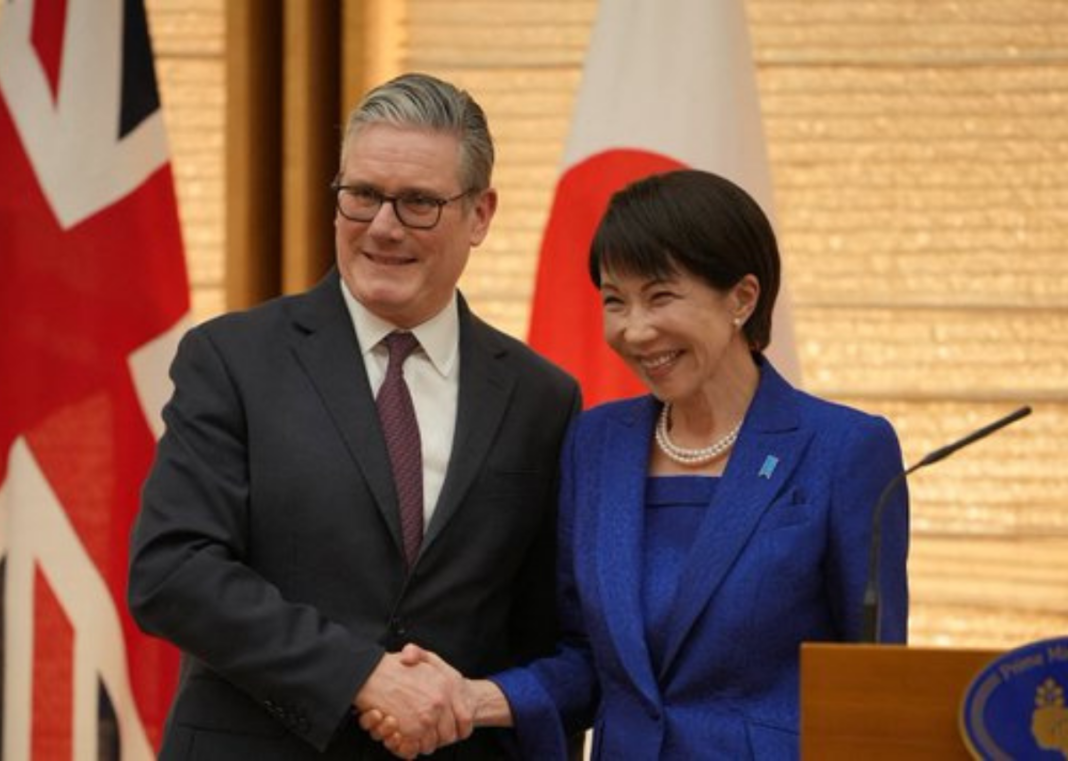
British Prime Minister Sir Keir Starmer and Japanese Prime Minister Sanae Takaichi agreed investment and technology partnerships worth more than £18 billion ($24 billion) at Downing Street on Sunday, June 14, ahead of the G7 summit in France. The deals, set out by the British government and reported by Reuters, are expected to create tens of thousands of jobs across both countries.
The agreements include a Japanese five-year investment pipeline of more than £9 billion in infrastructure and financial services, alongside plans to unlock up to £9 billion for UK offshore wind projects. The offshore wind component is expected to support 5.9 gigawatts of capacity across projects in Scotland and the Celtic Sea. Yahoo!Yahoo!
Starmer said the package constituted a clear signal of international confidence in the UK economy. “The visit delivers a major vote of confidence in the UK economy, with Japanese investors setting out a five-year investment pipeline worth more than £9bn, expected to build new towns and provide high-quality office space and innovation hubs,” he said, according to City AM.
The two countries also launched a new technology partnership covering areas such as AI, semiconductors, and quantum computing. The British government confirmed that Rolls-Royce will work on nuclear research with Japan’s Atomic Energy Agency under a new export agreement, while Japanese life sciences firm Eisai is set to invest £48 million to work on AI and quantum tech. Hitachi Energy is also among the companies expected to announce new collaborations spanning power grid expansion. Yahoo! + 2
Takaichi, speaking to reporters before her departure from Tokyo on June 13, said her discussions in London would go beyond trade. “In addition to the security cooperation that Japan is already advancing with both countries, I also hope to engage in thorough discussions on further strengthening cooperation in areas such as AI, quantum technologies, space, semiconductors, and offshore wind power, including advanced technology development and the strengthening of supply chain resilience,” she told the press, according to a statement published by the Prime Minister’s Office of Japan.
One significant element of the broader bilateral relationship was not confirmed at the meeting. Downing Street did not provide details on the Global Combat Air Programme (GCAP) in security, with the Defence Investment Plan having been set back by another delay following the resignation of Defence Secretary John Healey. The GCAP is a £6 billion joint stealth fighter jet programme involving the UK, Japan, and Italy. A text shared on the investment deal said parties expected to confirm their “shared commitment” to GCAP while an international contract would be signed “by the end of the month.” cityamcityam
Business leaders from both countries also attended the discussions before the G7 summit in France. Takaichi’s visit comes ahead of the June 15–17 G7 Evian Summit in France. At that summit, Takaichi said she intended to present proposals on energy security and critical minerals supply chain resilience to G7 partners. Investing.comThe Jakarta Post
Regional and Global Impact
The deal reinforces a pattern of the UK pursuing bilateral investment agreements as a framework for post-Brexit economic growth. The UK government said the broader package is expected to support job creation across the offshore wind, infrastructure, and financial services sectors. The offshore wind component — targeting Scotland and the Celtic Sea — responds directly to the UK’s legally binding clean energy commitments, though City AM reported that analysts have raised separate questions about whether the UK’s current renewables share, which fell as low as 16.4 per cent, is consistent with reaching the 42.5 per cent target by 2030. cityam
For Japan, the agreement advances Prime Minister Takaichi’s strategy of deepening ties with like-minded democracies while diversifying from over-reliance on Chinese supply chains for critical materials. The investments in AI, semiconductors, and quantum computing align with a wider push by Tokyo to build resilience in strategic industries alongside allies. The UK has established a reputation as a hub for AI research and innovation, while Japan is a global heavyweight in semiconductor manufacturing. Crypto Briefing
Background
The UK-Japan Comprehensive Economic Partnership Agreement, known as CEPA, has been in effect since January 2021, providing the existing framework for trade and investment flows between the two countries. The two governments designated their relationship as an “Enhanced Global Strategic Partnership” in January 2023, committing to closer cooperation on defence, technology, and economic security. Starmer visited Tokyo on January 31, 2026 — his first visit to Japan as Prime Minister — where he and Takaichi agreed to deepen ties across cybersecurity and critical minerals, and issued a joint statement on a Japan-UK Strategic Cyber Partnership. At that meeting, Starmer extended an invitation for Takaichi to visit Chequers, the official country residence of the UK Prime Minister. The June 14 meeting at Downing Street fulfils that commitment. Japan’s Liberal Democratic Party returned to power after its February 2026 general election, keeping Takaichi in office and clearing the path for the visit to proceed. Crypto Briefing
What Happens Next
The parties have said an international contract on the Global Combat Air Programme is expected to be signed by the end of June 2026. Both Starmer and Takaichi are set to travel to Evian, France for the G7 summit from June 15 to 17, where energy security, critical minerals, and geopolitical crises in the Middle East, Ukraine, and the Indo-Pacific are on the agenda. The Japanese five-year investment pipeline in UK infrastructure and financial services is expected to be deployed progressively, with the British government intending to track job creation outcomes across the offshore wind, infrastructure, and life sciences sectors. cityam