
Vietnam Plans to Raise Airline Foreign Ownership Cap to 49%
Vietnam’s government is moving to raise the foreign ownership limit in its domestic airlines from 34% to 49%, according to state media, which cited a draft document from the Construction Ministry published on Tuesday, May 13. The government of Vietnam wants to make it easier for people, from countries to invest in domestic airlines in Vietnam. The proposal would open Vietnamese carriers to significantly greater international investment as the country’s airlines struggle with rising operational costs. MarketScreener
The draft aims to help carriers attract investment, strengthen their finances and access modern technology as well as management and operational expertise from foreign partners, Dau Tu newspaper reported, citing the document. The draft is, about helping carriers work with foreign partners to make themselves stronger. MarketScreener
The timing is pressing. Local carriers have been forced to scale back operations because of surging jet fuel costs caused by the Iran war. On Wednesday, the Vietnamese government acknowledged the strain directly, saying local airlines will “further adjust their operations to optimise costs,” without elaborating. MarketScreener
The Ministry of Construction said the proposed 49% cap would not compromise domestic investors’ control of airlines or their decision-making authority, particularly in sensitive matters related to national security and air transport operations. VnEconomy
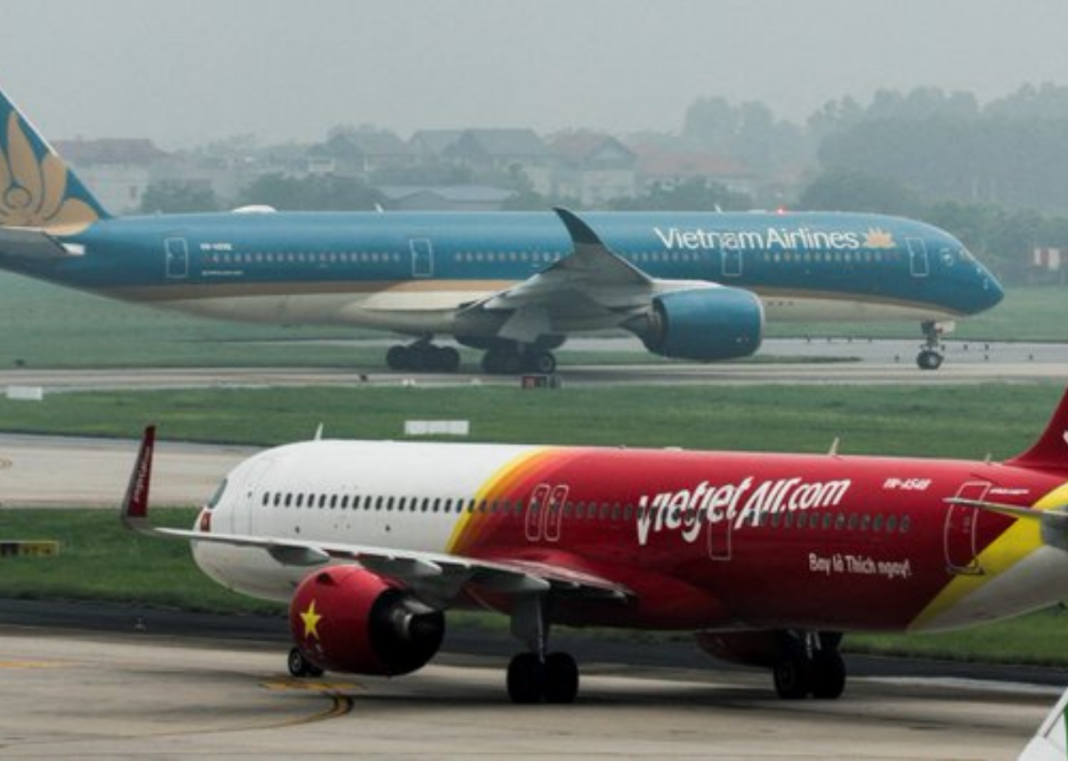
Vietnam currently has seven airlines, led by flag carrier Vietnam Airlines and budget airline Vietjet. Several of those carriers are under financial strain and actively seeking fresh capital. MarketScreener
The proposal has been in circulation for months. During its restructuring in 2024, Bamboo Airways had already proposed increasing the foreign ownership cap to 49%, arguing that the current limit discourages investors due to restricted participation in decision-making. The new draft decree from the Ministry of Construction formalises that direction across the entire sector. Travel Daily News
Experts have urged caution alongside reform. Tran Tho Dat, an economist, told Viet Nam News that maintaining the 34% cap would preserve domestic control but limit access to capital and global expertise, while raising the cap to 49% could unlock investment but carries risks of shifting control and conflicts of interest. The Star
“A sound policy must ensure that integration does not undermine national autonomy, but instead strengthens the internal capacity of the economy,” Dat said. The Star
Dat said a balanced approach should be considered — allowing higher foreign ownership while strengthening oversight mechanisms to ensure domestic control over strategic decisions. Such a framework would require tighter supervision of related-party transactions, transfer pricing and technology dependencies, alongside improvements in corporate governance and regulatory capacity, he said. Asia News Network
The ownership structure of Vietnamese airlines is directly tied to questions of corporate control. Shareholders holding more than 35% can exert significant influence over strategic decisions through veto rights, meaning that raising the cap to 49% could affect not only capital structure but also effective control rights. The Star
The draft also includes revised financial requirements for carriers. Airlines operating up to 30 aircraft would be required to maintain a minimum equity of VND 300 billion (approximately $11.55 million), while carriers operating 31 aircraft or more would need at least VND 700 billion (approximately $26.95 million). Travel Daily News
Regional and Global Impact
Raising the cap would also bring Vietnam in line with its commitments under the free trade agreements it has signed, the draft said. The move would reduce a long-standing friction point in trade negotiations and signal broader openness to foreign capital in regulated sectors. MarketScreener
Regionally, Thailand, Indonesia and Cambodia already allow foreign ownership of up to 49% in airlines, while the Philippines permits 40%. Vietnam has lagged behind its Southeast Asian neighbours on this metric for nearly a decade. Travel Daily News
For Vietnam Airlines specifically, the change could deepen existing international partnerships. The flag carrier already has foreign shareholding through ANA Holdings of Japan; increasing the cap could allow that partnership to deepen or pave the way for additional global carriers or institutional investors to participate more substantially. Travel And Tour World
Aviation is widely regarded as a strategic infrastructure sector, closely linked to airspace management, emergency response capabilities and national connectivity. Limits on foreign ownership are therefore often viewed as structural safeguards rather than temporary protectionist measures. The Star
Background
Vietnam previously allowed a 49% foreign ownership cap before reducing it to 30% in 2016 and later increasing it to 34% in 2020. The current 34% limit has drawn persistent criticism from foreign investors and some domestic carriers as too restrictive. The Ministry of Finance, which previously reviewed the proposal, urged caution, noting that under Vietnam’s commitments to the World Trade Organization, the country had not committed to open its domestic air transport market, but only to allow foreign airlines to provide services through ticket offices or agents in Vietnam. The Civil Aviation Authority of Vietnam sits under the Ministry of Construction, which leads the drafting process. Asia News NetworkThe Star
What Happens Next
The draft decree is part of the implementation framework for Vietnam’s Law on Civil Aviation and must pass through further government review before taking effect. The government will review it carefully. The Civil Aviation Authority of Vietnam has indicated the higher foreign ownership limit is intended to help domestic carriers secure additional capital, management expertise and operational experience from international partners. The government has not announced a timeline for finalising the decree. Vietnamese carriers have been told they will need to further adjust operations to optimise costs in the interim, suggesting the financial pressure on the sector will continue regardless of when the new ownership rules take effect. VnEconomyMarketScreener