
The United States has spent twenty-nine billion dollars fighting Iran since the fighting started in February. The Pentagon said this on Tuesday, May 12. A fragile ceasefire is showing signs of falling apart. Diplomatic efforts are also increasing across the region. The United States is still fighting Iran.
Jules Hurst III, the Defense Department’s acting comptroller, told lawmakers during a Capitol Hill budget hearing that the figure represented an increase of $4 billion from the estimate Defense Secretary Pete Hegseth offered on April 29. Hurst said the revised total covers updated equipment repair and replacement costs, as well as the ongoing operational expenses of sustaining American forces across the theater.
The disclosure came hours after President Donald Trump declared on Monday that the ceasefire with Iran was on “massive life support.” Trump described Tehran’s latest response to a US peace proposal as “garbage,” adding: “After reading that piece of garbage they sent, I didn’t even finish reading it.”
Iran’s side was equally blunt. Tehran had earlier dismissed Washington’s proposal as “one-sided” and accused Trump of making “unreasonable, excessive demands,” according to Al Jazeera.
The hearings on Tuesday marked Hegseth’s first appearance before Congress since the White House formally notified lawmakers that hostilities initiated by the United States and Israel against Iran on February 28 had “terminated.” Hegseth appeared alongside General Dan Caine, chairman of the Joint Chiefs of Staff, to advance a $1.5 trillion budget request for fiscal year 2027 — a request that includes additional emergency funding for the ongoing war.
Democrats used the session to hammer the administration. Representative Rosa DeLauro, the top Democrat on the House Appropriations Committee, demanded accountability. “The question must be answered at the end: what have we accomplished and at what cost?” she told reporters, according to Al-Monitor. Fellow Democrat Betty McCollum accused the Pentagon of “a consistent lack of transparency” and demanded clarity on long-term US strategy before any additional funds were approved.
The $29 billion figure does not include the cost of repairing damaged US military installations in the region. Hurst was candid about the gaps. “We have a lot of unknowns there,” he said. “We don’t know what our future posture is going to be. We don’t know how we construct those bases, and we don’t know what part our allies or partners could pay into our MILCON costs.”
Despite the declared truce, both sides have continued exchanging fire near the Strait of Hormuz. Iran launched missiles, drones, and small boats at US warships transiting the sea earlier this month, prompting American retaliatory strikes on Iranian military sites, Defense News reported. Hegseth described the situation on Tuesday as still fluid. “As you know, for the most part, ceasefire means fire is ceasing,” he said. “We have a plan to escalate, if necessary. We have a plan to retrograde, if necessary.”
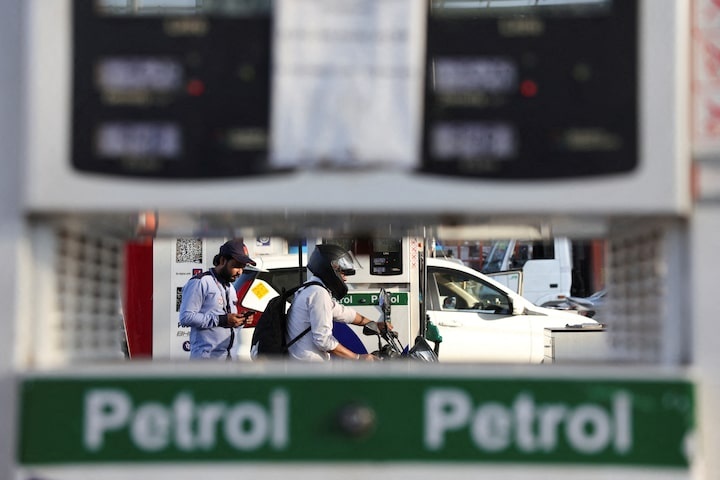
The Strait of Hormuz is still a problem when it comes to money and it is right, in the middle of the fight. The Strait of Hormuz is really important because it is a place where oil is transported and that is why the Strait of Hormuz is so crucial. Oil prices rose for a third consecutive day on Tuesday as hopes for a shipping deal cooled. Brent crude futures climbed close to $108 a barrel, up nearly four percent on the day, according to Middle East Eye. Stock markets moved in the opposite direction: Europe’s STOXX 600 fell 0.6 percent, while US futures for the S&P 500 and Nasdaq dropped 0.4 percent and 0.9 percent, respectively.
The negotiations deadlock stems from a fundamental mismatch in priorities, CNN reported. Trump is pushing for what analysts described as a “quick and easy” win, including immediate Iranian concessions on its nuclear program. Tehran, in turn, is demanding a phased approach that would allow it to extract its own concessions first. Iran’s latest counter-proposal, which Trump rejected outright on Sunday, reportedly focused on ending the war on all fronts — including in Lebanon, where Israel is engaged in operations against Hezbollah.
Regional diplomacy moved fast on Tuesday as multiple governments sought to position themselves around the stalled talks.
Pakistani Foreign Minister Ishaq Dar spoke with Chinese Foreign Minister Wang Yi about Islamabad’s mediation efforts. Pakistan’s Ministry of Foreign Affairs said Dar outlined “ongoing efforts to facilitate engagement between Iran and the United States” during the call. Wang Yi expressed support. “Foreign Minister Wang Yi reiterated appreciation and support for Pakistan’s constructive mediation role,” the ministry said in its readout. Both sides also agreed on the importance of ensuring normal shipping passage through the Strait of Hormuz.
Turkey added its voice. Foreign Minister Hakan Fidan, speaking at a press conference in Doha alongside his Qatari counterpart on Tuesday, said Ankara supported efforts to reopen the strait and that it should not be used as a weapon. Fidan confirmed Turkey was contributing to the Pakistan-led mediation push to find a negotiated end to the conflict.
Kuwait meanwhile announced the arrest of four individuals it said were affiliated with Iran’s Islamic Revolutionary Guard Corps (IRGC). The country’s interior ministry said the men were detained after attempting to enter the Gulf state by sea, and that a Kuwaiti armed forces member was injured in clashes during the interdiction, state news agency Kuna reported.
Lebanon presented a separate and deteriorating picture. Lebanon’s Health Minister Rakan Nasseredine released video footage on Tuesday that he said showed repeated Israeli strikes targeting paramedics and healthcare workers across the country. One clip captured first responders attempting to evacuate a wounded colleague inside an ambulance before a blast shattered the vehicle’s rear windows.
“The systematic targeting of healthcare workers and facilities is a grave violation of international humanitarian law,” Nasseredine wrote on X alongside the footage. “We place this evidence before the world: silence is complicity.” Two Lebanese civil defence members were also killed on Tuesday in an Israeli strike on the southern town of Nabatieh while they were conducting a rescue mission following an earlier attack, Lebanon’s state news agency NNA reported.
Inside Israel, military pressures were mounting. Israeli army chief of staff Eyal Zamir told a classified session of the Knesset’s Foreign Affairs and Defence Committee on Monday that the military’s reserve forces could face collapse within months without urgent legislative action. “In January 2027, due to the reduction of mandatory service to 30 months, the IDF will lose thousands more combat soldiers,” Zamir said, according to i24 News. “The reserve army will collapse into itself.” He urged lawmakers to pass laws extending mandatory service to 36 months and revising reserve duty regulations.
Background
The United States and Israel launched coordinated strikes against Iran on February 28, 2026, targeting its nuclear facilities. A ceasefire was declared in late March, but violations by both sides have continued since. Pakistan and China put forward a five-point peace initiative on March 31, calling for an immediate end to all hostilities. The US had estimated the war cost $11.3 billion in its first six days alone, according to Reuters. The Strait of Hormuz, through which roughly 20 percent of global oil supply passes, has remained partially blocked throughout the conflict, with Iran using access to the waterway as a central bargaining chip. The war is now approaching the end of its third month with no formal peace framework in place.
What Happens Next
President Trump will visit China this week for a state visit. This trip will likely affect talks that are happening now. China is helping with mediation. Uses a lot of energy. The closure of the Hormuz Strait affects China. President Trump and China are players in this situation.
The visit comes as President Trump and China have roles in these negotiations. China buys a lot of energy and the Hormuz Strait closure impacts them. President Trump wants to discuss this with Chinas leaders. The trip is happening now. Will likely change how negotiations go. President Trump will talk to Chinas leaders about their role in mediation and the Hormuz Strait. China is very important, in this situation. The BRICS foreign ministers meeting is scheduled for May 14–15 in New Delhi, where Iran is a member of the grouping, and the Iran war is expected to feature prominently in discussions. Pakistan’s mediation efforts are continuing, according to Islamabad’s foreign ministry. The Israeli Supreme Court is due to rule on the legality of Prime Minister Benjamin Netanyahu’s appointment of Roman Gofman as Mossad chief, following a formal challenge by outgoing director David Barnea. The US Senate is set to hear additional testimony from Defense Secretary Hegseth and General Caine following their House appearance on Tuesday.