
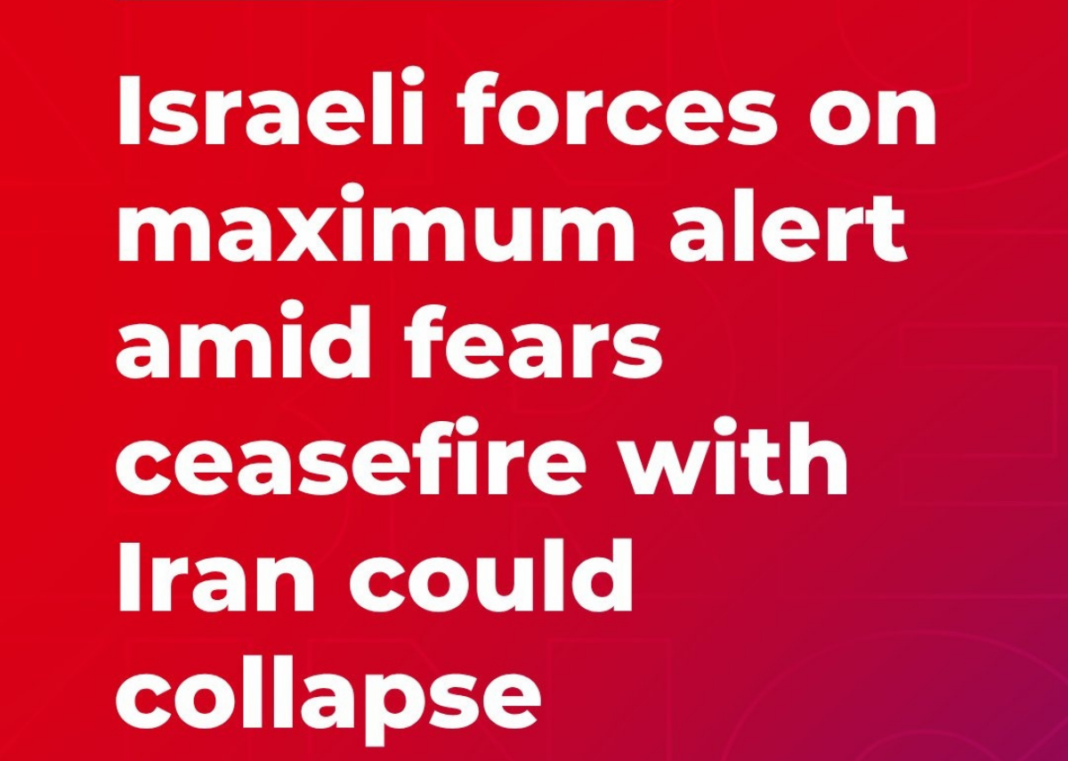

Israeli forces are in a state of high alert amid fears that the ceasefire with Iran could collapse, as military and political officials prepare for the possibility of renewed escalation.
The situation between Israel and Iran is very tense. Israels defense forces are on alert because they are worried that the current ceasefire might not last. This is happening because the whole region is unstable and Israel and Iran do not trust each other. Even a small incident could lead to fighting.
The problem between Israel and Iran is part of a rivalry that has been going on for years. They have been fighting indirectly using groups to do their battles and sometimes they fight directly.
Background of the Tensions
Israel and Iran have been disagreeing for a time. Israel thinks Irans military influence in the region is a threat to its safety. Iran on the hand thinks Israels military actions in the region are making things unstable.
Over the years the tension between Israel and Iran has gotten worse because of:
- -border attacks and secret operations
- Cyberattacks that both sides are blamed for
- Conflicts involving groups that Israel and Iran support
- Exchanges of missiles and drones when things get really tense
when they agree to stop fighting for a while it does not last long.
Current Security Situation
Now Israels military and political leaders are ready for anything. They think the ceasefire between Israel and Iran could end at any moment.
Israel is getting ready by:
- Making sure its air defense systems are ready
- Being able to move its units quickly
- Watching Irans movements and communications all the time
- Preparing for a fight on multiple fronts
This means Israel thinks the ceasefire is not stable and could end because of a mistake someone doing something on purpose or someone wanting to fight.
Fragility of the Ceasefire
The ceasefire between Israel and Iran is meant to stop the fighting for now.. It is not strong because:
- There is no long-term agreement
- Both sides do not trust each other
- There are still tensions because of groups in the region that support either side
- Incidents, whether on purpose or not could lead to fighting
That is why many people call the ceasefire a “managed pause” rather than a real peace agreement.
Military and Political Preparations
Israels leaders are working together to be ready in case things get worse. They are planning for scenarios from small attacks to a big regional war.
They are preparing by:
- Coordinating between military branches
- Protecting civilians in areas
- Talking to countries for support
- Watching the skies and missile activity in the region
This shows that Israel thinks the situation is unpredictable and could get worse quickly.
Regional and International Implications
The tension between Israel and Iran is not a local problem. If things get worse it could affect the Middle East and beyond. This could mean:
- Disrupting trade and energy routes in the region
- Other countries in the region getting involved
- The international community having to step in
- Economic problems because of uncertainty in the oil market
The world is asking everyone to be careful and not do anything that could make things worse.
Possible Future Scenarios
Experts think there are a ways things could go:
- The ceasefire stays,. It is still not stable
- There are attacks or incidents but they do not lead to a big war
- The ceasefire. There is a big war
- Other countries help Israel and Iran talk and try to make things more stable
now the first two options seem more likely but it is hard to predict.
Israels high-alert status shows that the ceasefire, between Israel and Iran is still not stable. Even though they are not fighting openly the underlying problems are still there. Could lead to more fighting at any moment.
This situation shows how unstable the region is, where stopping the fighting for a while depends on political decisions and can be easily disrupted. That is why Israel and Iran are being careful and preparing for anything.