

Reports from April 2026 have thrown the spotlight on a deal between India and Russia that lets each country station troops and military assets on the other’s soil. People are wondering what this means. So let’s break down what’s actually happening with the India–Russia Military Deployment Agreement.
Background
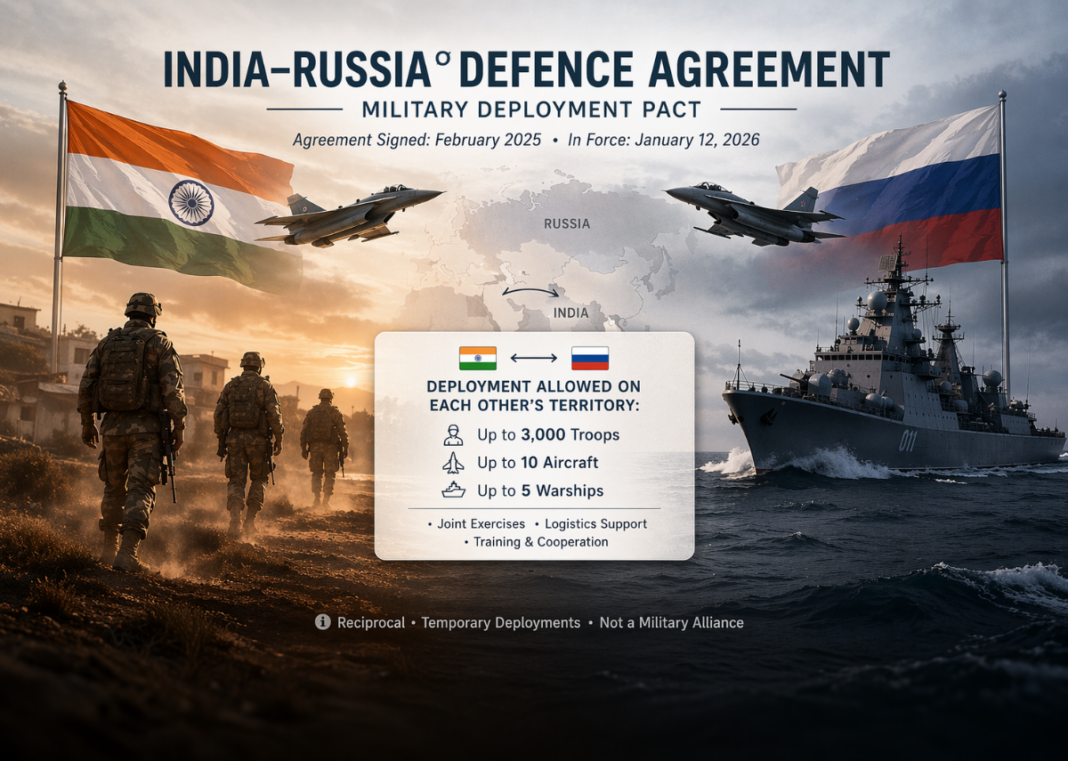
India and Russia signed this agreement in February 2025. It started on January 12 2026. The goal is to make it easier for both countries to work together share logistics and run missions. India and Russia have a history, especially in defense. Russia has supplied India with equipment for years. They also regularly conduct military exercises building familiarity between their forces.
This agreement builds on that history by creating a structure for cooperation especially in situations where quick coordination is needed between India and Russia.
What’s in the Deal?
Here’s what the agreement really allows:
- Up to 3,000 troops from either India or Russia can be stationed on the other’s territory.
- A maximum of 10 aircraft
- Up to 5 warships
These numbers are modest. They are meant for things like training, joint exercises or short-term operations between India and Russia. They are not designed for scale military deployments or long-term stationing.
There are also rules about jurisdiction how troops move around and how equipment and supplies are handled. The agreement defines who has authority in different situations and how coordination happens on the ground between the Indian and Russian militaries. It also explains how the two militaries communicate and support each other during these visits.
What This Isn’t
This is not an alliance like NATO. There’s no promise that one country will defend the other in a crisis. India has agreements with other countries as well. These deals are meant to make activities like exercises, port visits or humanitarian missions smoother for India and Russia.
So this agreement is practical not political. It’s about making cooperation easier—not committing to war between India and Russia.
Why Talk About It Now?
So why is everyone talking about this in April 2026? It’s because the details have recently become public and media coverage picked it up. Social media has amplified it further without full context.
Some posts make it sound like armies are about to set up bases. That’s misleading. Reliable sources say there’s no sign that thousands of Russian troops have been deployed anywhere yet. The agreement simply lays out what could happen under agreed conditions between India and Russia.
Why Does This Matter?
This deal matters for reasons:
- It strengthens the standing defense relationship between India and Russia.
- Both India and Russia get access to each other’s bases, ports and infrastructure.
- It improves readiness for exercises and coordinated operations between the Indian and Russian militaries.
- It sends a message that both India and Russia intend to continue working
It also reflects India’s strategy of maintaining ties with multiple global powers rather than aligning fully with one side.
Additional Strategic Context
In today’s shifting landscape agreements like this help countries stay flexible. India for example works closely with nations in some areas while maintaining strong defense ties with Russia. This balance allows India to protect its interests without becoming overly dependent on any one partner.
For Russia the agreement reinforces its relationship with a regional power, India at a time when its global partnerships are under pressure.
Clearing Up the Hype
There are exaggerated claims online. Some suggest bases or large troop deployments. That’s not accurate. Here’s what you should keep in mind:
- The troop and equipment numbers are limits, not current deployments between India and Russia.
- Any deployment happens with mutual agreement between India and Russia.
- The focus is on logistics and cooperation not combat.
The Bottom Line
The India–Russia military deployment agreement is essentially an updated framework based on a 2025 deal. It allows each country to temporarily host troops, aircraft or warships under defined conditions. It has value for both India and Russia.
It doesn’t signal a new global alliance or a dramatic shift in military strategy. It’s better understood as an example of how standing partnerships adapt over time between India and Russia.
In terms it’s not a sudden move—it’s a structured step forward in an already established relationship, between India and Russia.


