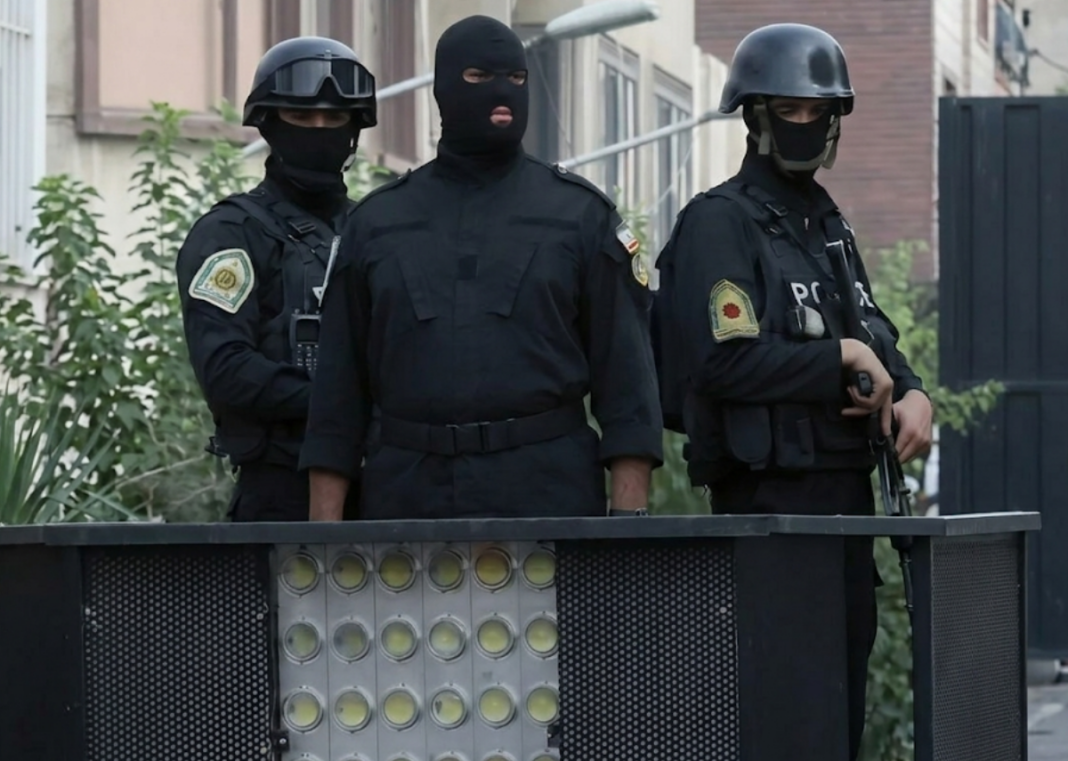

Iran’s Mehr News Agency says that the security forces have gone after the members of a group that Tehran calls a militant organization. This is happening somewhere near the border. The security forces and the militant organization have been having problems for a while now.
Things like this have happened before in the parts of Iran. The government talks about fighting with groups that they say are doing bad things like raids from, across the border or trying to separate from Iran. Iran’s outer provinces are where these kinds of incidents usually happen.
Based on what Mehr reported, security units launched a planned operation meant to wipe out part of an armed network close to Iran’s frontiers. They didn’t say exactly when or where, but these operations usually happen in southeast or northwest Iran—places with rough terrain, leaky borders, and a long history of political tension that fuel recurring security flare-ups.
Iran always labels these groups as “militant organizations” or “armed elements.” That’s their way of saying these people are involved in things like armed resistance, smuggling violence, or attacks on police. Depending on where you look, Iranian officials often tie these groups to separatist ideas or foreign connections, especially across the borders.
When you take a step back and look at Iran’s border security it is a situation. Iran has a lot of neighbors, including Pakistan, Iraq, Turkey, Afghanistan and Azerbaijan which means Iran’s border security has to deal with a lot of things. Some areas along the border have always had problems because they are away from big cities and have people, from many different backgrounds living there. These areas also see a lot of groups moving back and forth across the border of Iran. Iran’s border security is something that Iran has to pay attention to because of all these things happening with Pakistan, Iraq, Turkey, Afghanistan and Azerbaijan.
Take southeastern Iran, for example—those provinces bordering Pakistan and Afghanistan. It’s a regular hotspot for clashes between Iranian forces and militants or smugglers. Sometimes, Tehran says these groups get help from outside. The northwest, near Iraq and Turkey, isn’t any different—Kurdish militant groups, according to the government, are often involved.
Mehr’s story fits the usual pattern—you see it a lot in state-linked Iranian media. Their reports focus on showing off the successes of Iran’s security forces: how quickly they identify, confront, or break up armed cells, and how tightly military and intelligence teams work together.
There aren’t many specific details this time. Usually, these kinds of raids mix intelligence work, soldiers on the ground, and quick strike tactics. The job might fall to the Revolutionary Guards, border patrols, or special units trained for counterinsurgency. The way authorities put it, they went after “armed elements” who are active in a border zone—language that hints the group operates out in the sticks, areas where it’s harder for the government to keep a grip.
In the past, after operations like this, officials would talk about hauling in weapons, arresting or killing suspects, and taking down supply lines that keep militant groups running. But right now, there’s just not much out there about what exactly happened—no headcount, no specifics on arrests, casualties, or what kind of gear they found.
From Iran’s point of view, these operations are all about defending national security and holding the borders together. Officials usually frame these actions as necessary responses to real threats—protecting civilians, border security, and infrastructure. State-aligned news agencies always highlight how defensive, even restrained, the security forces are acting, and often claim the groups they fight are part of bigger plots or are backed from abroad. Not everyone buys these claims, of course—opposition groups and some outside observers see things differently.
This new action is happening because things are getting bad in places. The Middle East, South Asia and Central Asia. The areas around Iran’s borders often have problems with violence in the tough terrain that is hard to watch. Lately the government has been working to make the borders safer they are watching closely sending more people to patrol and working together with the military and the people who gather information. They want to stop the dangers from groups, with guns or bad people who break the law. Iran’s borders are a concern and the government is trying to make them more secure. The government is doing this to protect Iran from groups and criminal gangs.
On the other hand, the larger context is not any less chaotic. The neighboring states of Iran have their own troubles with national security, and thus these issues are bound to be transferred from one country to another across borders.
About the report itself—details are thin. Mehr News usually keeps these stories short, mainly announcing what happened without digging much deeper. So independent details—how big the clash was, what was seized, who was involved—aren’t clear, at least not yet.
Normally, the full story starts to show up later, through follow-up statements from Iranian officials or extra reporting from other media. That’s when you start seeing numbers, names, even what was confiscated or who got taken into custody.
Bottom line: Iranian security forces launched a targeted raid against a group the government calls a militant outfit near the border. There aren’t a lot of details yet, but it fits into years of similar operations out in Iran’s border provinces, where authorities keep running into groups they say threaten national security.
These actions are part of Iran’s larger play to clamp down on border trouble and go after suspected militants. But with such limited information in this first report—no timeline, no specifics—there’s still plenty we just don’t know. More info will probably come out as officials and outside reporters add to the story and fill in the gaps around what this incident really means for the region.