
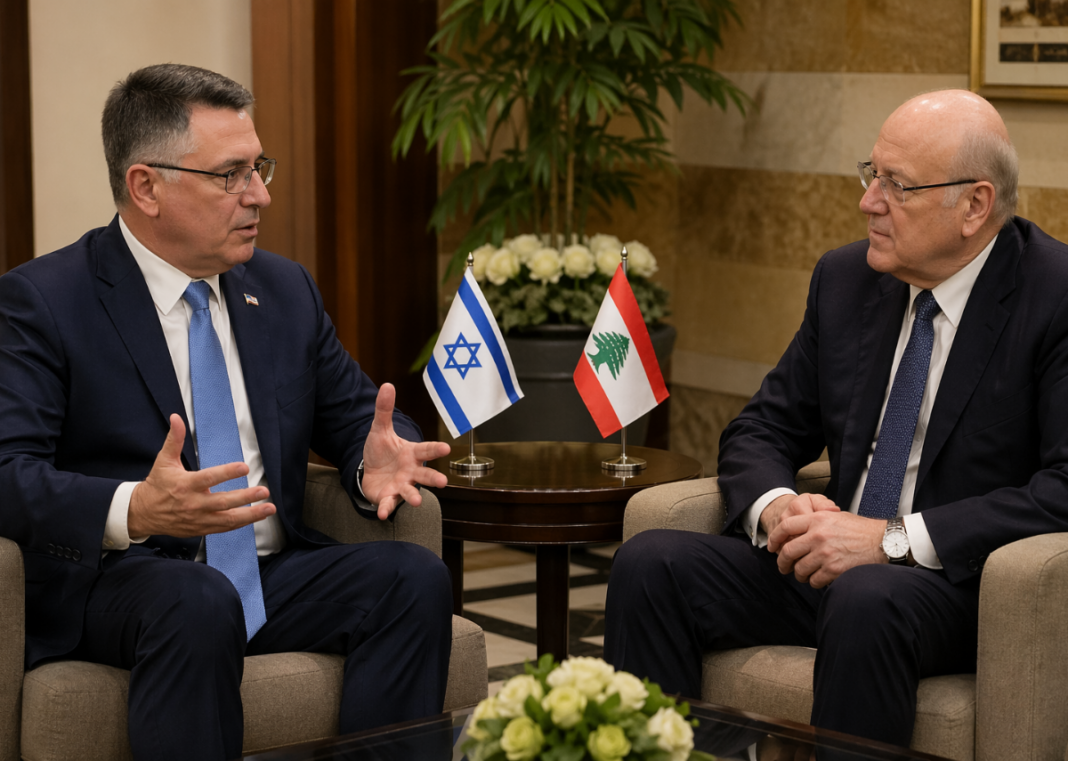

Israeli Foreign Minister Gideon Sa’ar’s recent comments have brought attention back to Israel’s relationship with Lebanon. He basically told the government it’s time to deal with Hezbollah calling the group a major obstacle to peace and normal relations. This is a challenge and it comes at a moment when the region’s security is unstable and everyone’s trying to reduce hostilities.
Here’s some background: Israel and Lebanon have a history. Decades of war distrust and occasional violence. For years Hezbollah has been at the center of their problems. The group isn’t a political force in Lebanon; it’s a heavily armed organization that’s fought Israel several times with the 2006 war being the bloodiest. No peace treaty was signed,. The border has been mostly quiet since then thanks to uneasy deterrence. Still flare-ups happen occasionally.
Sa’ar said Israel is open to making friends with Lebanon. With one big requirement: Lebanon must handle Hezbollah. From Israel’s point of view Hezbollah acts outside the control of Lebanon. It poses a threat. Sa’ar said Hezbollah’s military connections and alliances put Israel at risk and weaken Lebanon’s power. If Lebanon wants to move Sa’ar thinks the government must control all armed groups in its territory. He also said that Hezbollah’s presence makes trust impossible and keeps money and rebuilding efforts away.
In Lebanon things are complicated. Hezbollah is not a militia; it is a major political player and provides social services to parts of the country. Talking about disarming Hezbollah is a topic and people have different opinions. Some parties say Hezbollah’s weapons are necessary to protect Lebanon from aggression with old conflicts still not resolved. Others argue that Hezbollah’s guns weaken the state and make foreign relations difficult. Because of these divisions the Lebanese government cannot easily respond to demands; pushing for disarmament could cause chaos.
Sa’ar’s comments also connect to issues. The Middle East is changing, with some Arab countries choosing to make peace with Israel through deals like the Abraham Accords. Lebanon has not joined these agreements. Israel insists that without dealing with groups, like Hezbollah peace is not possible. Lebanon needs to deal with Hezbollah. Israel wants Lebanon to control Hezbollah.
Meanwhile Lebanon has economic problems: financial crisis, damaged infrastructure and a stuck political system. Some say easing tensions with Israel could bring in needed foreign aid and investment. But only if security issues get sorted.
There are still roadblocks when it comes to the situation with Hezbollah.
- The fact that Hezbollah has an arsenal of weapons is a big problem and Israel thinks they are a direct threat to them.
Israel views Hezbollah as an issue because of this arsenal.
- The political scene in Lebanon is over the place which makes it really tough to make decisions about security and what to do about Hezbollah.
- The close relationship between Hezbollah and Iran is also an issue that adds a lot of complexity to the situation with Hezbollah.
- There have been wars and many years of dislike between certain groups which still affects what people think about Hezbollah and the situation.
- Incidents at the border happen a lot. They keep tensions very high, between Israel and Hezbollah.
With these problems Sa’ar talking about normalization feels new. Diplomatic doors aren’t closed although real progress looks distant. For a breakthrough Lebanon probably needs to make internal reforms regional neighbors would have to get involved and bigger security guarantees might be necessary. Outside players could help, with border issues.
To sum it up Sa’ar’s statement highlights how complicated. And yet open. Things are between Israel and Lebanon. By focusing on Hezbollah as the sticking point Israel is laying out what it wants while saying it’s not against normalization.. The hurdles are steep. Lebanon’s politics are messy regional rivalries are intense. Hezbollah’s influence isn’t fading soon. Still just having normalization out in the hints at changing attitudes in the Middle East and the ongoing push, for stability.