

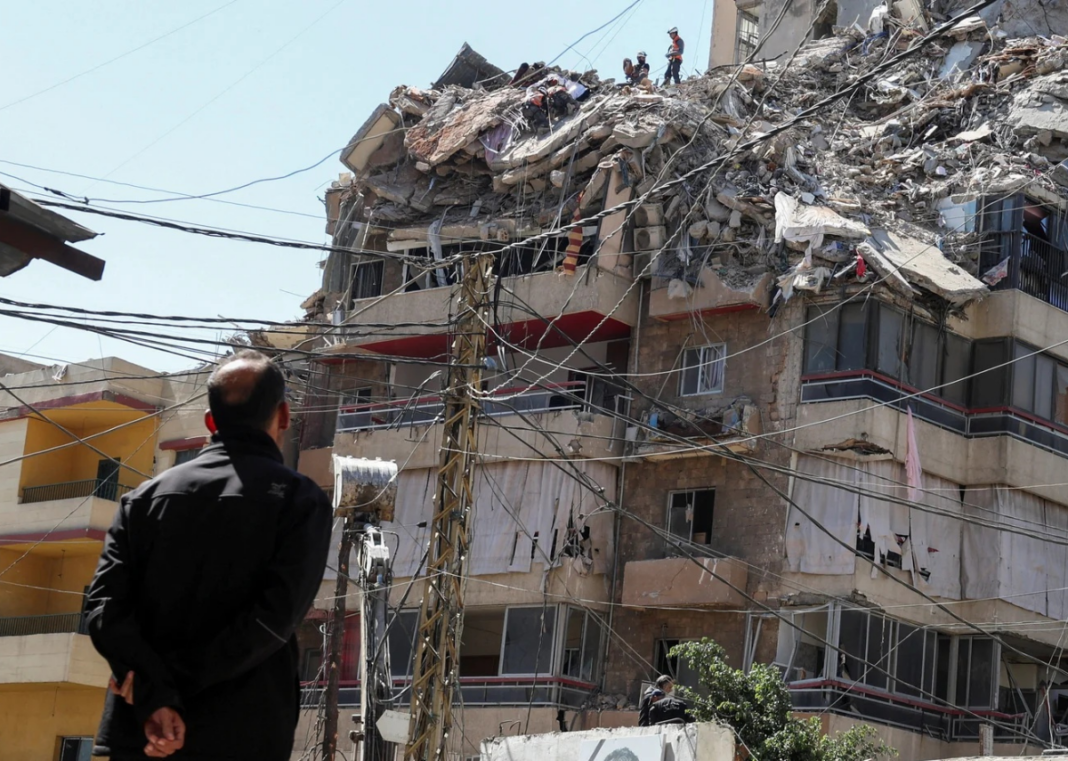

Iran’s Foreign Minister Abbas Araghchi met Oman’s Sultan Haitham bin Tariq al-Said in Muscat on Sunday, 26 April 2026, in a bid to advance regional mediation efforts and address mounting security concerns around the Strait of Hormuz, as a widening military conflict between the United States, Israel, and Iran continues to reshape the Middle East. The talks in Oman’s capital came hours after the Israeli military resumed airstrikes on southern Lebanon — violating a fragile ceasefire extended only three days earlier — and killed four people, bringing the confirmed death toll from Israeli attacks on Lebanon since 2 March to at least 2,496, according to the Lebanese Health Ministry. Washington simultaneously cancelled a scheduled diplomatic trip by its envoys to Islamabad for Iran peace negotiations, with President Donald Trump instructing Tehran to initiate contact directly.
BODY
The flurry of overlapping crises unfolded on a single day that underscored the fragility of ceasefire arrangements and the volatile state of diplomacy between the world’s major powers. In Lebanon, the Israeli army’s spokesperson, Avichay Adraee, posted warnings on X directing civilians to evacuate at least seven towns south of the Litani River, including Kfar Tibnit, a locality subsequently struck by Israeli warplanes. Lebanon’s state-run National News Agency reported casualties from the Kfar Tibnit strike. Israel’s forces continue to occupy a strip of Lebanese territory it has designated a ‘yellow line,’ roughly 10 kilometres north of the Israeli border, and has barred residents of dozens of villages within that zone from returning to their homes.
Simultaneously, in Washington, a shooting incident outside the Washington Hilton during the annual White House Correspondents’ Association Dinner forced the evacuation of President Trump and other senior U.S. officials. A Secret Service agent was struck by gunfire but was protected by a bulletproof vest. Trump, speaking to reporters afterwards, described the suspected shooter as a ‘lone wolf’ and stated that the person was in custody. Police said the motive remained unknown. The president moved quickly to separate the incident from the broader conflict, stating he did not believe it was connected to the war on Iran, but added that investigators were still working to confirm that assessment.
On the naval front, U.S. Central Command (Centcom) confirmed the interception of a commercial vessel, the MV Sevan, in the Arabian Sea. Centcom identified the ship as part of a network transporting Iranian oil and gas products, including propane and butane, to international markets. A U.S. Navy helicopter launched from the guided-missile destroyer USS Pinckney conducted the interdiction. The vessel was subsequently escorted back toward Iran. The U.S. Treasury Department had sanctioned Sevan the day prior, listing it among 19 vessels in what it described as Iran’s ‘shadow fleet’ engaged in the transport of billions of dollars’ worth of sanctioned energy products.
In a separate legal development, Iran submitted documentation to the International Criminal Court and the International Committee of the Red Cross alleging systematic attacks on civilian populations. Pir-Hossein Kolivand, head of the Iranian Red Crescent Society, confirmed the submission, stating that the ICC prosecutor had accepted the materials as official evidence and opened an examination under international humanitarian law. The Red Cross was also formally engaged. Iran framed the move as part of a sustained effort to hold the United States and Israel accountable through multilateral institutions.
China’s Hengli Petrochemical, one of the country’s largest independent refiners, issued a public denial on Sunday after the United States sanctioned one of its subsidiaries for allegedly purchasing Iranian crude. In a stock exchange filing, the company stated it had ‘never engaged in any trade with Iran,’ asserting that all its crude suppliers had guaranteed compliance with U.S. sanctions. Hengli added that it maintained sufficient crude oil inventories to sustain more than three months of operations and that procurement activities remained unaffected. The company called the U.S. sanctions ‘lacking factual and legal basis’ and pledged to pursue their removal.
QUOTES
U.S. President Donald Trump, speaking to reporters at the White House following the evacuation from the Correspondents’ Dinner, addressed both the shooting and the ongoing conflict:
“It’s not going to deter me from winning the war in Iran.”
On whether the shooting was linked to the Iran conflict, Trump said:
“I don’t know if that had anything to do with it, I really don’t think so, based on what we know.”
Iranian Foreign Minister Abbas Araghchi, in talks with Oman’s Sultan Haitham bin Tariq al-Said in Muscat, addressed the broader security architecture of the region, according to an Iranian foreign ministry statement:
“The U.S. military presence in the Middle East is fuelling insecurity and division.”
Araghchi called for a regional security framework free of outside interference. Separately, Hengli Petrochemical stated in its stock exchange filing:
“Hengli has never engaged in any trade with Iran, and all crude oil suppliers guaranteed that origins do not fall within the scope of U.S. sanctions.”
REGIONAL AND GLOBAL IMPACT
The combined effect of continued Israeli strikes in Lebanon, the interception of Iranian oil vessels, and the collapse of scheduled U.S.-Iran talks in Islamabad represents a significant deterioration in the prospects for a negotiated ceasefire. For Lebanon, the renewed Israeli bombardment — despite a truce extended as recently as 17 April and again on Thursday — suggests the ceasefire framework is functionally collapsing. At least 7,725 people have been wounded in Lebanon since 2 March, according to the health ministry. Lebanese communities within the Israeli-declared yellow line remain displaced with no clear timeline for return.
Globally, the conflict’s ripple effects are widening. The United Nations has warned that disruption to the Strait of Hormuz — through which approximately 20 percent of the world’s oil supply transits — risks pushing millions of people into food insecurity due to fertiliser shortages. The UAE, which sustained direct Iranian air strikes over the preceding weeks, announced on Sunday a one-billion-dirham ($272 million) national fund to rebuild industrial resilience, support supply chain localisation, and accelerate AI adoption in production systems. Prime Minister Mohammed bin Rashid al-Maktoum announced the fund on X. Oman, which shares a coastline with the Strait of Hormuz, has emerged as a critical diplomatic conduit, with Sultan Haitham hosting senior Iranian officials in Muscat while maintaining lines of communication with Washington.
In the United States, the domestic political cost of the conflict is beginning to accumulate. Fuel prices have risen, Republican lawmakers are reassessing their midterm election positioning, and approval ratings for the administration’s handling of the war have declined, according to reporting by Middle East Eye. The Treasury Department’s expansion of sanctions against Chinese entities, including Hengli Petrochemical, raises the risk of further economic friction between Washington and Beijing at a moment when both powers are already engaged in an escalating trade dispute.
BACKGROUND
The current conflict between the United States, Israel, and Iran marks a dramatic escalation of hostilities that have simmered for decades. Israel and Iran have engaged in shadow warfare across the region for years, with Iran providing financial and military support to proxy forces including Hezbollah in Lebanon, Hamas in Gaza, and the Houthi movement in Yemen. The November 2024 ceasefire agreement between Israel and Hezbollah formally paused their most recent war, which began in September 2024 and caused mass displacement across southern Lebanon. That truce has been repeatedly violated, with Israel maintaining that it retains the right to strike Hezbollah infrastructure and prevent the group from re-arming. The U.S. entered more directly into hostilities against Iran in early 2026, conducting joint operations with Israel against Iranian military and nuclear infrastructure. Iran responded with strikes on U.S. and Israeli assets, including, according to Middle East Eye, direct air strikes on UAE soil. The Hormuz Strait, through which Iran has repeatedly threatened to restrict shipping, has become the focal point of an economic blockade campaign with global supply chain consequences.
WHAT HAPPENS NEXT
Araghchi is scheduled to return to Pakistan for further consultations following his Oman visit, before travelling to Moscow for talks with Russian officials. Iran has framed these regional shuttle missions as an effort to build a diplomatic coalition and present a unified negotiating front should direct talks with Washington resume. However, the cancellation by the Trump administration of its envoys’ Islamabad visit — with Trump instructing Tehran to initiate contact — leaves the mechanism for resuming negotiations uncertain.
In Lebanon, Israeli leaflet drops warning civilians to evacuate additional villages signal that further ground and air operations south of the Litani River remain likely in the near term. The Lebanese government has yet to formally respond to the latest round of warnings. Hezbollah has not publicly commented on the current round of strikes as of the time of publication.
The ICC’s acceptance of Iranian-submitted evidence of civilian casualty documentation opens a separate track of legal pressure that could complicate both Israeli and American diplomatic positioning in international forums in the weeks ahead. The U.S. does not recognise ICC jurisdiction over its citizens or military actions, but the evidentiary record created by Iran’s submissions may influence how allied and neutral governments frame the conflict publicly. Observers will be watching closely for Iran’s formal response to the MV Sevan interdiction, which represents one of the most direct U.S. naval enforcement actions against Iranian oil trade since the conflict escalated.

