
Iran and U.S. Trade Fire at Strait of Hormuz as Ceasefire Strains to Breaking Point
Iran accused the United States of violating a weeks-old ceasefire on Thursday, May 7, 2026, after American forces struck military facilities along Iran’s southern coastline and targeted an Iranian oil tanker navigating toward the Strait of Hormuz. U.S. Central Command confirmed that three Navy guided-missile destroyers — the USS Truxtun, USS Rafael Peralta, and USS Mason — came under fire from Iranian missiles, drones, and small boats while transiting the strait, prompting retaliatory self-defense strikes. The confrontation marks the most serious military exchange since a Pakistan-brokered ceasefire took effect in early April, raising acute concerns about the durability of ongoing peace negotiations. ABC News
The Exchange of Fire
The incident unfolded in the narrow waters of the Strait of Hormuz on the afternoon and evening of May 7. Iran’s Khatam al-Anbiya Central Headquarters, the country’s top joint military command, stated that U.S. forces targeted an Iranian oil tanker traveling from Iran’s coastal waters near Jask toward the strait, as well as another vessel entering near the Emirati port of Fujairah. GMA News Online
Iran’s military said it retaliated against U.S. Navy ships after American forces targeted the oil tanker in Iranian territorial waters. The IRGC Navy confirmed that Iranian forces employed “various types of ballistic and antiship cruise missiles and destructive drones with high-explosive warheads” in the response. Al Jazeera
The Iranian facilities struck by U.S. forces included missile and drone launch sites, command and control locations, and intelligence, surveillance, and reconnaissance nodes, according to CENTCOM. A U.S. official told CNN that strikes were carried out at multiple locations, including Bandar Abbas and Qeshm. ABC17NEWS
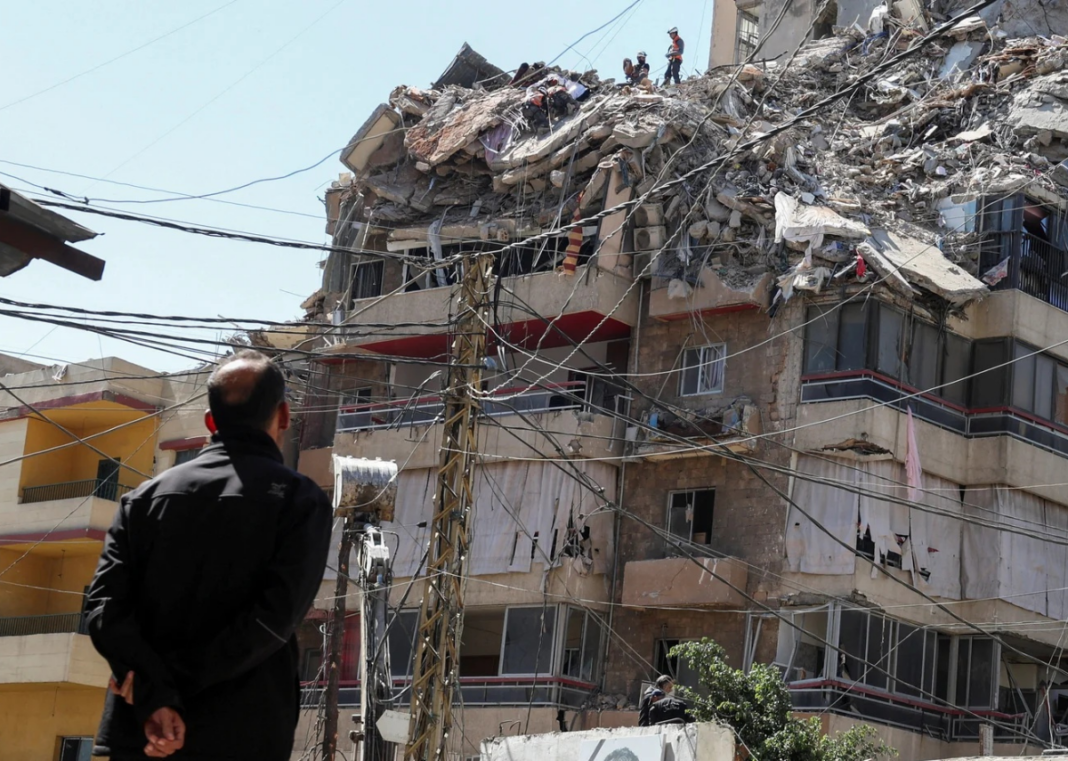
Iran also alleged a broader operation. Iran’s Khatam al-Anbiya Central Headquarters stated that the U.S. carried out air strikes on civilian areas, including Qeshm Island, “in cooperation with some regional countries,” without identifying those partners. A spokesperson for Iran’s armed forces said U.S. strikes hit civilian areas along the coasts of Qeshm Island, Bandar Khamir, and Sirik. Washington did not confirm strikes on civilian infrastructure. Al JazeeraABC17NEWS
Iranian state media reported that the situation stabilized following the exchange of fire. The Islamic Revolutionary Guard Corps stated, citing a reporter in Hormozgan province, that no civilian casualties had been confirmed. CNN
Quotes
U.S. Central Command stated: “U.S. forces intercepted unprovoked Iranian attacks and responded with self-defense strikes as U.S. Navy guided-missile destroyers transited the Strait of Hormuz to the Gulf of Oman.” CENTCOM added that no U.S. assets were struck and that American forces “do not seek escalation” but remain “ready to protect American forces.” ABC News
President Donald Trump, speaking to reporters during an unplanned stop near the Lincoln Memorial Reflecting Pool in Washington, took a defiant tone while simultaneously insisting the ceasefire remained operative. “They trifled with us today. We blew them away,” Trump said, describing the Iranian strikes as a “love tap” and warning that “we’ll knock them out a lot harder, and a lot more violently” if Iran fails to sign a peace agreement. ABC News
Iran’s Khatam al-Anbiya Central Headquarters, in a statement carried by state media, declared: “The criminal and aggressor America and its supporting countries should know that the Islamic Republic of Iran, as powerfully as in the past, will give a crushing response to any aggression without the slightest hesitation.” Al Jazeera
Regional and Global Impact
The skirmish sent fresh tremors through an already volatile region. Schools across the United Arab Emirates shifted to remote learning through Friday, May 8, with the Emirati Ministry of Education citing concern for the safety of students and education workers. The UAE has faced Iranian strikes throughout the conflict, and Emirati air defenses recently engaged 19 Iranian missiles and drones in a single engagement, though three Indian nationals sustained moderate injuries when a drone struck the Fujairah Oil Industry Zone. CNNCNN
The Strait of Hormuz remains the world’s most critical maritime chokepoint for energy. Before the outbreak of the current conflict, roughly 20 million barrels of oil transited the strait daily, representing approximately 20% of global seaborne oil trade. That flow has been severely disrupted since late February. U.S. gasoline prices surged to an average of $4.54 per gallon as of Wednesday — the highest since July 2022 — representing a 52% jump since the start of the Iran conflict. WikipediaCBS News
China, which depends heavily on Gulf energy imports routed through the strait, has publicly called for its reopening. Treasury Secretary Scott Bessent indicated China could do more to pressure Iran to allow vessels through the passage ahead of Trump’s scheduled visit to Beijing. CNN
Background
Shipping traffic through the Strait of Hormuz has been largely blocked since February 28, 2026, when the United States and Israel launched an air campaign against Iran and assassinated Supreme Leader Ali Khamenei. In retaliation, Iran launched missile and drone attacks on Israel, U.S. military bases, and U.S.-allied Gulf states, while the IRGC boarded merchant ships and laid sea mines in the strait. Wikipedia
A two-week ceasefire, mediated by Pakistan, took effect on April 8, 2026, after Iran rejected an earlier 45-day framework and submitted its own 10-point peace plan. The truce has proven fragile from the outset. Iranian officials accused the U.S. of breaching commitments under that framework, while Trump said he had agreed to the ceasefire contingent on the full reopening of the Strait of Hormuz — a condition Iran did not fulfill. WikipediaCNBC
On May 4, Trump launched Operation Project Freedom, a U.S. Navy mission to escort merchant ships out of the Gulf. He paused the operation on May 6, citing “great progress” toward a potential agreement. The destroyer transit on May 7 — the trigger for Thursday’s exchange — occurred the following day. Wikipedia
What Happens Next
Despite the military exchange, both governments stopped short of declaring the ceasefire void. Trump told ABC News that the ceasefire is “going” and remains “in effect,” while simultaneously warning of much more severe consequences if Iran does not reach an agreement. CNN
Behind the scenes, U.S. envoys Steve Witkoff and Jared Kushner have been negotiating a 14-point memorandum of understanding with Iranian officials, both directly and through intermediaries. The proposed one-page document would declare an end to the war and open a 30-day negotiating window covering the Strait of Hormuz, Iran’s nuclear program, and sanctions relief, with potential talks in Islamabad or Geneva. Axios
Two U.S. officials indicated the White House expected Iranian responses on several key points within 48 hours, describing the current moment as the closest the two sides have come to an agreement since the conflict began. Trump acknowledged on Thursday that a deal “might not happen, but it could happen any day.” AxiosCNN
The coming hours are likely to determine whether May 7’s clashes represent a manageable incident within a turbulent but intact ceasefire, or the opening chapter of resumed full-scale hostilities. Gulf states, shipping insurers, and oil markets are watching closely. With Trump’s Beijing visit looming and Chinese interests directly tied to Hormuz, diplomatic pressure from multiple directions is converging on both Washington and Tehran simultaneously.