
Can Israel Sustain Its War Economy as Western Support Fractures?
Israel’s military-first economic model faces unprecedented strain as European trade restrictions multiply, U.S. political support erodes, and the country’s public debt surpasses 68 percent of GDP — raising fundamental questions about the long-term viability of a nation permanently mobilized for war.
Israel has operated under conditions of near-continuous military conflict since October 7, 2023, conducting simultaneous operations in Gaza, the West Bank, Lebanon, Syria, Yemen, and Iran. The cumulative fiscal cost of sustaining those fronts has fundamentally restructured the country’s economy. Israel’s central government balance swung from a surplus of 0.6 percent of GDP in 2022 to a deficit of 6.8 percent in 2024, driven by surging defense spending and weaker revenue, while public debt rose from 60 percent of GDP at the end of 2022 to 68.6 percent by the end of 2025. Analysts and international institutions now warn that without course correction, the civilian sectors of Israel’s economy face sustained and worsening pressure. imf
The War Economy in Numbers
Defense spending reached 8 percent of GDP in 2025 — nearly double the pre-conflict level of around 4.5 percent — and is expected to ease only partially to 6 percent in 2026, still well above peacetime norms. The International Monetary Fund, in its February 2026 Article IV Mission statement, flagged the trajectory as unsustainable without additional fiscal measures. Israel’s 2025 budget — the largest in Israeli history at NIS 756 billion (approximately $203.5 billion) — included a Defense Ministry allocation of NIS 110 billion ($29 billion), with total defense costs reaching NIS 136 billion ($36.9 billion). imfThe Times of Israel
According to the Stockholm International Peace Research Institute, Israel recorded the steepest single-year increase in military spending of any country in 2024, with its share of GDP second only to Ukraine among all nations measured. The Jerusalem Report noted the completeness of this structural shift, writing that the transition from a consumer-led growth model to a security-first industrial complex is now complete, and that the state’s long-term prosperity now depends on its ability to innovate within this costlier framework. The Times of Israel
The IMF’s assessment projects a partial rebound — the Fund expects Israeli economic growth to strengthen from 2.9 percent in 2025 to 4.8 percent in 2026, driven by pent-up private consumption and a rebound in investment, assuming no renewed regional hostilities. That assumption, however, is fragile. Iran has warned of retaliatory strikes on Israel and U.S. bases should military confrontation resume, and the Gaza ceasefire has remained intermittent since late 2025. The Times of Israel
Quotes: Institutions and Officials Sound the Alarm
The IMF, in its concluding statement from its February 2026 mission, stated: “Absent further adjustment, public debt will continue rising with risks skewed to the upside. As a consequence, civilian spending could come under increasing pressure from elevated defense and interest expense.” imf
UN Special Rapporteur on the Occupied Palestinian Territories, Francesca Albanese, has described Israel’s economic configuration in blunter terms, characterizing it as an “economy of genocide” in a report cited by Middle East Eye, and has called on all states to “impose sanctions and a full arms embargo on Israel” and “suspend or prevent all trade agreements and investment relations, and impose sanctions, including asset freezes, on entities and individuals involved in activities that may endanger the Palestinians.” Just Security
Israeli Foreign Minister Gideon Sa’ar, reacting to the European Commission’s September 2025 proposals for partial trade suspension, dismissed the measures as politically motivated. Sa’ar called the EU Commission president’s comments “regrettable” and accused her of “yielding to the pressures of elements that seek to undermine Israel-Europe relations,” calling the proposed motions “not acceptable conduct between partners.” FDD
European Pressure: Fragmented but Accelerating
The European Union is Israel’s largest trading partner, and that relationship is now under significant legal and political strain. The European Commission formally proposed suspending certain trade-related provisions of the EU-Israel Association Agreement, alongside sanctions on extremist Israeli ministers and violent settlers. The proposal, however, faces structural hurdles: suspending the trade pillar of the association agreement requires the support of 15 out of 27 EU member states, and has historically been opposed by Germany, Hungary, and the Czech Republic. Al JazeeraFDD
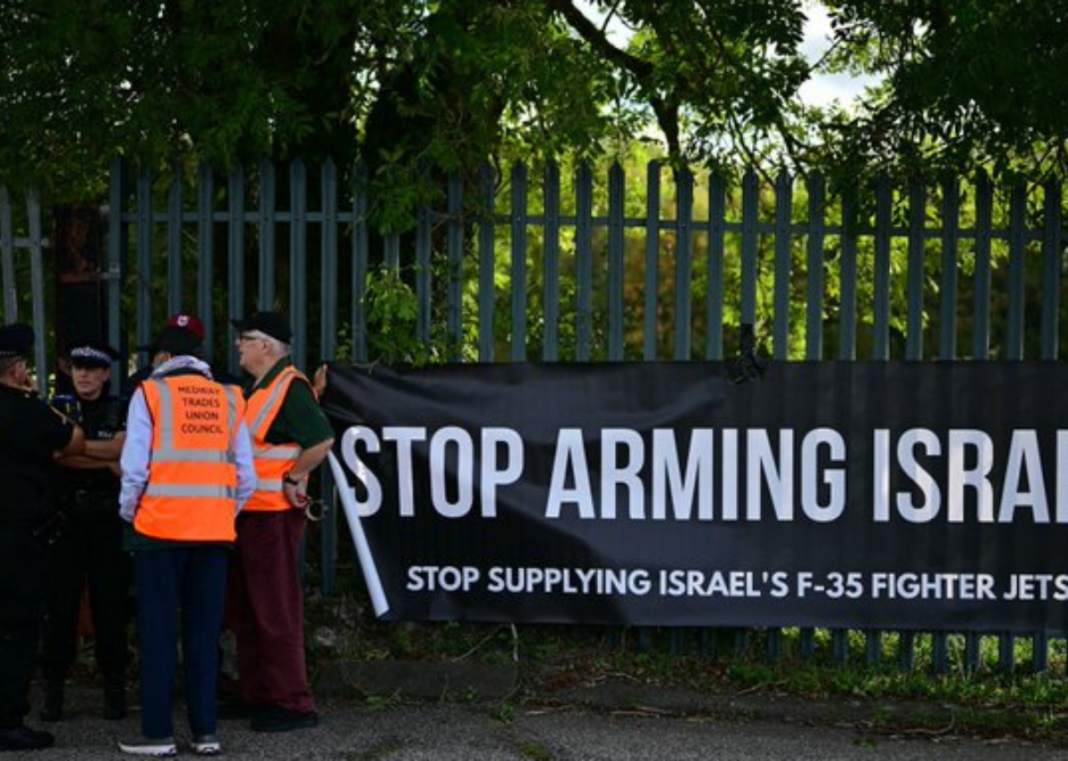
In the absence of a unified EU-wide measure, individual member states have acted unilaterally. The Netherlands restricted export controls for all military and dual-use goods to Israel; the UK suspended around 30 of its 350 arms export licenses and halted negotiations on a new free trade agreement; Slovenia announced a total weapons export and import ban; and Spain announced a complete arms embargo in September 2025. Turkey has implemented a total export and import ban, while 13 states acting as “The Hague Group” agreed in July 2025 to ban providing or transferring arms and to prevent public institutions from supporting what they described as Israel’s illegal occupation. The ConversationJust Security
Israel has simultaneously escalated its international public relations spending. According to the Jewish Telegraphic Agency, Israel quadrupled its public relations budget to $730 million, though analysts cited in that report expressed doubt the spending would be effective. The country has also spent close to $1 billion in total on efforts to shape its global image, according to Middle East Eye.
U.S. Support: Durable but Under Pressure
The United States remains Israel’s most consequential strategic backer, providing financial aid, military hardware, and diplomatic cover at the United Nations. That relationship is now being openly debated within American domestic politics. There is growing political appetite, particularly within parts of the Democratic Party, to halt weapons transfers to Israel — a shift reflected in a collapsing baseline of public support. middleeasteye
Israel has reportedly commenced negotiations with the U.S. to cease direct military support by 2038 — a timeline that underscores both the depth of the current dependency and its eventual planned unwinding. Pew Research Center data from April 2026 confirmed that negative views of Israel and Prime Minister Benjamin Netanyahu among Americans have continued to rise, especially among younger cohorts. middleeasteye
Critically, U.S. support encompasses more than financial transfers. No other global actor — not China, not Russia, not any regional power — offers the combination of military hardware, intelligence cooperation, diplomatic veto protection, and financial backing that Washington provides. Analysts warn that severing or curtailing that relationship would leave Israel without a credible substitute.
Regional and Global Implications
The reconfiguration of Israel’s economy has direct consequences for the broader Middle East. Countries that have been on the receiving end of Israeli military operations — Gaza, the West Bank, Lebanon, Iran, and Yemen — continue to absorb the human and material costs of those operations. For the Palestinian territories specifically, the economic model Israel has chosen prioritizes security control over civilian reconstruction, leaving no fiscal pathway toward the development of viable Palestinian governance.
For the wider region, Israel’s transformation into what analysts have termed a “Super Sparta” war economy creates an arms-export dynamic with global reach. Nations across Eastern Europe and beyond have continued purchasing Israeli surveillance technology and weapons systems — a revenue stream that partially offsets Western-imposed trade restrictions, though analysts note that no major power can replace the strategic depth the U.S. alliance provides. middleeasteye
Background
Israel has been the largest cumulative recipient of U.S. foreign assistance since World War II, receiving over $310 billion in inflation-adjusted terms, the majority in military aid. The EU-Israel Association Agreement, in force since 2000 and originally signed in 1995, has provided Israeli exports with preferential market access to Europe. The agreement specifies that “respect for human rights and democratic principles” constitutes an “essential element” of the partnership — a clause that European critics now argue Israel has violated. The International Criminal Court issued arrest warrants for Prime Minister Netanyahu and former Defense Minister Yoav Gallant for war crimes and crimes against humanity, a development that has accelerated calls for multilateral economic action. Human Rights Watch
What Happens Next
Several indicators will determine Israel’s economic trajectory in the months ahead. The IMF has recommended that Israel pursue additional fiscal consolidation to meet a proposed deficit ceiling of 2.4 percent of GDP by 2029, and to reduce public debt toward 60 percent by the mid-2030s. Whether the Netanyahu government — or a successor administration — pursues those adjustments while simultaneously sustaining military operations remains an open question.
The IMF projects that, without further adjustment, Israeli civilian spending will come under increasing pressure from elevated defense and interest expenses — a structural squeeze that could generate domestic political consequences. Within the EU, the European Commission’s trade suspension proposal remains alive but contested, and the 2026 calendar will include further Council discussions on whether qualified-majority support can be assembled. In the U.S., congressional midterm positioning and ongoing Democratic Party debates over weapons transfers will shape the political environment around the bilateral relationship. imf
Former Prime Minister Naftali Bennett has emerged as the leading opposition figure in Israel, though analysts note that his platform, while distinct from Netanyahu’s in style, does not represent a fundamental departure from the military-first strategic posture that has defined Israeli governance since October 2023. The structural economic pressures Israel now faces — rising debt, declining civilian investment, and a shrinking base of unconditional Western support — are likely to outlast any individual government.