
Vietnam’s Communist Party Plans 1,000-Influencer Network and AI Censorship Drive by 2030
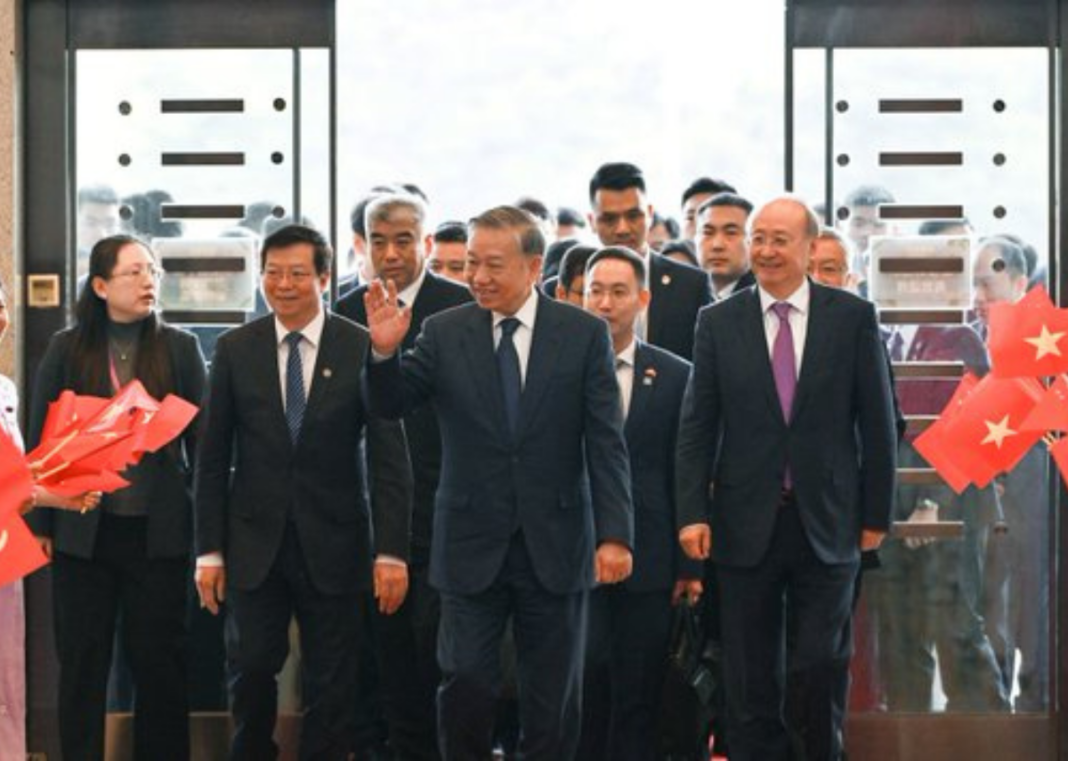
Vietnam’s ruling Communist Party is preparing a sweeping digital propaganda overhaul that would recruit at least 1,000 social media influencers and 5,000 artificial intelligence specialists by 2030 to shape public opinion and suppress dissenting content online. The plan, drawn from an unpublished April draft by the party’s propaganda committee reviewed by Reuters, represents Hanoi’s most ambitious attempt yet to extend ideological control over the country’s rapidly expanding digital landscape. The strategy takes shape as General Secretary and President To Lam — a former head of the public security ministry — consolidates power and becomes what analysts describe as Vietnam’s most dominant leader in decades.
A Strategy Built Around “Ideological Immunity”
The April draft lays out a vision to transform how the Communist Party of Vietnam (CPV) communicates with its citizens. Rather than relying solely on state-controlled television and newspapers, the party intends to deploy influencers, podcasts, short-form videos, and AI-generated content to reach younger audiences who increasingly consume information through digital platforms.
The strategy’s stated objective is to build what the document describes as “ideological immunity” for Vietnamese society against what it characterizes as harmful, toxic, and false information. The draft argues that rapid technological change demands a fundamentally new approach to spreading party ideology across new generations. Yahoo!
The plan calls for at least 80% of information in the Vietnamese-language online space to carry a positive framing by the end of the decade. AI tools are to be used to ensure the removal within 24 hours of at least 90% of content deemed to violate party guidelines. Vietnamese-developed AI platforms will also be tasked with actively steering social discussion, according to the document. Yahoo!
The breadth of the initiative distinguishes it from previous propaganda efforts. In addition to influencer recruitment, the draft envisions training government officials in digital communication skills so they can engage directly with young audiences through the same formats those audiences prefer — short videos, platform-targeted posts, and interactive content.
Quotes: Officials and Insiders Speak
The internal documentation, reviewed by Reuters journalists Phuong Nguyen and Francesco Guarascio, contains language that reveals the party’s assessment of its own communications shortcomings. In prior internal evaluations, the party concluded that government communications in some areas were “not convincing enough” and that the approach must shift from one-sided propaganda to “multi-dimensional interaction.” FULCRUM
An anonymous Vietnamese influencer who was approached for recruitment gave Reuters a rare firsthand account of how the program is already taking shape on the ground. He said he had declined to join the plan in order to preserve his autonomy, noting that party requests typically involve publishing approved material and posts or promoting official activities. The source, who requested anonymity citing fear of repercussion, added that participants could expect perks such as sponsored trips, but not financial compensation. Yahoo!Yahoo!
A second data point illustrating the program’s early activation: in April, the Communist Youth Union’s central committee invited Vietnamese influencers on a study trip to China, the latest such visit in a series of recent months. The trips to China — where the ruling party has pioneered state-aligned influencer networks — appear to serve as a model-sharing exercise for Vietnamese officials studying digital propaganda techniques. Yahoo!
The Security Apparatus Context
The influencer and AI initiative does not exist in a vacuum. It emerges directly from Vietnam’s broader political moment under To Lam, who assumed the party’s top post in 2024 following the death of longtime General Secretary Nguyen Phu Trong. To Lam’s ascent has been marked by a pragmatic, digitally focused communication strategy and a clear departure from his predecessor’s ideological conservatism. ISEAS-Yusof Ishak Institute
Vietnam’s security apparatus is gaining power under To Lam, who served as head of the public security ministry before rising to lead both the party and the state. The propaganda overhaul mirrors the security-first priorities of his administration. Yahoo!
Vietnam’s media freedom is consistently ranked among the world’s worst. Authorities control public debate by directing news coverage and censoring social media. Those who post dissenting views face fines or detention, while a specialised military unit — known internally — combats information it deems harmful through online posts and comments. The new strategy seeks to supplement this repressive architecture with a softer, content-driven approach. Yahoo!
A Massive and Receptive Digital Market
The scale of Vietnam’s digital audience makes the strategy both consequential and, from the party’s perspective, urgent. Vietnam is one of Facebook’s largest markets globally, and millions of Vietnamese also use TikTok and other international platforms. By October 2025, the country counted 79 million active social media user identities — nearly 80% of the total population, according to data provider DataReportal. Yahoo!
The new strategy reflects Vietnam’s growing focus on digital communication as younger audiences increasingly consume short-form videos, podcasts, and social media content. The party’s traditional outlets — state newspapers and broadcast television — are poorly positioned to compete with algorithmically driven platforms for the attention of citizens under 35. EconoTimes
Additional party guidance issued in May urges traditional state media outlets to be more creative in how they cover the activities of senior leaders, explicitly citing social media influencers as models to emulate, Reuters reported.
The Risks of Encouraging Creativity
The strategy carries an inherent tension: encouraging more creative expression online raises the likelihood of messaging that escapes party control. A recent episode illustrated this risk vividly.
A song titled “My Uncle,” released in April and dedicated to To Lam, compared him to Communist Vietnam’s founding leader Ho Chi Minh — known historically as Uncle Ho. The song provoked unease within the party. The performer, Du Thien — a Facebook personality with 850,000 followers — accompanied the track with footage of Lam meeting Chinese leader Xi Jinping and Russian President Vladimir Putin. Yahoo!
Shortly after the song’s release, state media received instructions not to cover “improperly oriented” cultural products that could undermine the prestige of communist leaders and ideology. Du Thien could not be reached for comment, according to Reuters. The episode underscores the fine line the party walks between harnessing popular digital culture and maintaining ideological discipline over the content it generates. Yahoo!
Regional and Global Implications
Vietnam’s pivot toward AI-assisted propaganda and influencer recruitment reflects a broader regional pattern. The rise of decentralised propaganda actors — including cyber units and pro-regime influencers — has helped the Vietnamese state extend its reach online but has also created new challenges of message coordination and narrative coherence. ISEAS-Yusof Ishak Institute
For Southeast Asia, Hanoi’s strategy signals a template that other single-party or authoritarian-leaning governments in the region may study or adapt. The explicit modeling of China’s influencer-state relationship — evidenced by the Youth Union’s study trips to Beijing — suggests that digital propaganda techniques are now a transferable governance export within the China-aligned political sphere.
For Western governments and international digital rights organizations, the plan raises fresh questions about the complicity of global platforms. Vietnam’s 79 million social media users primarily operate on Meta’s Facebook and Instagram, ByteDance’s TikTok, and Google’s YouTube — all Western- or Chinese-owned platforms that would serve as the primary distribution channels for state-aligned influencer content. None of those companies have commented on Vietnam’s internal strategy documents.
Background: Vietnam’s Information Control Architecture
Vietnam has long maintained one of the most restrictive media environments in Asia. The CPV exercises direct editorial control over all domestic broadcast and print outlets. The concept of the state engaging more interactively with digital publics was formally articulated in a book published in September 2023 by three-star police General Nguyen Van Thanh, a senior communist ideologue, on safeguarding “state information security” through public outreach — a sign that even the party’s conservative faction had accepted the need for a new approach to managing media crises. FULCRUM
In February 2025, the Communist Party of Vietnam announced a plan to leverage social media for a new approach to policy communications. Directive 7 of the Prime Minister’s Office prompted all government agencies to take proactive steps toward digital engagement. The April 2026 draft reviewed by Reuters represents an acceleration and formalization of that earlier directive. FULCRUM
What Happens Next
The April draft remains unpublished and is subject to revision before any official rollout. However, the infrastructure for implementation appears to already be in motion: influencers are being approached, study trips to China are underway, and state media has received updated editorial guidance.
The 2030 target date for reaching the network’s full scale — 1,000 influencers and 5,000 AI experts — gives the party approximately four years to build its digital apparatus. Whether the program achieves its targets will depend heavily on how successfully authorities navigate the tension between creative latitude and ideological control, a balance the “My Uncle” episode demonstrated is far from stable.
International observers, press freedom organizations, and digital rights advocates are expected to respond to the Reuters report in the days ahead. Vietnam’s government has not publicly confirmed the existence of the April propaganda draft.