
AIPAC and Allied Groups Pour Millions Into Kentucky Race to Unseat Anti-War GOP Congressman
Republican U.S. Representative Thomas Massie of Kentucky has publicly accused pro-Israel lobbying organizations — led by the American Israel Public Affairs Committee (AIPAC) — of funding at least 95 percent of the campaign spending deployed against him in the May 19 Republican primary, making his northern Kentucky district the site of what he described as the most aggressive pro-Israel intervention into a Republican primary in U.S. history. Massie, a seven-term congressman first elected in 2012, is fighting to retain his seat against Ed Gallrein, a former Navy SEAL and local farmer endorsed by President Donald Trump. The race has drawn national attention as a flashpoint between the libertarian-conservative wing of the Republican Party and the organized power of Washington’s pro-Israel donor network.
The Money Behind the Race
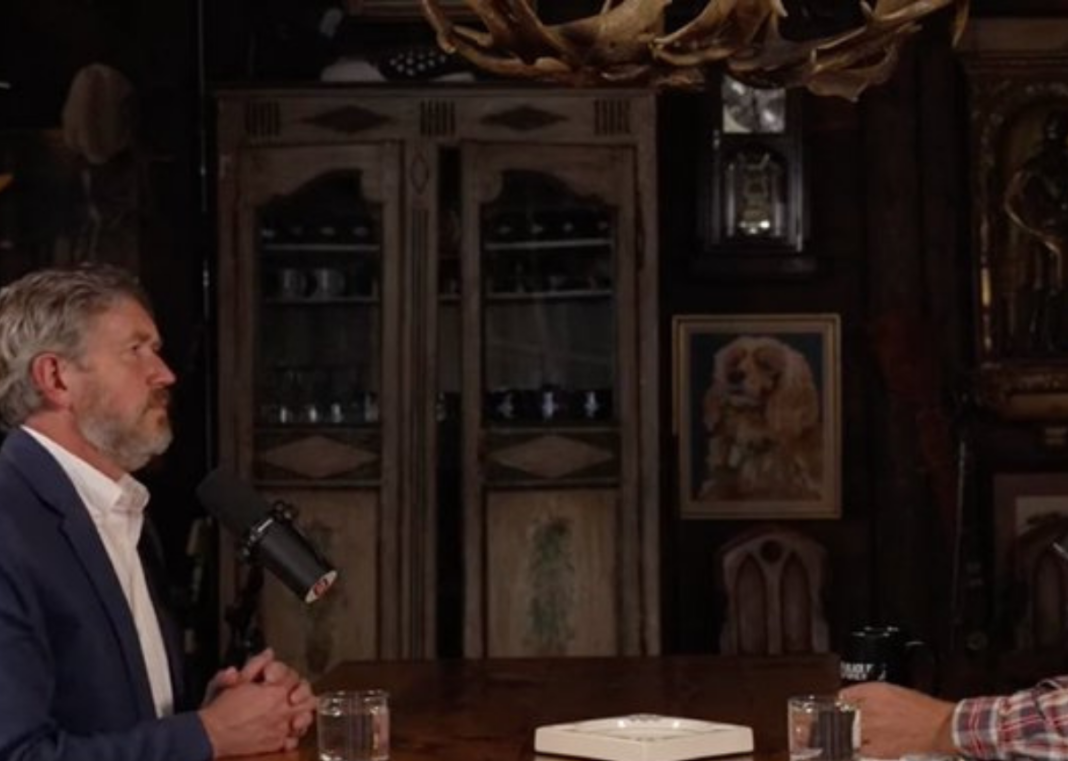
Speaking on The Tucker Carlson Show in an episode that aired this week, Massie described the opposition funding in stark terms: “It didn’t come from regular people. It’s come from billionaires, and 95 percent of it — at least 95 percent — has come from the Israeli lobby.” He specifically named AIPAC, the Republican Jewish Coalition, and Christians United for Israel, alongside three billionaire donors: Miriam Adelson, hedge fund manager Paul Singer, and financier John Paulson — none of whom are Kentucky residents. Middle East Eye
Analysts estimate that more than $10 million could ultimately be spent in the race, much of it flowing through outside political action committees. Massie himself has characterized the spending as wasteful, writing on social media: “They’ve wasted $10 million in my race already.” By contrast, Gallrein has raised over $2 million for his campaign, with nearly $100,000 of that total traceable to the Republican Jewish Coalition PAC, according to Federal Election Commission filings. Local 12 + 2
AIPAC’s United Democracy Project had deposited approximately $1.5 million directly into the race, while Kentucky 4th — a super PAC supporting Massie — had spent just under $3.5 million in response. The MAGA KY super PAC, largely funded by Singer and Adelson, had spent $4.5 million on attack advertising against Massie alone. The DispatchLPM
The Deepfake Dimension
The race has descended into one of the most aggressive and technologically novel primary contests of the 2026 cycle. Super PAC attack ads in the race have used AI-generated “deepfake” video to depict each candidate in a damaging light, despite a state law passed in Kentucky last year intended to regulate such content in elections. One ad, sponsored by MAGA KY, portrayed Massie using AI-generated imagery as holding hands and dining with Democratic Representatives Ilhan Omar and Alexandria Ocasio-Cortez, cutting to a hotel room door closing with a “do not disturb” sign displayed. Massie condemned the spot on social media, calling it “disgusting and defamatory.” LPMYahoo!
Massie’s Case: A Whistleblower Under Siege
Massie framed the financial assault as an effort to remove one of Congress’s most persistent independent voices on foreign policy and classified government conduct. He told Tucker Carlson: “If I lose on May 19, I’ll be out of Congress on January 3 next year … I won’t be invited down into the secret SCIFs to read the secret interpretations of the laws that the executive branch is using to spy on you. The one whistleblower, if you will, in Congress, will be gone.” Middle East Eye
Massie also alleged that AIPAC was circumventing disclosure requirements by routing hard-dollar contributions to Gallrein’s campaign through a vendor: “What we’ve realised and deduced is that they’re funnelling money, hard dollars — from their donors to [Gallrein’s] campaign through a vendor,” he explained. AIPAC has not publicly responded to Massie’s specific allegations regarding vendor-based fundraising. Middle East Eye
Gallrein’s Position and Trump’s Role
Gallrein’s campaign spokesman Lance Trover framed the contest as a straightforward loyalty referendum: “Ed Gallrein is endorsed by President Trump who won the district by 35 points. That alone shows Thomas Massie is nowhere close to in line with KY04.” CNN
Massie, for his part, has argued that the financial pressure on Republican members of Congress extends far beyond his own race: “I think that’s one of the reasons they’re attacking me and putting so much money into my race — is to keep the others in line, and so far, it’s working,” he told CNN in a recent interview. CNN
Regional and National Implications
The Kentucky race has become a test case for a broader question reshaping American politics: whether pro-Israel lobbying organizations can exert decisive influence not just in Democratic primaries, as they have done before, but inside the Republican Party’s own base as well. Massie described the stakes in systemic terms: “Their position is more war, it’s more strife, it’s more bombs, it’s more foreign aid, and those are the things that I’ve been voting against. So the real reason that this race is a serious race, and I may lose, is because a foreign lobby has fully funded — to the extent that they’ve never done in any Republican race ever before.” Middle East Eye
The warning resonates nationally. A December 2025 poll by the Institute for Middle East Understanding Policy Project and conducted by YouGov found that more than a third of Republican voters said they would prefer a primary congressional candidate who rejected AIPAC money, compared to only 19 percent support for a candidate who accepts AIPAC donations. The same poll found that 44 percent of Republican voters said they would support a candidate who favored reducing the flow of U.S. taxpayer-funded weapons to Israel — a significant constituency for a party long defined by unconditional support for the Israeli government. The InterceptThe Intercept
Background: AIPAC’s Expanding Electoral Role
AIPAC did not raise funds directly for political candidates until 2021, when it formed its own political action committee and announced plans for a super PAC. The shift marked a major strategic escalation. In the 2024 election cycle, AIPAC spent a record $45.2 million to defeat two progressive Democratic legislators critical of Israel — Jamaal Bowman of New York and Cori Bush of Missouri — both of whom lost their primary races. WikipediaWikipedia
As of 2025, AIPAC reports more than 5 million members across the United States, 17 regional offices, and what it describes as a vast pool of donors. The group’s move into Republican primaries represents a significant evolution from its historical pattern of targeting Democrats it deemed insufficiently supportive of Israel. Wikipedia
Massie’s voting record on Israel-related legislation is not ambiguous. He has consistently voted against foreign aid to any country — including Ukraine and Israel — citing fiscal concerns and his opposition to deficit spending, and has also voted against non-financial resolutions expressing U.S. support for Israel. Local 12
What Happens Next
Kentucky’s Republican primary is scheduled for May 19, 2026, less than two weeks away. Kentucky state representative T.J. Roberts, a Massie ally, argued that the congressman’s core supporters are reliable enough to provide a floor that is “near unbeatable,” while Senator Rand Paul of Kentucky has publicly rallied to Massie’s defense and urged donors to counter the outside spending. The Dispatch
Senior Republicans in Washington remain divided on whether Trump’s political operation can ultimately dislodge Massie, and the result will likely reverberate well beyond Kentucky. A Massie defeat would signal to other Republicans that cross-aisle independence on foreign policy and Israel carry a prohibitive electoral cost. A Massie victory would test the limits of both AIPAC’s power and Trump’s influence over a district his endorsed candidate has yet to make fully his own. Either way, the race is set to become one of the defining congressional primary contests of the current political era.