
Philippines Foreign Minister Plans Meetings With Myanmar Ethnic Armed Groups
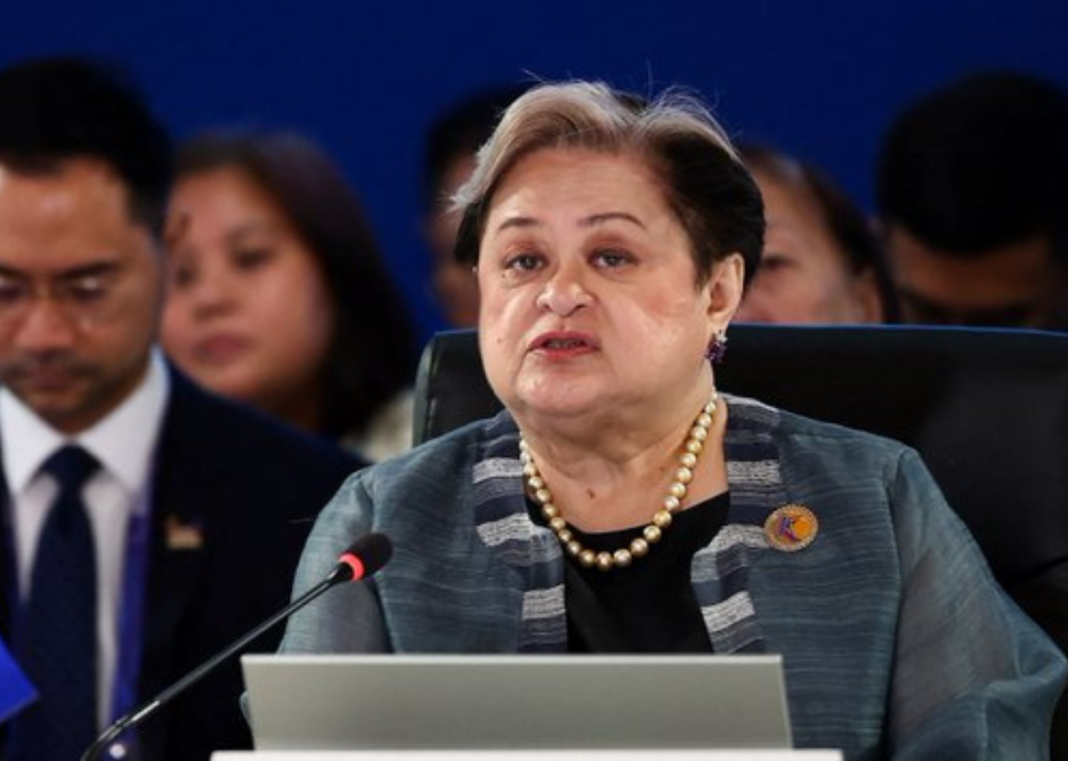
Philippine Foreign Affairs Secretary Maria Theresa Lazaro said on Wednesday, June 10, that she intends to meet ethnic groups from Myanmar in the coming days to learn about the situation on the ground and seek solutions to the country’s ongoing civil conflict. Lazaro made the announcement at a forum organised by Nikkei in Tokyo, where she is attending a series of diplomatic engagements. She did not specify which groups she plans to meet or where the meetings will be held. The Star + 2
“I intend to meet with certain ethnic armed groups and to find out the situation and how we can really try to help,” Lazaro told the Nikkei forum. The Star
The Philippines holds the chairmanship of the Association of Southeast Asian Nations (ASEAN) in 2026, and President Ferdinand Marcos Jr. has appointed Lazaro as his special envoy to Myanmar. That dual role gives Manila a formal mandate to engage all sides of the conflict — a remit that extends beyond the new government in Naypyidaw. Yahoo!
In January, Manila convened a “stakeholders’ meeting” that assembled several ethnic rebel groups to find solutions to the crisis. Wednesday’s announcement signals a continuation of that approach — reaching out to armed ethnic organisations rather than limiting diplomacy to Myanmar’s central government. BusinessWorld
Myanmar’s President Min Aung Hlaing has said his new government will strive to normalise relations with ASEAN. He made that pledge on April 10, when he was sworn in as president after five years of ruling the country as military chief following the February 2021 coup that ousted elected leader Aung San Suu Kyi. Yahoo!INQUIRER.net
The transition, however, has not been accepted by resistance forces. The elections, which concluded in January 2026, excluded mainstream political parties including the National League for Democracy, and the military’s traditional proxy party dominated the results. In April, Min Aung Hlaing set a 100-day deadline for ethnic armed organisations to engage in dialogue — an offer widely characterised as an ultimatum in the absence of concrete confidence-building measures. IISSIISS
That deadline was immediately rejected by the Karen National Union, Chin National Front, and the National Unity Government. Bhrn
Lazaro’s outreach to ethnic groups sits within a broader debate over how ASEAN should engage Myanmar at this moment. Myanmar was blocked from assuming the ASEAN chairmanship in 2026, leaving the Philippines to take the role instead — a decision reflecting the bloc’s continued reluctance to restore the junta’s full standing. Prism News
Regional Impact
Myanmar’s leadership has been barred from attending top-level ASEAN meetings, but the regional bloc has been seeking ways to re-engage with Naypyidaw since the new, nominally civilian government took power in April. Manila’s direct outreach to ethnic armed organisations introduces a parallel channel that bypasses the Naypyidaw government, raising questions about whether any engagement can yield meaningful results without the participation of the conflict’s principal armed actors. Yahoo!
The Philippines’ approach also adds pressure to stalled Code of Conduct discussions elsewhere in the region. On the same day Lazaro spoke in Tokyo, she told the Nikkei forum that a bad South China Sea code of conduct would be worse than no deal at all, and that any agreement must be grounded in the UN Convention on the Law of the Sea — signalling that Manila intends to use its 2026 chairmanship to push for substantive outcomes across multiple fronts simultaneously.
Internationally, the European Union has extended its sanctions on Myanmar through April 2027, and genocide proceedings against Min Aung Hlaing are underway at the International Court of Justice and the International Criminal Court, alongside cases filed in Argentina and Timor-Leste. That legal backdrop constrains how far ASEAN members can go in formally rehabilitating Naypyidaw without domestic and international political cost. Bhrn
Background
Myanmar has been engulfed in civil war since the military seized power in a coup on February 1, 2021, overthrowing the elected government of Aung San Suu Kyi. ASEAN adopted a Five-Point Consensus in April 2021 calling for an immediate cessation of violence, dialogue among all parties, mediation by an ASEAN special envoy, humanitarian assistance, and a visit to Myanmar to meet all parties concerned. The junta largely ignored these commitments. Successive ASEAN chairs — Brunei, Cambodia, Indonesia, Laos, and Malaysia — each appointed their own special envoy, producing inconsistent approaches. Though direct junta rule is formally over, the generals retain control of key levers of power, and the civil war continues with no clear end in sight. Defcon Level + 3
What Happens Next
Lazaro confirmed the meetings with ethnic armed groups will take place in the coming days but provided no further scheduling details. The Philippines, as ASEAN chair, is expected to continue pursuing a dual-track approach — engaging both the Naypyidaw government and armed ethnic organisations. Min Aung Hlaing’s 100-day dialogue deadline for ethnic armed organisations remains in effect, though it has already been rejected by key groups. ASEAN’s next summit-level discussions, where Myanmar’s re-engagement with the bloc may be formally addressed, will provide the next test of whether Manila’s expanded outreach translates into any measurable diplomatic progress. Yahoo!IISS