
The United States and Iran exchanged military strikes on Wednesday and Thursday, June 11, with American forces hitting Iranian military infrastructure and the Islamic Revolutionary Guard Corps retaliating against US-linked bases in Bahrain, Kuwait, and Jordan. The exchanges placed a fragile April ceasefire under its most serious strain yet and drew several Gulf states directly into the latest round of escalation.
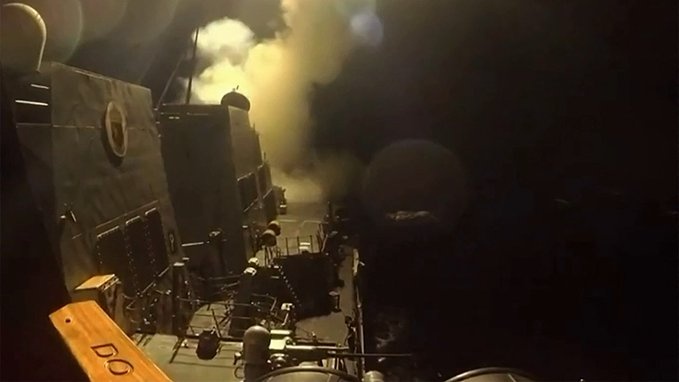
US Central Command said the latest wave of strikes began at 5:15pm Washington time on Wednesday, early Thursday in Iran, and had been “completed.” Marine Corps, Air Force, and Navy assets fired precision munitions at targets across Iran. US officials said the attacks were aimed at Iranian surveillance, communications, and air defence systems that posed a threat to American forces and commercial shipping in regional waters.
Iranian media reported explosions in several areas, including Bandar Abbas, Qeshm, and Minab, near the Strait of Hormuz. Reports also cited strikes in Karaj, Nazarabad, and Pishva, near Tehran. Iranian media said at least three people were wounded in Tehran province.
The attacks came after US President Donald Trump accused Tehran of prolonging negotiations to end the three-month war. Speaking on Wednesday, Trump said Iran had been “playing us for suckers” and would “have to pay the price.”
Secretary of Defense Pete Hegseth suggested the military pressure could continue, saying that if Trump required it, Washington would “negotiate with bombs.”
Iran did not stay silent. The IRGC said it retaliated by striking US-linked military targets in Bahrain, Kuwait, and Jordan. Iranian state media said the attacks included drones and ballistic missiles targeting the US Fifth Fleet in Bahrain, airbases in Kuwait, and the al-Azraq airbase in Jordan.
Bahrain issued an air raid alert on Wednesday after Iranian reports said the US base there had been targeted. The interior ministry urged residents to remain calm and move to safe places.
In Kuwait, authorities temporarily closed the country’s airspace early on Thursday and diverted flights, citing risks to civil aviation after what they described as Iranian attacks. The military said its air defences were engaging “hostile aerial targets.” Kuwait later announced that commercial air traffic had returned to normal.
Jordan’s military said on Thursday that its air defence systems and air force intercepted 20 missiles launched from Iran towards the Azraq area in Zarqa governorate, around 80km east of Amman. It said fragments fell but caused no casualties or material damage.
The IRGC, however, claimed that 12 ballistic missiles had hit the al-Azraq airbase and its control centre, saying the attack destroyed facilities and aircraft. The claims could not be independently verified.
Strikes on Shipping in Gulf of Oman
The escalation also saw US strikes on shipping in the Gulf of Oman. An Iranian cargo barge was hit by a US projectile in the Gulf of Oman early on Thursday, the Iranian governor of Sirik county said, according to Mehr news agency.
The 150-tonne cargo barge, owned by locals from Sirik and carrying essential goods from the Omani port of Khasab, was hit about five nautical miles off Khasab. All five crew members were rescued by passing vessels and taken to Oman.
US forces disabled three tankers in the vital waterway this week, leading to the death of three seafarers over enforcement of an Iranian ports blockade. Two Indian seafarers were confirmed killed and one went missing after a US attack on the Palau-flagged Settebello oil tanker off the coast of Oman early on Wednesday, according to Indian news outlet The Hindu.
Iranian media reported on Thursday that the Iranian navy had hit two ships trying to transit the strait. US Central Command denied that shipping had stopped, saying commercial vessels were still moving in and out of the waterway.
Oil prices rose again on Thursday as traders weighed the risk of further disruption. Gulf stock markets also dipped, reflecting wider concern that the confrontation could spread beyond direct US-Iran exchanges.
Iran Condemns Strikes, Calls Ceasefire “Meaningless”
Iran’s foreign ministry condemned the US strikes on Thursday, saying they rendered the nearly two-month ceasefire “practically meaningless.” It said Washington bore responsibility for what it called the “extremely serious consequences” of the attacks.
UN Secretary General Antonio Guterres warned against a return to “full war,” while Iran’s UN ambassador Amir Saeid Iravani said no sustainable agreement could be reached through threats or the use of force.
Trump told Fox News that US forces had fired 49 Tomahawk missiles during the latest strikes and claimed Iranian leaders had contacted him while the bombing was under way to ask for it to stop. Iran’s IRGC denied the claim, calling it an attempt to cover for Washington’s position in the war.
Background
The war began in February with US-Israeli strikes on Iran. A ceasefire reached in April had held uneasily for nearly two months before this week’s escalation. The renewed hostilities followed the downing of an American helicopter near the Strait of Hormuz earlier this week, after which Washington launched strikes on Iranian military infrastructure. Tehran has insisted that any settlement include a truce in Lebanon, where Israel has continued to bombard civilian areas, killing 3,696 people since March, while Hezbollah has continued to target Israeli forces. The Strait of Hormuz, through which roughly 20 percent of global oil trade passes, has been a central flashpoint throughout the conflict.
What Happens Next
Qatari negotiators travelled to Tehran on Wednesday after consultations with Washington in an effort to bridge remaining gaps between the two sides. The delegation left on Thursday. US Central Command has said its latest strikes have been “completed,” though Secretary of Defense Hegseth has left open the possibility of further military action. Iran’s foreign ministry has warned of “extremely serious consequences” and placed responsibility for any deterioration on Washington. Whether diplomatic efforts led by Qatar can revive the ceasefire framework now depends on whether both sides agree to pause further military exchanges.