

China Issues Extreme Flood Warning for Xinjiang as Desert Floods Two Months Ahead of Schedule
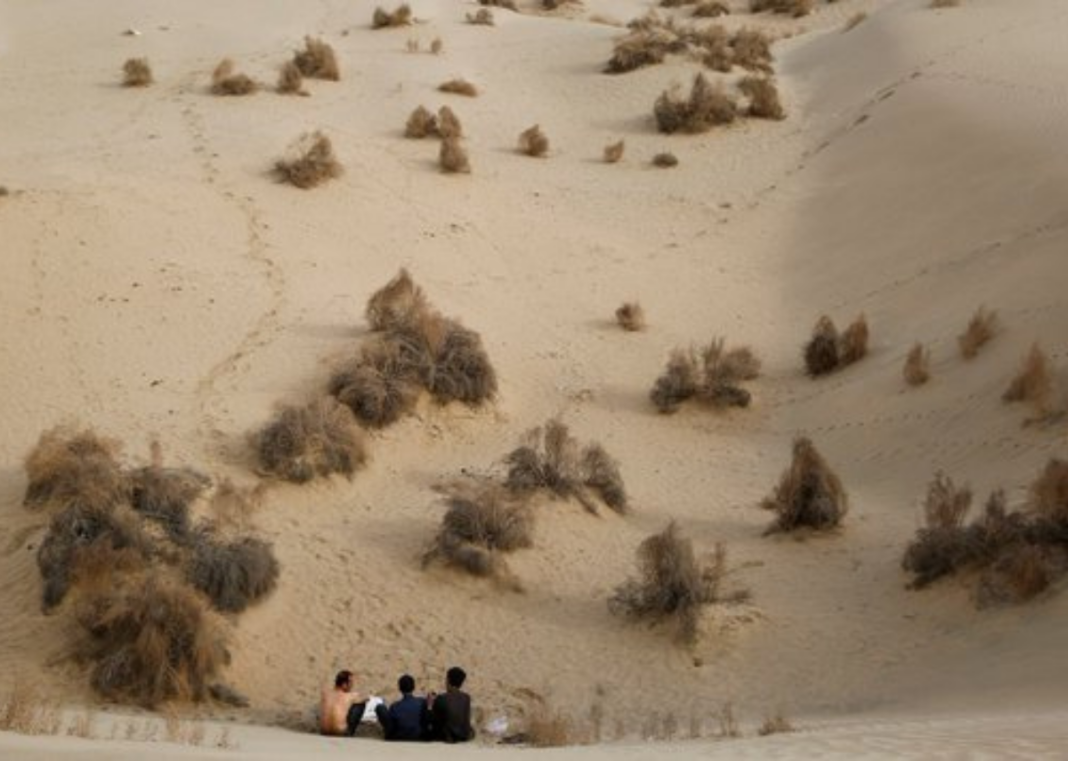
Chinese authorities warned communities in the northwestern Xinjiang region on Friday, June 12, to prepare for extreme flooding this summer, after the Taklamakan Desert — China’s largest — experienced its first flood of the year in early June, driven by abnormally high temperatures, accelerated glacier melt, and rainfall running two to three times above historical averages.
State broadcaster CCTV reported the warning on Friday, showing footage of water filling the typically arid dunes of the Taklamakan. While the desert has experienced similar floods since 2021, they typically occur in August, when temperatures peak. The early June timing marks a significant shift in the seasonal pattern. Military Times
The Conditions Behind the Flooding
On June 12, Xinjiang was 7.3 degrees Celsius hotter than average for this time of year, reaching 38 degrees Celsius. Precipitation in western and southern parts of the region has also been running at double or even triple the historical average for early June, according to CCTV. Military Times
The combination of intense heat and elevated rainfall has accelerated the melting of glaciers and snowpack in the Tianshan and Kunlun mountains, sending large volumes of meltwater rushing into the Tarim River — China’s longest inland waterway. The increased runoff caused the river to burst its banks and spill water into low-lying areas of the desert. Military Times
Officials said the flooding water can provide short-term benefits for local forests, but warned that extreme floods could damage roads, railways, and oil and gas infrastructure, posing a significant disaster risk for affected communities. Yahoo!
Infrastructure and Agricultural Exposure
The stakes are substantial. Xinjiang sits at the heart of China’s domestic energy and agricultural production. Xinjiang accounts for approximately 20% of the world’s cotton production, a water-intensive crop whose fields occupy large areas of low-lying terrain in the Tarim Basin — the same basin now receiving abnormal runoff from the mountains. NBC News
The region is also crossed by pipelines and transmission infrastructure connecting China’s interior energy resources to eastern population centres. Roads and highways built across desert terrain are particularly exposed to sudden inundation from uncharacteristic flood events, and previous flooding seasons have recorded submerged desert highways captured on widely circulated social media footage.
Flooding has affected the Taklamakan Desert’s Tarim Basin before, with the Xinjiang Water Resources Department activating flood emergency responses in prior years. Since mid-August in previous flood seasons, temperatures have exceeded 40 degrees Celsius in some parts of the desert — conditions now being recorded in June rather than late summer. Wikipedia
A Pattern Accelerating Since 2021
The Taklamakan Desert has experienced flooding since 2021, but the 2026 event is notable both for its timing — two months earlier than the typical August peak — and for the scale of the temperature anomaly driving it. Military TimesNBC News
From 2001 to 2022, average temperatures in Xinjiang rose by 1 degree Celsius compared to the 1961-2000 baseline, and average precipitation increased 16.1%. Warming has also accelerated glacier melt, with the glacial area in Xinjiang shrinking by 11.7% over the past 60 years. Wikipedia
Chen Yaning, of the Xinjiang Institute of Ecology and Geography at the Chinese Academy of Sciences, has previously said that warming and increased precipitation cannot alter the fundamental landscape of arid deserts in northwest China — but that the frequency and intensity of flood events within those desert systems will continue to rise.
The annual average precipitation in the Taklamakan Desert is less than 100 millimetres, while the annual average evaporation is as high as around 3,000 millimetres. It is one of the driest places on Earth. That the region is now experiencing June floods of the scale authorities consider extreme enough to warrant formal community warnings reflects how far conditions have shifted from historical norms. CNN
Regional and Global Impact
Xinjiang’s flood risk has direct implications beyond China’s borders. The Tianshan mountain range, which feeds meltwater into the Tarim River basin, extends across Kazakhstan and Kyrgyzstan. The China Meteorological Administration has previously warned that glacial melting in Xinjiang poses a high risk of dam failure on tributaries including the Aksu River near China’s border with Kyrgyzstan. A dam failure or uncontrolled glacial lake outburst in the upper reaches of a transboundary river system would carry consequences for downstream communities in Central Asia as well as within Xinjiang itself. NBC News
Xinjiang’s cotton production is also a globally significant supply chain input. Any large-scale crop damage from flooding in the Tarim Basin would transmit through textile and apparel manufacturing supply chains across Asia, at a time when global trade is already under strain from the Iran war energy shock.
Ma Quanlin, deputy head of the Gansu Desert Control Research Institute, has said the formation of lakes and flooding events in Xinjiang’s desert systems is due to the impacts of climate change — more rain and more melting glacier water — and that similar trends have also been noticed in Dunhuang, located on the edge of the Gobi Desert in northwest China. The phenomenon is not confined to the Taklamakan alone. Wikipedia
Background
North-west China is among the regions most sensitive to climate change, with warming and increased precipitation particularly evident since 2000. The glacial area in Xinjiang has shrunk by 11.7% over the past 60 years. In 2021, footage of floodwaters surging across the Taklamakan and submerging desert highways began trending on Chinese social media, marking the first time many observers had seen the region flood. The events have recurred each year since, typically in August. Xinjiang is more than twice the size of France and is home to long mountain ranges along its borders, including the Tian Shan, the Pamirs, the Kunlun, and the Karakoram, all of which carry significant glacial mass that feeds into the Tarim Basin river system. China has invested heavily in flood control infrastructure nationally, and the annual flood death toll has fallen sharply from the thousands recorded in the 1990s, but Xinjiang’s desert terrain and dispersed communities present distinct management challenges. Wikipedia + 2
What Happens Next
Chinese authorities have issued the extreme flood warning ahead of what is expected to be a prolonged period of abnormal temperatures and elevated precipitation across Xinjiang this summer. No casualty figures or damage assessments were reported as of June 12, as the warning pertains to anticipated rather than already-occurred extreme flood events. The Ministry of Water Resources’ flood emergency response activation protocols — used in previous Xinjiang flood seasons — are expected to be deployed if water levels in the Tarim River and its tributaries continue to rise. Whether the summer peak in late July and August produces compounding flood events on top of the already-early June flooding will determine the full scale of the season’s impact on the region’s infrastructure and agricultural output.