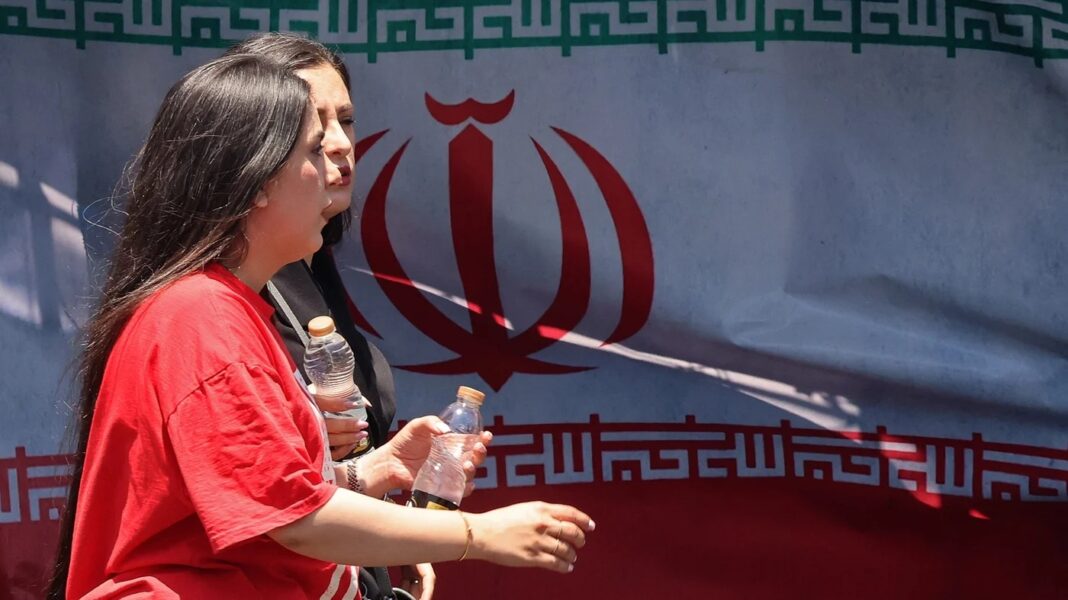

Across Iran on Monday, people responded with a tangle of emotions to the announcement that the United States and Iran had agreed to end a month-long war — some with tears of relief, others with outright fury.
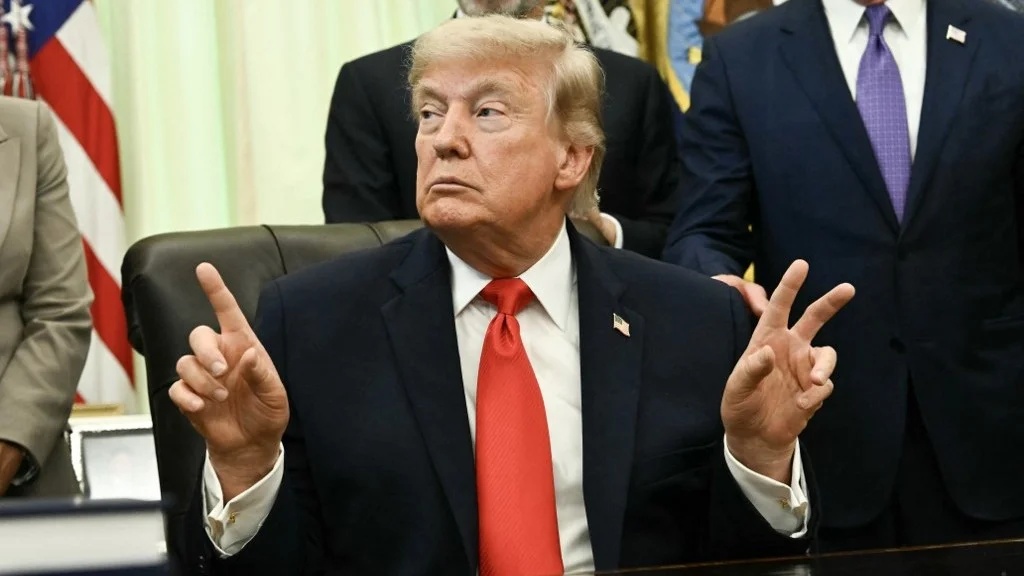
US President Donald Trump announced a deal to end the month-long US-Israeli war on Iran, and the news spread fast. In Tehran, in Sari, in Karaj, ordinary Iranians stopped what they were doing and reached for their phones. Some wept. Some shouted. Many simply went quiet and tried to work out what to believe.
Relief Among Those Who Lost the Most
For Sepideh, a 32-year-old jewellery seller from Tehran who runs her business through Instagram, the past several weeks had been close to ruin. Conflict, uncertainty and internet disruptions had reshaped daily life, and sales had collapsed for small business owners like her.
“Has it really ended? I can’t believe it,” she told Middle East Eye on Monday. “Thank God. I still can’t believe it’s over. I just hope everything goes back to normal. We were exhausted. I’m so, so happy.”
“Most of my sales came through Instagram,” she said. “When the internet was cut off, everything was frozen. Besides that, nobody was in the mood to buy things like jewellery.”
Sepideh now says she is allowing herself to think about the future again. She hopes the agreement holds and eventually leads to a broader deal that improves economic conditions.
The Deal Itself
Trump declared that the deal “is now complete,” announcing the end of Washington’s naval blockade and the reopening of the Strait of Hormuz. On Truth Social, Trump wrote that he “fully authorize[s] the toll free opening of the Strait of Hormuz” and called for the “immediate removal of the United States Naval blockade,” adding: “Ships of the World, start your engines. Let the oil flow!”
Iran’s Deputy Foreign Minister Kazem Gharibabadi confirmed the announcement, saying that the war and military operations on several fronts — including Lebanon — would end immediately and permanently.
Speaking to Iranian state television, Gharibabadi said talks on a final agreement would take place over a 60-day period, and warned that Tehran would take its own measures if it saw any breaches from the other side. He also said the agreement did not mean Iran trusted the “enemy.”
Iranian state-affiliated Mehr News Agency reported that the proposed memorandum includes provisions for the release of frozen Iranian assets. Fars news agency reported that Iran would regulate marine traffic through the Gulf in coordination with Oman under the emerging ceasefire arrangement.
Pakistan’s Prime Minister Shehbaz Sharif confirmed on X that the formal signing ceremony would take place in Switzerland on June 19.
Those Still Waiting to Believe
For Darya, a 28-year-old from the northern city of Sari, the announcement carried deeply personal weight. She had been accepted to a French university and had spent months unable to complete her visa application. The uncertainty, she told Middle East Eye, had worn her down.
“It feels like a miracle,” she said. “I know almost nothing about politics, but for months all I did was follow the news.”
She said she was particularly alarmed by Israeli strikes on Lebanon on Sunday, fearing they could derail the diplomatic process. “I was sure Netanyahu was trying to sabotage everything,” she said. “When I heard about the new Israeli attacks on Lebanon, I thought it was over. I thought we were back to square one.”
Despite her relief, Darya still plans to leave Iran — at least for now. But she is hoping the country she returns to will be in better shape. “I want sanctions to be lifted,” she said. “Most of our problems come from sanctions. If sanctions are removed, jobs, businesses and the economy will improve too.”
Skeptics on Both Sides
Not everyone is convinced the agreement signals a real turning point. Mohammad, a 43-year-old Tehran resident, told Middle East Eye the deal was far less than it was being made out to be.
“Just look at how long it took them to reach this small understanding, which is really more of a ceasefire extension than anything else,” he said. “During that time, the United States attacked, Israel attacked and Iran attacked. All of that makes it difficult for me to be optimistic. People want to believe all their problems are over, but I don’t think Iran and the United States will be able to reach an agreement on difficult issues like the nuclear programme and sanctions relief.”
That kind of caution runs through large parts of the Iranian public. While many people say they are simply happy to see a pause in military escalation, others doubt the agreement will last, and some believe it represents a dangerous concession.
Opposition Supporters Feel Abandoned
For some Iranians who had hoped the conflict might lead to political change inside the country, the deal has brought a different kind of pain entirely.
Amir, a 19-year-old from Karaj, said he felt deceived. “We were fooled,” he told Middle East Eye. “We were lied to. Reza Pahlavi said he was on his way to Tehran. Trump said help was coming soon. Netanyahu said he would change the situation in Iran. Was this the help Trump promised? To make a deal with the clerics?”
He predicted that with the external pressure now lifted, the Iranian government would turn its attention back inward. “Once the agreement is in place and the Islamic Republic no longer worries about war, it will turn its attention back to the people,” he said. “More repression will follow.”
Hardline Anger at the Negotiators
The sharpest criticism of the agreement has come from some hardline supporters of the Islamic Republic, who had opposed any negotiations with Washington. Over recent weeks, opposition to negotiations had become increasingly visible at rallies and public gatherings organised by conservative groups, with some participants openly describing the negotiators as traitors.
Emad, a 38-year-old from Tehran who supports the government but opposes the deal, directed his anger at Iran’s chief negotiator and parliamentary speaker. “God curse Araghchi and Ghalibaf for throwing us into another trap like the nuclear deal,” he said. “Only 10 years have passed since the disgraceful agreement between Rouhani and Obama. How can people fall for this again?”
Emad also questioned the deal’s timing. “Look at the timing. Why two months from now? Because Trump wanted peace of mind during the World Cup. After that, he will come back for us. And under what conditions? We reopened the Strait of Hormuz, oil prices returned to normal, and the United States and Israel have had time to update their plans for another attack on Iran.”
Emad, who is still grieving the death of Ali Khamenei, said he sees the entire diplomatic process as a coordinated effort between Trump and Israeli Prime Minister Benjamin Netanyahu.
Regional and Economic Impact
Financial markets responded positively to the announcement, with Brent crude futures falling roughly 4 percent and US West Texas Intermediate declining more than 4.6 percent in early Monday trading — a reflection of how severely the conflict and Hormuz blockade had rattled global energy markets.
The agreement to reopen the Strait of Hormuz carries significance well beyond Iran and the United States. The strait is the passage point for roughly a fifth of the world’s oil supply. Under the emerging arrangement, Iran would regulate marine traffic through the Gulf in coordination with Oman.
Maryam, a 59-year-old political science graduate, expressed skepticism about how durable any final agreement could be — and questioned whether the US-Israel relationship would allow it. “Israel, AIPAC and pro-Israel lobbying groups will not allow a final agreement between Iran and the United States unless the Islamic Republic changes its approach towards Israel,” she told Middle East Eye.
Background
The agreement comes after approximately 40 days of US and Israeli military operations against Iran, during which both sides traded strikes and the United States imposed a naval blockade on Iranian waters. The conflict disrupted global oil markets and internet access inside Iran, and led to civilian casualties and damage to infrastructure, including schools, hospitals and universities, according to Middle East Eye. The 2015 nuclear deal, formally known as the Joint Comprehensive Plan of Action, collapsed after the United States withdrew from it in 2018 under Trump’s first term. Iran and the US have had no formal diplomatic relations since 1980. Gharibabadi stated that Iran’s military capabilities and the threat of further escalation helped finalise the text of the current memorandum, and that Tehran did not agree to the deal until its final demands were included.
What Happens Next
A formal signing ceremony is scheduled to take place in Switzerland on June 19. Iran’s deputy foreign minister confirmed that international mediators will remain involved in the next phase and that the text of the memorandum of understanding will be published after the official signing. Talks toward a comprehensive final agreement are expected to run over a 60-day period. Tehran has stated it will take unspecified measures if it detects violations by the other side. The precise terms of the memorandum had not been made public as of Monday, June 15.