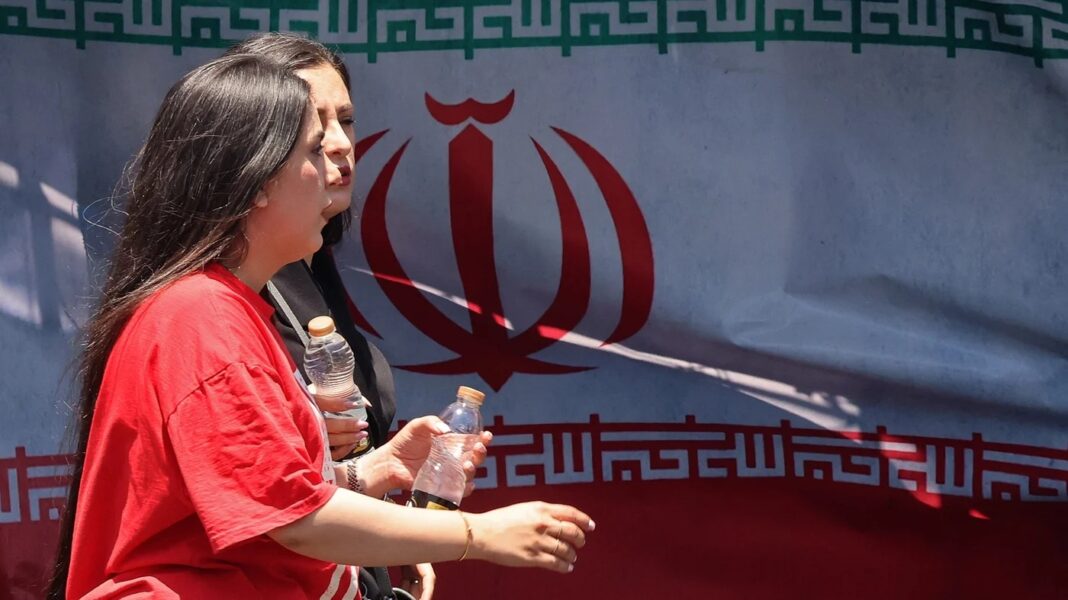
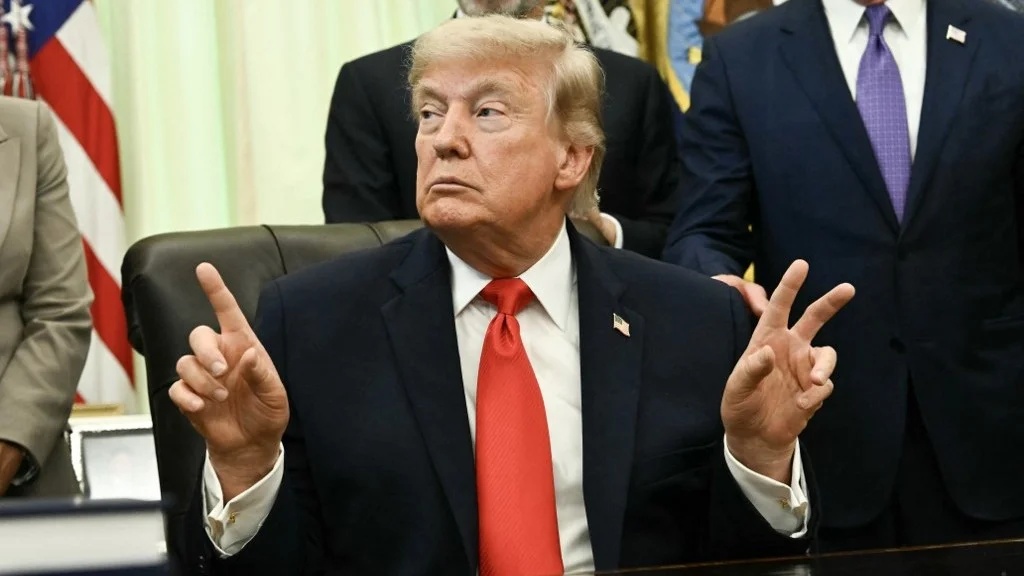

US President Donald Trump announced on Sunday evening that a peace deal with Iran “is now complete,” ordering an immediate end to the American naval blockade of Iran and the reopening of the Strait of Hormuz. Iran’s deputy foreign minister confirmed the agreement, saying military operations on all fronts — including Lebanon — would cease immediately and permanently. A formal signing ceremony is scheduled for Friday, June 19, in Switzerland.
Trump made the announcement on Truth Social on Sunday, which also fell on his birthday. “I fully authorize the toll free opening of the Strait of Hormuz, and, simultaneously herewith, authorize the immediate removal of the United States Naval blockade,” he wrote. “Ships of the World, start your engines. Let the oil flow!”
Iran’s Deputy Foreign Minister Kazem Gharibabadi confirmed the deal in remarks to Iranian state television. He said talks on a final agreement would take place over a 60-day negotiating period, and added that Tehran would take its own measures if it saw “breaches from the other side.” He also made clear that the memorandum did not mean Iran trusted what he called the “enemy.”
Gharibabadi said Iran’s military posture during the conflict helped bring the text to its final form. “Iran’s military power and threats helped finalise the text,” he said, according to Middle East Eye. “Tehran did not agree to the memorandum until its final demands were included.”
Pakistan’s Prime Minister Shehbaz Sharif confirmed the deal independently in a post on X in the early hours of Monday. “Both sides have declared the immediate and permanent termination of military operations on all fronts, including in Lebanon,” Sharif wrote. He added that “pre-implementation discussions” would take place before the formal signing on June 19.
The deal’s precise terms were not immediately made public. Iran’s Supreme National Security Council said in a statement carried by the semi-official Tasnim news agency that all warfare between the parties would cease “immediately and permanently from tonight” and that the naval blockade would end. The council added that US commitments under the memorandum would have to be met before negotiations for a final agreement could begin.
Iran’s state-affiliated Mehr News Agency reported that the proposed memorandum includes provisions for the release of frozen Iranian assets, though no figures were disclosed. Fars news agency reported that Iran would regulate marine traffic through the Gulf in coordination with Oman under the emerging arrangement.
Gharibabadi said mediators would remain involved in the next round of negotiations. The text of the memorandum of understanding, he said, would be published only after the official signing ceremony.
Qatar’s Ministry of Foreign Affairs welcomed the agreement in a statement on Sunday, describing it as “an important step towards consolidating sustainable peace and promoting economic growth” and a means to “de-escalate tensions,” according to NBC News.
Financial markets responded sharply to the news. Brent crude futures fell approximately 4 percent in early Monday trading, while US West Texas Intermediate dropped more than 4.6 percent, according to Middle East Eye. The Strait of Hormuz — a chokepoint through which roughly a fifth of the world’s oil supply passes — had been closed to commercial traffic under the US naval blockade, driving energy prices higher throughout the conflict.
Regional and Global Impact
The deal carries direct consequences for Lebanon, which has been caught in a parallel war tied to the broader Iran conflict. Iran’s confirmation that the ceasefire covers Lebanon explicitly marks the first time a US-Iran agreement has formally included that front. Prior ceasefire arrangements related to the Iran war had not formally included Lebanon, which contributed to continued fighting there and complicated earlier diplomatic efforts, according to Wikipedia’s documented record of the 2026 Israel–Lebanon ceasefire.
Gulf states had significant economic stakes in the outcome. A report by Middle East Eye indicated that the UAE had paid Iran billions of dollars to halt strikes, pointing to the acute pressure on Gulf economies during the blockade period. Qatar, which welcomed Sunday’s deal, had also been involved in earlier mediation efforts.
For global energy markets, the reopening of the Strait of Hormuz removes one of the most significant supply disruptions in recent years. The immediate drop in crude prices on Monday morning reflected the scale of the premium that markets had applied to the blockade risk.
Background
The war between the United States and Iran began on February 28, 2026, when the US and Israel launched coordinated strikes across Iran, which also included the assassination of Supreme Leader Ayatollah Ali Khamenei. A ceasefire brokered by Pakistan took effect on April 8, 2026, but remained fragile, with both sides trading strikes in subsequent weeks. Trump extended the ceasefire indefinitely on April 21. A separate Israel-Lebanon ceasefire, brokered by the US, took effect on April 16, 2026, establishing a 10-day truce that was intended to halt active fighting, but the Lebanon front remained active into June. The US imposed a naval blockade on Iran following the breakdown of talks in Islamabad, which had sought a 45-day two-phased ceasefire framework that Iran rejected in favor of its own 10-point plan.
What Happens Next
Both sides are expected to sign the memorandum of understanding electronically, with the formal ceremony set for June 19 in Switzerland, according to Pakistan’s Prime Minister Sharif. Pre-implementation discussions are expected to take place in the days between now and the signing. Once US commitments under the memorandum are met, Iran’s Supreme National Security Council said, negotiations for a final agreement will begin. Those final negotiations are expected to run over a 60-day period, as confirmed by Deputy Foreign Minister Gharibabadi. Mediators, who were not identified by name in Sunday’s statements, will remain involved throughout that process.