

Bailey: BoE Will Tolerate Above-Target UK Inflation
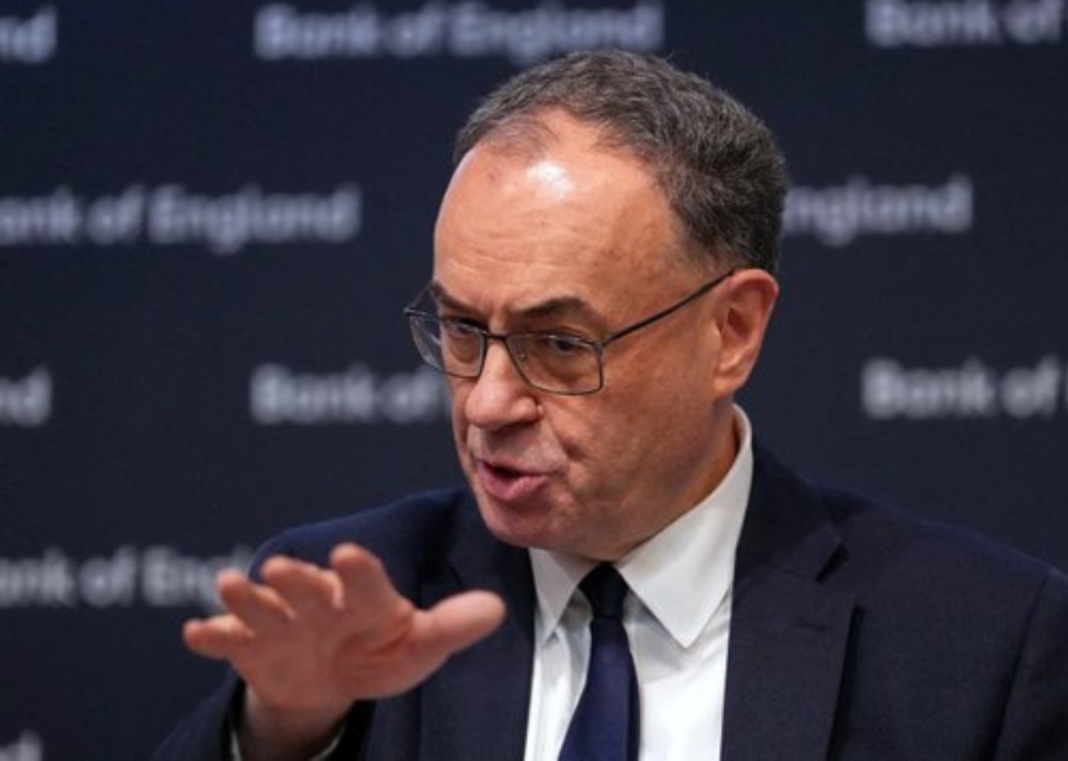
Bank of England Governor Andrew Bailey said on Friday that the central bank is justified in allowing UK inflation to remain above its 2% target, citing weak economic growth and persistent uncertainty over the economic fallout from the Iran war. Bailey delivered the remarks in a speech at the Reykjavik Economic Conference in Iceland, organised by Iceland’s central bank. The statement marks one of his most explicitly dovish public positions since the conflict began.
The Bank of England’s position, as set out by Bailey on May 29, rests on two factors: the fragile state of the British domestic economy and the unresolved disruption to global energy markets caused by the ongoing Iran war and the closure of the Strait of Hormuz, now entering its fourth month. Reuters reported that Bailey said allowing inflation to run above the central bank’s 2% target is justified given the uncertainty about the impact of the Iran war on the economy and the weak pace of growth. LSE
The governor was direct about the limits of that tolerance. “But that tolerance would weaken if signs of second-round effects begin to emerge,” Bailey said in the text of his Reykjavik speech. Second-round effects refer to the risk that an initial price shock — driven here by energy costs — spreads into broader wage demands and persistent price increases across the economy, making inflation significantly harder to bring down. LSE
Bailey also made clear that the Bank has not been passive. In his speech on Friday, Bailey reiterated comments he made last week in which he said that the BoE had tightened monetary policy by taking rate cuts off the table “and that is already affecting the economy.” Before the war began on February 28, financial markets had priced in three 0.25 percentage point rate cuts from the Bank of England across 2026. By taking those cuts off the table, the Bank of England forced private lenders to withdraw loans and products offered at the start of the year and price them differently, Bailey said. In effect, borrowing costs in the wider economy have already risen without the Bank formally raising its benchmark rate. 93.3 The DriveCity AM
Despite that, Bailey stopped short of signalling that an official rate hike is imminent. He told the Reykjavík Economic Conference that despite the closure of the Strait of Hormuz stretching into its fourth month, a hike to the Bank Rate may not be needed because of the weak domestic outlook for the UK economy. City AM
He offered a clear explanation for that caution. “It takes time for changes in interest rates to affect the economy and inflation, so higher interest rates might only push inflation below the Bank’s 2% target once the energy price shock has passed, resulting in undesirable volatility in both inflation and activity,” Bailey said. City AM
On the need for continued vigilance, Bailey was unambiguous. “We have to monitor the situation in the Middle East and how it affects the UK economy and inflation very closely and adjust policy as required,” he said in Reykjavik. 93.3 The Drive
A divided picture across Europe
The Bank of England’s cautious approach stands in marked contrast to its European counterpart. Policymakers at the European Central Bank have signalled a likely rate rise in June, after the ECB cut rates by more than the BoE before the war. The divergence reflects different assessments of domestic economic strength — the ECB appears more confident that its economy can absorb tighter monetary policy than the BoE judges the UK can. 93.3 The Drive
Financial markets are pricing in some tightening from the Bank of England, but not a dramatic series of hikes. Markets are fully pricing one quarter-point BoE rate hike and roughly a one-in-three chance of a second increase over the rest of 2026. Traders Union
Analysts have drawn varying conclusions from the Bank’s posture. Dutch bank ING expected a rate hike at the central bank’s next meeting in June with probably no further increases. Deutsche Bank forecast no move before July but said the scale of geopolitical uncertainty meant multiple hikes could not be ruled out. Investing.com Canada
Deutsche Bank Chief Economist Sanjay Raja assessed the situation bluntly. “Big picture, the MPC has bought itself time today. The MPC is preaching patience — but at the same time, the Bank has signalled that its patience may be wearing thin,” Raja said. Investing.com Canada
German bank Berenberg offered a more optimistic scenario. A reopening of the Strait of Hormuz soon might allow the BoE to resume cutting rates towards the end of 2026, Berenberg said. Investing.com Canada
Background
The Iran war began on February 28, when the United States and Israel started bombing Iran. Until that point, it was seen as nearly certain that the Bank of England would cut interest rates, as inflation in the UK was expected to fall towards the 2% target in the coming months. A fifth of the world’s crude oil passes through the Strait of Hormuz. The Bank of England’s Monetary Policy Committee kept interest rates on hold on April 30 as it waited to see the economic impact of the Iran war, even as the central bank said it expected inflation to climb in response to the energy price shock from the conflict. At that meeting, eight members voted to hold the Bank Rate at 3.75%, while one member, Huw Pill, voted to increase it by 0.25 percentage points to 4%. Bailey assessed the most likely outcome as one in which inflation peaks at a little over 3.5% at the end of 2026 before falling back to close to 2%. Yahoo Finance + 4
What happens next
Bailey said policymakers have to monitor developments in the Middle East closely, assess how they affect the UK economy and inflation, and adjust policy as required. The Bank of England’s next scheduled Monetary Policy Committee meeting follows April 30’s hold decision, with markets pricing at least one 0.25 percentage point rate hike before the end of 2026. The ECB is expected to raise rates in June. Bailey indicated that if second-round inflationary effects materialise — through wage growth or persistent price rises beyond energy — the Bank’s tolerance for above-target inflation would diminish and policy would tighten accordingly. Berenberg has said that a reopening of the Strait of Hormuz could open the door to rate cuts resuming later in the year. Traders Union + 2