
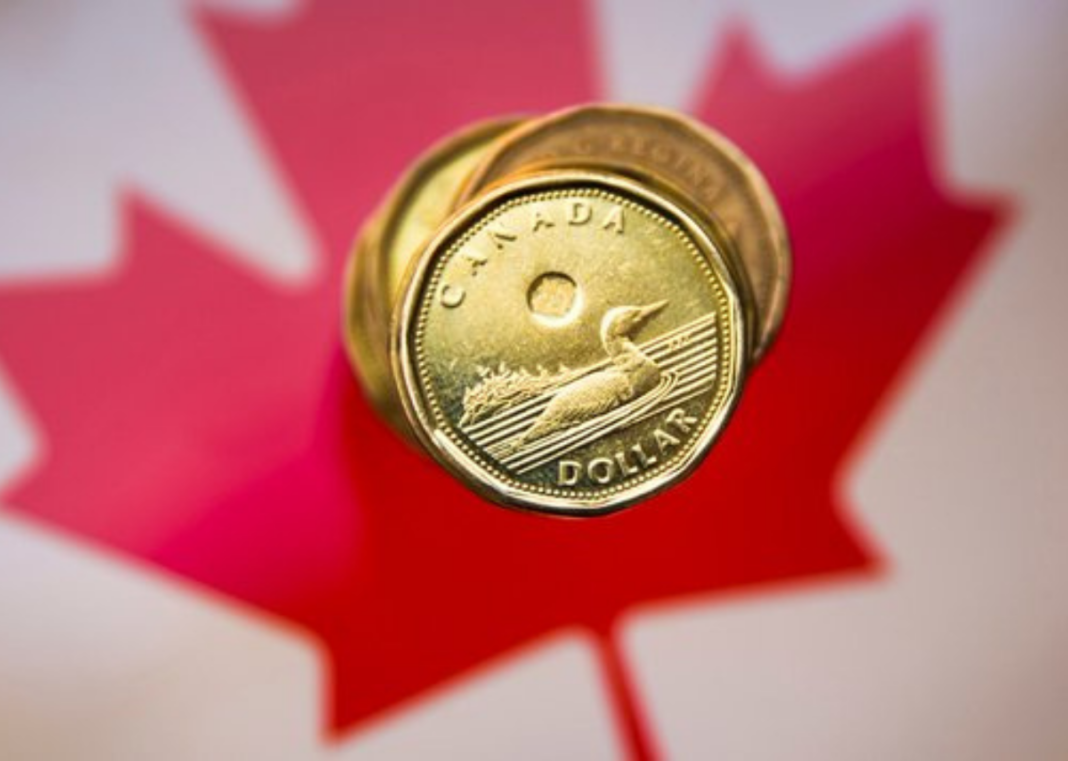

Canadian Dollar Falls to Two-Month Low as Speculator Bearish Bets Hit Highest Level Since December
The Canadian dollar weakened to a two-month low against the US dollar on Monday as speculative short positions against the currency surged to their highest level since December, compressing the loonie under the combined weight of a surprise technical recession, uncertainty over the upcoming review of Canada’s trade deal with the United States, and expectations of a widening interest rate differential with Washington. The loonie was trading 0.1 percent lower at 1.3950 per US dollar, or 71.68 US cents, after touching its weakest intraday level since March 31 at 1.3961. NBC News
Bearish bets by speculators on the Canadian dollar rose to the highest level since December, data from the US Commodity Futures Trading Commission showed on Friday. Non-commercial net short positions stood at 94,111 contracts as of June 2, up from 68,882 in the prior week. The increase of more than 25,000 contracts in a single week represents one of the fastest single-week buildups of bearish positioning against the loonie in recent months. NBC News
“Speculative shorts in CAD have increased as the market leans into a combination of wider US-Canada rate differentials, weaker Canadian growth momentum, and lingering uncertainty around the CUSMA review,” said Kevin Ford, an FX and macro strategist at Convera. NBC News
The CUSMA dimension is acutely time-sensitive. The United States-Mexico-Canada Agreement — known as CUSMA in Canada — has shielded much of Canada’s exports from US tariffs. It is set for review by a July 1 deadline. Any deterioration in the terms of that review, or a breakdown in the negotiation process, would expose a significant share of Canadian exports to tariff risk with immediate consequences for growth and the currency. NPR
The growth backdrop has deteriorated sharply. Recent first-quarter GDP data showed that Canada’s economy slipped into a surprise technical recession. Two consecutive quarters of contraction represent a meaningful shift in the Canadian economic narrative, reducing the Bank of Canada’s scope to hold rates and increasing the likelihood of further cuts — which would widen the rate differential against a US Federal Reserve that markets, after Friday’s strong payrolls data, now fear may resume raising rates rather than cutting them. NPR
The Bank of Canada’s decision this week sits at the centre of the market’s attention. “The BoC messaging this week will be closely monitored to gauge if those spec positions hold,” said Amo Sahota, a director at Klarity FX in San Francisco. A dovish cut — or dovish guidance accompanying a hold — would validate the speculative short positioning and push the loonie lower. A more hawkish outcome could trigger a partial unwind of the record short build. NPR
The external environment is adding pressure independently of domestic fundamentals. Monday’s global market turbulence, led by an 8.3 percent crash in South Korea’s KOSPI and rising US Treasury yields following stronger-than-expected American payrolls data for May, pushed the dollar broadly higher against major currencies. USD/CAD climbed to near 1.3950 on June 8, approaching its 2026 high after a 3 percent recovery from May lows. The next major resistance sits at 1.4000, a psychological barrier not tested since 2020. worldbank
Regional and Global Impact
A weaker Canadian dollar has immediate pass-through effects for Canadian consumers through higher import prices, compounding the inflation pressure already flowing from elevated global energy costs caused by the Strait of Hormuz closure. For exporters, particularly in the energy, agricultural, and manufacturing sectors, a softer loonie provides a partial offset — Canadian oil sands production, priced in US dollars, becomes more valuable in Canadian dollar terms as the exchange rate moves. But that benefit is selective, and the broader economy faces a stagflationary risk: contraction alongside imported price pressure.
The CUSMA review deadline of July 1 represents the most immediate binary risk for the currency. A favourable outcome that preserves Canada’s tariff-free access to the US market for its major export categories — energy, autos, agricultural products — could stabilise the loonie. A breakdown that reinstates tariffs, or introduces uncertainty over their scope, would likely accelerate the bearish positioning already visible in CFTC data.
Background
Canada entered a technical recession in the first quarter of 2026 following two consecutive quarters of GDP contraction, reversing a period of moderate growth in 2025. The Bank of Canada has been cutting rates since 2025 as inflation cooled and growth softened, bringing its policy rate below that of the US Federal Reserve and creating the rate differential that Ford and other strategists identify as a structural driver of Canadian dollar weakness. The CUSMA — the successor to NAFTA negotiated during Trump’s first term — is subject to a mandatory six-year review process, with the July 1 deadline representing the first major checkpoint under the current US administration. Canada’s energy sector, which accounts for a significant share of its export earnings and government revenues, has been partially insulated from the Iran war’s oil price effects because elevated crude prices benefit Canadian producers — but the net economic impact, filtered through weaker growth, a softer currency, and trade deal uncertainty, has been negative.
What Happens Next
The Bank of Canada will announce its policy rate decision this week, with markets watching closely for any shift in guidance toward further cuts or a more hawkish hold. Sahota said the BoC’s messaging this week will determine whether speculative short positions in the loonie hold or begin to unwind. The CUSMA review process will reach its July 1 deadline approximately three weeks after the Bank of Canada meeting, providing the next major event risk for the currency. A sustained break above the 1.4000 level would take the loonie to its weakest point against the US dollar since 2020. Canada has not yet published a formal response to the trajectory of CUSMA negotiations as of Monday. NBC News