

Ebola Reaches Congolese Displacement Camp of 30,000 as WHO Warns Outbreak Is Bigger Than Detected
Two people have died of Ebola inside a displacement camp hosting 30,000 internally displaced people in eastern Democratic Republic of Congo, the United Nations refugee agency confirmed on Thursday, June 11, as the World Health Organization warned the outbreak is spreading into new areas and is larger in scale than previously detected. The deaths — a mother and her daughter — occurred on May 31 and June 1 respectively at the Kpangba camp in Ituri province, according to the UN High Commissioner for Refugees.
As of Friday, June 12, DRC had reported 676 confirmed cases and 136 deaths since the outbreak was declared on May 15. The virus has now spread across three eastern provinces and into neighbouring Uganda, which has confirmed 19 cases including two deaths.
How the Outbreak Reached the Camp
A Congolese health ministry report seen by Reuters showed that a 60-year-old woman in the Kpangba camp tested positive for Ebola on May 30. By the time of her diagnosis, she had already broken out of quarantine and could not be traced by contact-tracing teams, the report said. She died on May 31. Her daughter died on June 1. Humanitarian workers later discovered both bodies, at which point post-mortem tests confirmed both had died of Ebola.
When WHO vehicles arrived to respond, community members pelted them, according to an aid worker with direct knowledge of the cases who spoke to Reuters on condition of anonymity. The source of both deaths — how the 60-year-old woman contracted the virus — was not established in the reporting.
Conditions Inside the Camps
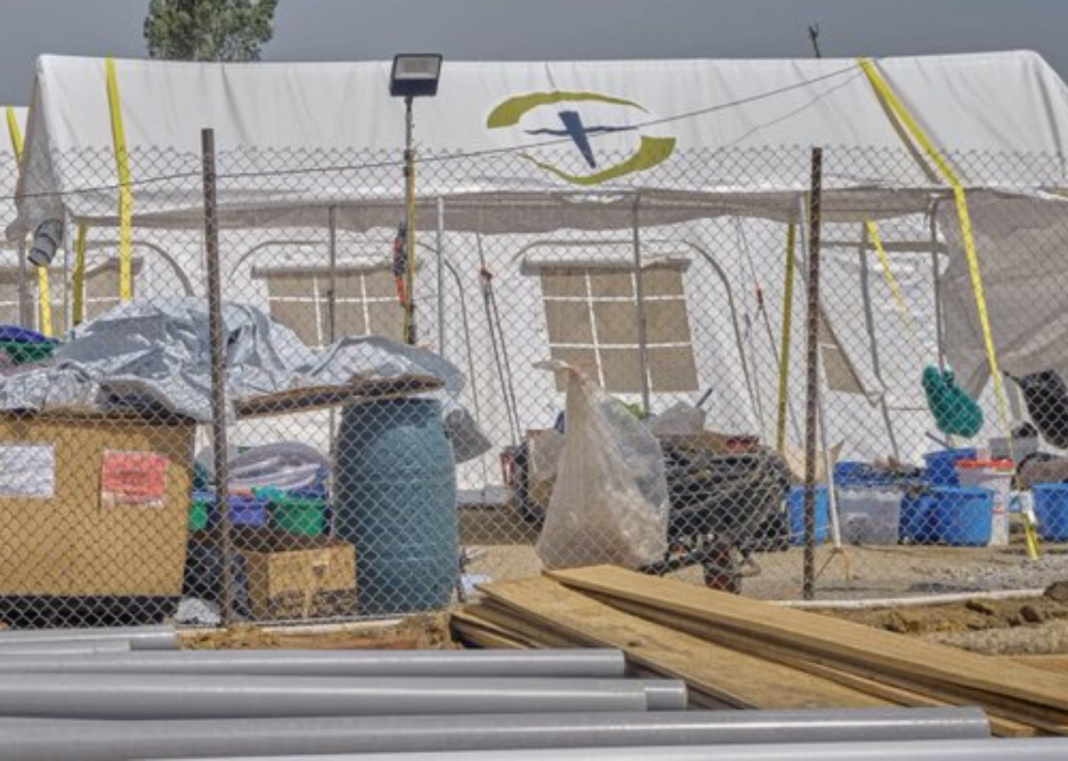
Kpangba is one of dozens of displacement camps in eastern DRC that have expanded rapidly as conflict displaced millions of people. Aid workers described cramped conditions in which hundreds of people share a single toilet, and where open defecation is common. In the nearby Kigonze camp on the outskirts of Bunia — one of the outbreak’s epicentres — water taps ran dry on June 9, leaving rows of empty jerry cans beside residents waiting for water needed to maintain the hand-washing stations installed as part of the Ebola response.
Ituri, North Kivu, and South Kivu — the three affected provinces — have been devastated by decades of conflict and are home to more than 5 million displaced people. The WHO classified the risk within DRC as very high, the risk for Uganda as high, and the risk for countries sharing land borders with DRC and Uganda as high. The risk elsewhere was assessed as low.
A Strain With No Approved Vaccine or Treatment
The outbreak is caused by the Bundibugyo strain of Ebola virus — not the strain responsible for the 2014-2016 West Africa epidemic that killed more than 11,000 people. Two approved Ebola vaccines exist, but neither was developed for use against the Bundibugyo strain, according to Médecins Sans Frontières. The Ervebo vaccine, designed for the Zaire strain, can be used in a limited ring-vaccination strategy to protect contacts and healthcare workers, but offers no guaranteed efficacy against Bundibugyo virus disease.
WHO officials have prioritised vaccine and therapeutic candidates for testing against the Bundibugyo strain, but clinical trials will not begin for several months, according to CIDRAP, the Center for Infectious Disease Research and Policy. Health officials from DRC and the WHO believe the outbreak began months before the official May 15 declaration and was spreading undetected, meaning the true case count likely exceeds the confirmed total.
WHO Warns of Critical Gaps
Olivier le Polain, a WHO epidemiologist based in Beni in eastern Congo, said the situation contains significant unknowns. “There are still many blind spots in some areas that are high risk,” le Polain said. “Surveillance really needs to be strengthened in those areas.”
Le Polain said isolation bed capacity is far below the level needed given the trajectory of the outbreak. As of June 12, only 250 isolation beds were available across the three affected provinces — insufficient for an outbreak that had already produced 260 people hospitalised in isolation facilities as of June 9, before the latest case count rose to 676.
Most cases to date have been among socially and economically active adults, but as the outbreak evolves, WHO officials warned that increasing household transmission may mean children become affected in the days ahead, according to CIDRAP.
Mistrust Compounds the Response
Community mistrust of aid workers has been a persistent obstacle throughout the outbreak. Some communities have buried highly contagious bodies in secret to avoid health protocols. The pelting of WHO vehicles at the Kpangba camp following the two deaths in late May and early June is consistent with a pattern documented across multiple health zones since the outbreak began.
The outbreak is occurring in areas affected by insecurity, population displacement, mining-related population movement, and frequent cross-border travel — all factors the CDC identified as increasing the risk of further transmission when it issued a Level 3 Travel Health Notice for DRC on May 15. An American national working in DRC who tested positive was transferred to Germany for care, according to the WHO.
Cross-Border Spread and the Uganda Dimension
Uganda confirmed its first cases on May 15 and May 16, when two individuals travelling from DRC tested positive for Bundibugyo virus in Kampala — the country’s capital. As of June 6, Uganda had reported 19 confirmed cases including two deaths as well as one probable case who died, according to the WHO. The Ugandan outbreak remains epidemiologically linked to transmission originating in DRC, with evidence of both imported infections and secondary transmission among contacts and healthcare workers.
On June 5, Africa CDC and the WHO, together with partners, launched a joint Ebola continental preparedness and response plan, covering both countries and neighbouring states.
Regional and Global Impact
The entry of Ebola into a displacement camp of 30,000 people marks a qualitative shift in the outbreak’s character. Displacement camps in eastern DRC lack the infrastructure needed to sustain basic hygiene, maintain safe water supplies, or isolate infectious patients. The combination of overcrowding, water insecurity, limited sanitation, community mistrust, active armed conflict in surrounding areas, and the absence of a licensed treatment or vaccine creates conditions in which Ebola can establish sustained chains of transmission that are exceptionally difficult to interrupt.
The concurrent funding crisis at UNHCR — which reported a 25% cut in available funds for 2025, resulting in the closure of 185 offices and the loss of nearly 5,000 staff — has reduced the capacity of the agency managing affected displacement sites precisely when that capacity is most urgently needed.
The 2026 FIFA World Cup, co-hosted by the United States, Canada, and Mexico, has brought additional international attention to the DRC outbreak, with public health officials monitoring whether the large movement of travellers associated with the tournament increases the risk of international spread, according to Al Jazeera.
Background
This is the 17th recorded Ebola outbreak in DRC since the virus was first identified in 1976. The current outbreak is the fourth largest in DRC’s history and the third caused specifically by the Bundibugyo strain, following outbreaks in Uganda in 2007-2008 and in DRC in 2012. The Bundibugyo strain was first identified in Uganda’s Bundibugyo district in 2007. Eastern DRC’s three affected provinces — Ituri, North Kivu, and South Kivu — have experienced continuous armed conflict for three decades, involving dozens of armed groups and contributing to one of the world’s largest internal displacement crises. The previous Ebola outbreak in DRC, caused by a different strain, ended in December 2025. The WHO determined the current outbreak to be a public health emergency of international concern on May 17, 2026.
What Happens Next
WHO and Africa CDC’s joint continental preparedness and response plan, launched on June 5, sets out coordinated measures across DRC, Uganda, and neighbouring countries. Whether isolation bed capacity can be expanded across the three affected provinces from the current 250 beds to a level commensurate with the outbreak’s scale is the most immediate operational priority, according to WHO’s le Polain. Clinical trials of vaccine and therapeutic candidates against the Bundibugyo strain are expected to begin in the coming months but will not yield licensed products in time to affect the current outbreak. Contact tracing in displacement camp environments, where population movement is high and privacy for isolation is physically impossible, will determine whether the Kpangba camp can be contained or whether it becomes a sustained transmission site within the broader outbreak.