
Asia Hedge Funds Post Triple-Digit Returns as AI Hardware Rally Drives Regional Markets to Record Highs
Several Hong Kong-based hedge funds posted returns exceeding 100 percent in the first five months of 2026, riding a surge in AI hardware stocks that pushed benchmarks in South Korea, Taiwan, and Japan to historic levels, according to sources familiar with the performance cited by Reuters on Monday, June 15. The results mark the strongest stretch for Asia-focused technology funds in at least a decade, as institutional capital concentrated heavily into semiconductor supply chains and domestic Chinese AI firms.
The performance highlights how market volatility induced by the Iran war has not derailed the AI-driven rally this year, as growing demand and tight supply lifted stocks and pushed Japan, South Korea, and Taiwan to record highs. Middle East Eye
The Standout Numbers
E20 Capital, a Hong Kong-based hedge fund launched in 2025, posted a net gain of 136 percent in the first five months, with its position in memory, optics, and CPUs boosting returns at its flagship $2 billion Global Opportunity Investment Fund, a source told Reuters. un
WT Asset Management’s long-short China Focus fund booked a net return of 103 percent in the year to end-May, after rising more than 20 percent in May alone. Its long-only fund was up 67.5 percent, a source familiar with the matter told Reuters. Long-time technology investor Trivest Advisors gained 88.9 percent over the same period, according to another source. Middle East Eyeun
WT Asset Management declined to comment, while E20 Capital and Trivest Advisors did not respond to Reuters requests for comment. un
The two standout positions driving WT’s gains were Hua Hong Semiconductor, one of China’s largest domestic chipmakers, and Knowledge Atlas — the Hong Kong-listed entity of the Chinese AI firm Zhipu AI. Public filings show WT was a cornerstone investor in Knowledge Atlas, whose shares have surged more than 1,000 percent year-to-date following its Hong Kong listing in January. Assets under management at WT, run by veteran investor Wong Tongshu, have since grown rapidly to around $10 billion, another source said. Middle East Eye
Why Asia Moved First
Industry sources told Reuters that regional fund managers gained an early structural advantage rooted in geography. Market participants say regional funds were quicker to spot supply-side constraints as Asia covers nearly the entire semiconductor stack, allowing them to position early and capture opportunities across AI subsectors. Middle East Eye
That proximity gave Asia-based investors visibility into demand signals — factory orders, wafer starts, component lead times — weeks before those signals filtered into global consensus forecasts. Positions in memory, optical components, and central processing units became high-conviction bets early in the year, long before global fund flows rotated toward the sector at scale.
Navin Raj Jaidev, a senior investment director at Cambridge Associates, said Asia offers increasing opportunities to deliver outsized returns, as many AI supply-chain firms in the region “remain under-covered and under-recognised by global investors.” He added that themes such as corporate governance reforms and block trades are gaining traction. un
The Benchmark Backdrop
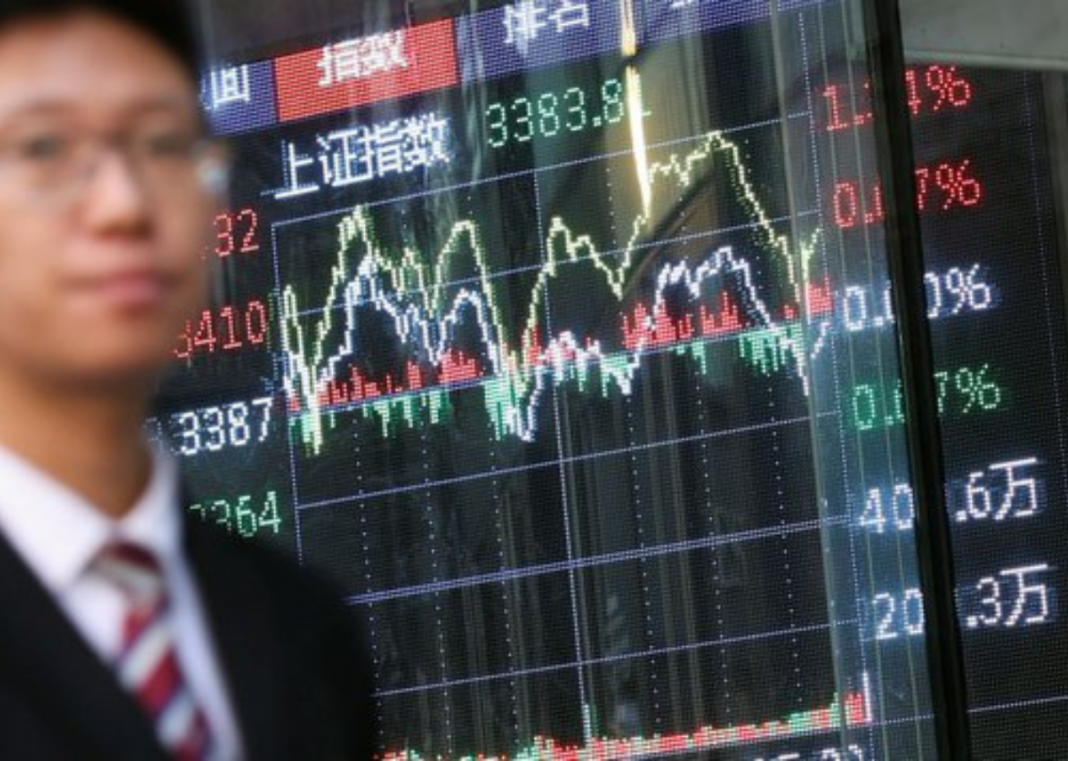
The individual fund returns reflect a broader reset in Asian equity markets that has been underway since January. South Korea’s KOSPI has surged almost 100 percent year-to-date, while Japan’s Nikkei 225 and Taiwan’s weighted index have risen roughly 31 percent and 53 percent respectively. China’s Shanghai Composite has climbed to its highest level in more than a decade. un
The concentration underpinning those gains is significant. TSMC alone now accounts for more than 40 percent of Taiwan’s market capitalisation, while Samsung Electronics and SK Hynix together make up a record 42.2 percent of South Korea’s KOSPI index. That concentration has drawn warnings from market strategists. HSBC’s Asia-Pacific head of equity strategy Herald van der Linde said markets are “reaching levels where many Asian portfolios are starting to face concentration risk, meaning too much exposure to a small number of stocks in the region.” aolaol
MSCI’s global head of index regional research solutions Raman Aylur Subramanian said the AI-driven repricing collided with geopolitical shocks and shifting interest-rate expectations this year, making the first quarter of 2026 “particularly disruptive for global markets and multi-asset portfolios.” aol
The China AI Dimension
The performance of domestic Chinese AI names has been a defining feature of the 2026 rally that distinguishes it from prior AI surges centred primarily on US-listed firms. Knowledge Atlas — Zhipu AI’s Hong Kong vehicle — delivered over 1,000 percent gains since January, making it one of the most discussed single-stock stories in Asian markets this year. Hua Hong Semiconductor, which manufactures chips for Chinese clients unable to access leading-edge fabs run by TSMC or Samsung under US export controls, became a direct beneficiary of a supply ecosystem bifurcating along geopolitical lines.
The rally in domestic Chinese AI equities reflects both genuine commercial momentum and the effect of capital that was once directed into US-listed technology names being redirected into Hong Kong and mainland-listed alternatives following tightening restrictions on cross-border investment flows. For hedge funds positioned ahead of that rotation — as WT and E20 were — the combination produced outsized returns that passive or index-tracking strategies were structurally unable to replicate.
One notable feature of this rally is its disconnect from cryptocurrency markets. The AI hardware investment theme has played out almost entirely in traditional equities, suggesting that institutional capital is gravitating toward companies with tangible revenue and earnings growth rather than speculative digital assets. Tehran Times
Regional and Global Impact
The hedge fund performance data, reported on June 15, arrives as global asset allocators are reassessing the weight of Asian technology exposure within diversified portfolios. For years, Asia ex-Japan technology stocks were treated as a derivative play on US demand cycles — companies that built what American hyperscalers ordered. The 2026 results suggest that framing has shifted: Asian AI supply chains now generate their own investment thesis, driven by domestic demand, sovereign technology programmes, and the structural need for alternative semiconductor ecosystems outside US export-control reach.
For South Korea and Taiwan, the benchmark gains carry macroeconomic weight beyond financial markets. Both economies are heavily dependent on semiconductor exports, and equity market performance at these levels signals continued strong order flow for chipmakers whose products underpin global AI infrastructure spending. Taiwan Semiconductor Manufacturing Company’s dominance of advanced chip production remains the single most strategically significant fact in global technology supply chains, and its share price trajectory — embedded in the 53 percent gain in Taiwan’s benchmark — reflects capital markets pricing that position as indispensable for the foreseeable future.
Background
Asia’s hedge fund industry managed an estimated $400 billion in assets at the end of 2025, according to industry data, with Hong Kong remaining the dominant hub for the region’s alternative investment sector. The HFRI Asia with Japan Index delivered its best annual return in 15 years in 2024, rising 12.1 percent, according to Hedge Fund Research — a result that 2026’s first five months have already eclipsed by multiples for the top performers. South Korea’s KOSPI had already staged a substantial recovery in 2024–2025, partly driven by government-led corporate governance reforms under the “Value-up Program” that pushed conglomerates to improve shareholder returns. That reform backdrop combined with AI-driven hardware demand to create the conditions for the near-doubling of the index in 2026. China’s Knowledge Atlas listed on the Hong Kong Stock Exchange in January 2026 in one of the year’s most closely watched technology IPOs.
What Happens Next
The 90-day period through August will be closely watched to determine whether hedge funds that positioned heavily in May — when WT’s long-short fund gained more than 20 percent in a single month — continue to add to positions or begin to take profits at elevated valuations. Cambridge Associates’ Jaidev said corporate governance reforms and block trades are emerging as secondary investment themes that could sustain returns beyond the initial AI hardware surge. The concentration risk flagged by HSBC means that any demand slowdown at TSMC, Samsung, or SK Hynix — the three companies that dominate the hardware layer of AI infrastructure in Asia — would have an immediate and outsized impact on the regional benchmarks and the funds positioned around them.