
Myanmar’s Min Aung Hlaing Arrives in Beijing for First State Visit as Civilian President
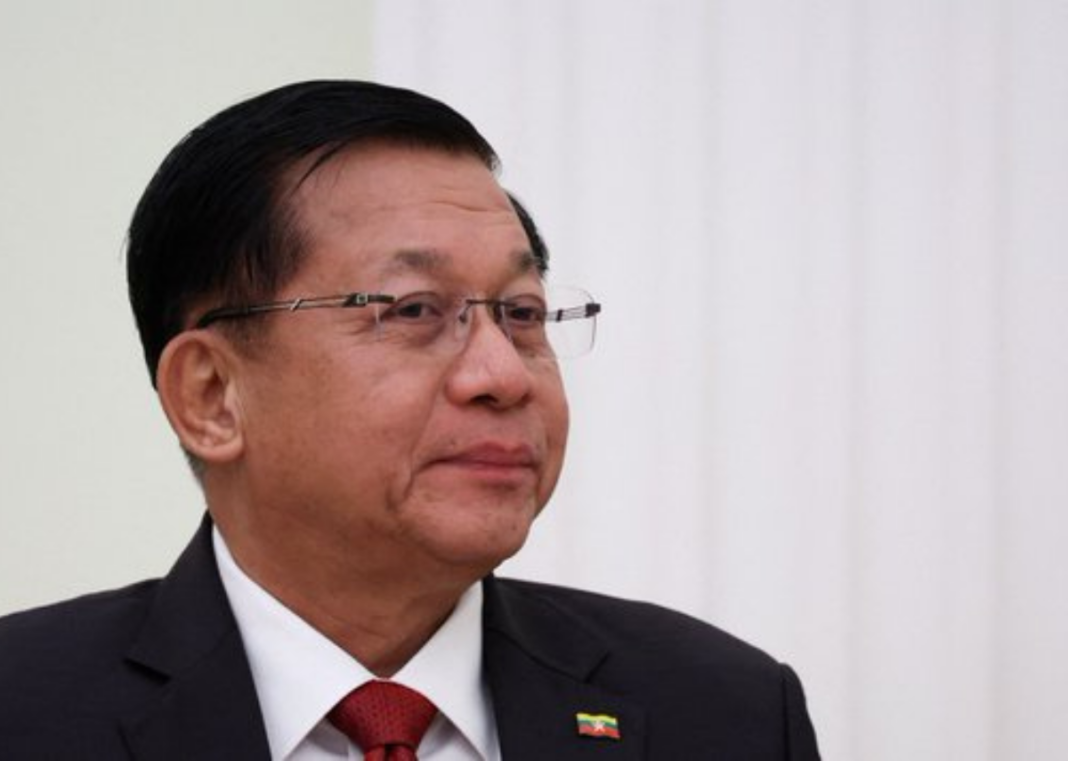
Myanmar President Min Aung Hlaing arrived in Beijing on Monday, June 15, for a five-day state visit at the invitation of Chinese President Xi Jinping, his first trip to China since completing a carefully managed transition from military commander to civilian head of state in April 2026. The visit was confirmed by China’s state media and marks Min Aung Hlaing’s first trip to the world’s second-largest economy since being elected president. The Japan Times
Min Aung Hlaing, 69, was elected president in early April by a parliament packed with military loyalists, following Beijing-backed elections that democracy monitors rejected as a facade. His arrival formalises a diplomatic relationship that China has invested in steadily since Myanmar’s military seized power from the elected government of State Counsellor Aung San Suu Kyi in February 2021. Prime Minister’s Office of Japan
Min Aung Hlaing landed to a red carpet welcome, according to images shared by his office, and spent the opening hours of his visit touring Beijing Aerospace City — the centre of China’s space programme. During his visit, he will hold talks with Xi and also meet Chinese Premier Li Qiang and top legislator Zhao Leji. LBCThe Japan Times
China’s foreign ministry set the tone before Min Aung Hlaing’s departure. “China looks forward to working with Myanmar, through President Min Aung Hlaing’s visit, to deepen comprehensive strategic cooperation,” ministry spokesman Lin Jian told reporters on Friday. LBC
The visit is the second state trip Min Aung Hlaing has made since taking office in April. At the end of May, he flew to India for a five-day trip during which he held talks with Indian Prime Minister Narendra Modi — a visit analysts said India used to dilute China’s outsized influence on Myanmar while pursuing access to the country’s rare earth mineral deposits and bolstering security along its northeastern border. The China visit follows directly from that diplomatic opening, as Myanmar’s new civilian government moves to re-engage with its most important neighbours after years of internationally imposed isolation. Prime Minister’s Office of Japan
The Scam Centres Problem
The relationship Min Aung Hlaing is arriving to repair has been strained in recent years by a crisis neither side has fully resolved. Relations have frayed over mushrooming internet scam centres along the two countries’ shared border, which both enlist and target Chinese citizens in lucrative cryptocurrency fraud, analysts say. LBC
The scale of the problem drew intense pressure from Beijing. Tens of thousands of people — many of them Chinese nationals lured by false job offers — were trafficked into compounds in Myanmar’s border regions and forced to work in fraud operations targeting victims across Asia and beyond. China pushed the Myanmar military hard to crack down, and a series of extraditions followed. The first bill announced by Myanmar’s new parliament proposes the death penalty for those who detain or violently coerce victims into working in scam centres — a signal Naypyidaw is sending to Beijing that the new civilian government intends to treat the issue seriously. LBC
Rare Earths and Strategic Economics
Trade and resources sit at the core of what both sides want from the visit. While Myanmar has been impoverished by civil war, it has emerged as a major global supplier of mined rare earth minerals — vital for China’s production of renewable energy technology. China is Myanmar’s dominant export market and its primary source of infrastructure investment, arms, and diplomatic cover at the United Nations Security Council, where Beijing has blocked Western-backed resolutions condemning the military government. LBC
Beijing has also served as a key power broker in the civil war sparked by the 2021 coup, variously backing the military, armed rebel factions, and truces between them according to its security and economic interests, analysts say. That leverage — simultaneously supporting the government and some of the forces fighting it — gives China an influence over Myanmar’s internal dynamics that no other external actor can match. LBC
The Min Zin Detention
The visit is taking place under the shadow of a separate and politically awkward development that surfaced days before Min Aung Hlaing’s arrival. China’s government confirmed on Friday, June 12, that Min Zin, a US citizen who heads a Myanmar-focused think tank, was detained on suspicion of engaging in “espionage and endangering Chinese national security.” mofa
Min Zin was arrested on June 3 at Kunming airport in Yunnan province, which borders Myanmar, according to a person with professional ties to the Institute for Strategy and Policy Myanmar (ISP-M), who spoke to AFP on condition of anonymity because of the case’s sensitivity. ISP-M researches political, resource and conflict dynamics in Myanmar, and in recent years has published on issues including Myanmar’s rare earth exports to China and Beijing’s foreign policy in the border region. The Japan TimesBrit Brief
The US State Department confirmed it was “aware of reports regarding a US citizen detained in China” and said it would “work to provide appropriate consular assistance.” Amnesty International called for Min Zin’s immediate release, and Joe Freeman, a Myanmar researcher for the group, described the circumstances of the arrest as “extremely concerning.” mofamofa
The arrest came just weeks after the Beijing summit between President Trump and President Xi aimed at easing tensions between the two competing powers, and took place directly ahead of Min Aung Hlaing’s state visit. NPR reported that it is rare for China to detain US citizens on national security charges, with only a small number of such known cases in recent years. mofa
Regional and Global Impact
The state visit consolidates the diplomatic architecture China has been building around Myanmar since 2021. For Min Aung Hlaing, Beijing’s endorsement — expressed through the red carpet reception, the full state visit protocol, and the meeting schedule with the top three members of China’s leadership — carries significance that goes beyond bilateral trade. It signals to ASEAN members, Western governments, and other regional actors that China regards the transition from junta rule to civilian presidency as legitimate, regardless of how that transition was engineered.
For China, the visit advances several concurrent interests: securing rare earth supply chains, stabilising border areas disrupted by civil conflict, maintaining leverage over multiple parties in Myanmar’s internal war, and demonstrating to Beijing-aligned governments across Southeast Asia that strategic loyalty to China provides durable diplomatic returns.
The Min Zin detention adds an uncomfortable layer to the proceedings. China has provided no public evidence for the espionage allegation, and the timing — announced three days before a state visit by a government that China actively supported — draws attention to Beijing’s willingness to use national security law expansively against researchers who document Chinese influence in sensitive border regions.
Background
Min Aung Hlaing led the February 2021 coup that overthrew the elected National League for Democracy government and sparked a civil war still ongoing across large parts of the country. Myanmar’s military has faced sustained armed resistance from an array of ethnic armed organisations and pro-democracy People’s Defence Forces. China brokered a pair of ceasefires between the military and two of the most powerful rebel coalitions operating in the Shan State borderlands over the past two years. Myanmar has been diplomatically isolated since the 2021 coup, with its armed forces battling an array of opposition factions. Beijing endorsed December 2025 elections that delivered a walkover for pro-military parties, clearing the way for Min Aung Hlaing’s April installation as president. Democracy watchdogs described the transition as a charade designed to rehabilitate the government’s international standing after the pariah status many nations assigned it following the putsch. LBCLBC
What Happens Next
Min Aung Hlaing’s programme in China runs through Friday, June 19, with his talks with Xi Jinping, Premier Li Qiang, and top legislator Zhao Leji expected to produce joint statements and potentially new agreements on trade, rare earth cooperation, and border security. The scam centre crackdown legislation passed by Myanmar’s new parliament will be closely watched by Beijing, which has treated the issue as a precondition for normalising border relations. The US State Department’s handling of the Min Zin detention will be monitored by rights groups and by the broader community of researchers working on China-Myanmar border issues, several of whom have now been warned informally against travel to Yunnan province.