
Indian Rupee Strengthens as Brent Falls Below $100 and RBI Governor Signals Currency Undervalued
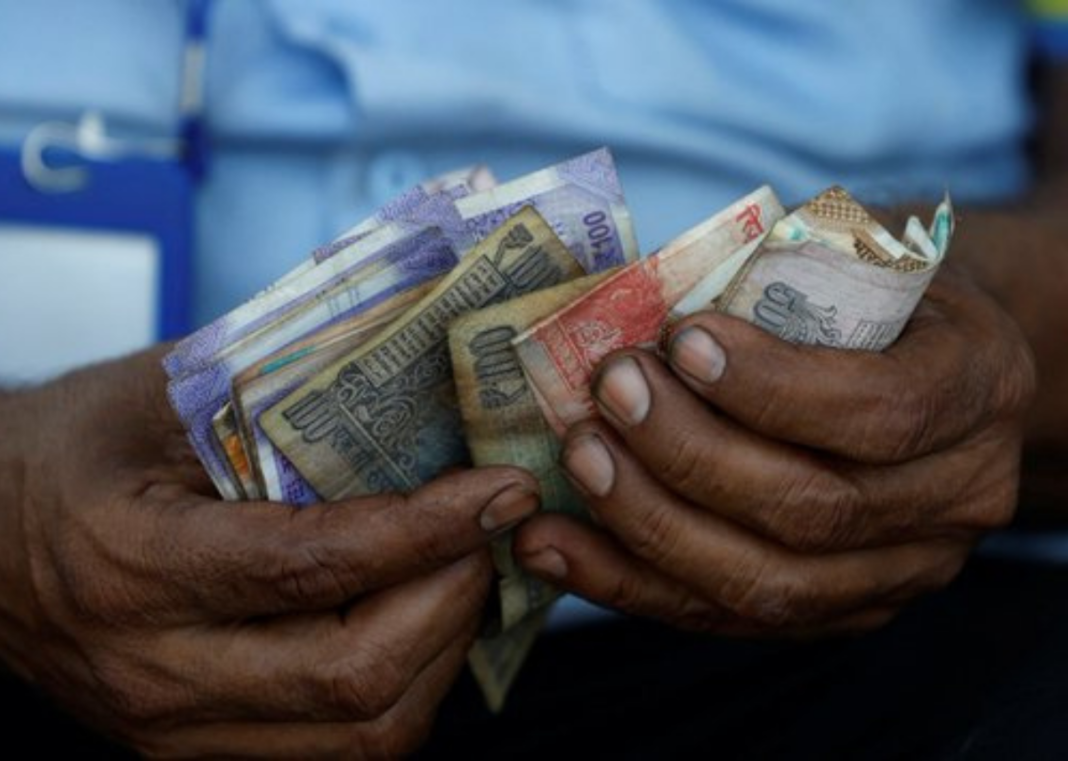
India’s rupee rose 0.4 percent to 95.34 against the US dollar on Tuesday, joining a broader rally in regional emerging market currencies after Brent crude fell below $100 a barrel on hopes of a US-Iran ceasefire deal and after Reserve Bank of India Governor Sanjay Malhotra said publicly that the currency may be undervalued — the first such signal from a sitting RBI governor since the conflict began. The rupee rose 0.4 percent to 95.3425 per dollar on Monday, joining a broader rally in regional currencies as Brent crude fell below $100 a barrel. The currency has gained around 1.5 percent over the past three trading sessions, with part of the rise fuelled by central bank interventions. TimesLIVE
The most immediate catalyst was a pause in Middle East tensions that eased crude oil prices, reducing pressure on India’s import bill. India imports approximately 85 to 90 percent of its crude oil requirements, making oil price movements a direct and significant driver of rupee direction. umn
Governor Malhotra’s comments added a second force to the recovery. His characterisation of the rupee as potentially undervalued — delivered publicly in the wake of the June 6 monetary policy decision that held the repo rate at 5.25 percent — amounts to an explicit signal that the RBI considers further depreciation from current levels to be unwarranted by underlying fundamentals. Central bank governors rarely make such statements unless they intend to act on them, and markets read the comment as forward guidance that intervention is more likely than not if the currency comes under renewed pressure.
The June 6 monetary policy meeting had already introduced specific structural measures to attract dollar inflows. The RBI’s June 5 monetary policy announcement included a set of measures specifically designed to attract dollar inflows and support rupee stability. These included subsidising foreign exchange hedging costs for FCNR(B) deposits, offering concessional swap windows for external commercial borrowings by public sector undertakings. FCNR(B) deposits are foreign currency non-resident accounts held by the Indian diaspora — a channel through which substantial dollar inflows can be mobilised relatively quickly when the hedging cost is reduced. umn
The combination of cheaper hedging and a governor openly flagging undervaluation represents a two-track approach: attracting fresh inflows while signalling that the RBI will defend the currency against speculative selling.
The recovery, however, comes from a position of severe prior weakness. The rupee had faced severe pressure earlier in 2026, touching record lows near the 96 to 97 range amid the Iran-related oil shock, sustained foreign institutional investor outflows, and dollar strength. At its worst, the currency had depreciated more than 10 percent from its pre-war levels, driven by three mutually reinforcing forces: elevated Brent crude driving up the import bill, foreign portfolio investors pulling capital out of Indian equities and debt, and a broadly stronger US dollar as the Federal Reserve held rates well above those of the RBI. umn
India’s foreign exchange reserves have been drawn down significantly to defend the currency through that period. Reserves fell to a 14-month low of $681.4 billion in late May as RBI intervention to slow the rupee’s decline consumed reserves at pace. That drawdown constrains the central bank’s capacity to defend the currency indefinitely through direct market operations — making the structural measures introduced at the June 6 meeting, and the governor’s undervaluation signal, part of a longer-term strategy to reduce the burden on the reserve buffer.
Regional and Global Impact
The rupee’s partial recovery reflects a broader stabilisation in emerging market currencies triggered by the Brent crude drop below $100. For India specifically, each dollar decline in Brent crude reduces the country’s annual oil import bill by approximately $1.5 billion — a direct relief to the current account deficit that has been widening sharply since the Hormuz closure began in late February. A weaker dollar index also provided relief to emerging market currencies more broadly, with the rupee among the beneficiaries of the softer greenback. umn
The stabilisation is fragile. The rupee remains vulnerable to renewed oil price spikes, persistent foreign institutional investor outflows that have run into tens of billions of dollars year to date, and broader global macro shifts. Monday’s global market turbulence — driven by strong US payrolls data raising Federal Reserve rate hike fears — produced a stronger dollar that partially offset the oil relief. The net result is a currency in tentative recovery, not a sustained reversal. umn
Background
The rupee hit a record low of 96.8 against the US dollar on May 20, its weakest level on record, as the combined effects of the Hormuz closure, Brent crude above $110, and sustained foreign capital outflows compressed the currency. The RBI intervened repeatedly to slow the pace of depreciation, spending an estimated $16 to $18 billion in foreign exchange reserves in a single month at the peak of the pressure. The Iran war began on February 28 with joint US-Israeli strikes, triggering the Hormuz closure and the sequence of currency, inflation, and growth pressures that have dominated India’s macroeconomic agenda since. The repo rate has been held at 5.25 percent through both the April and June 2026 MPC meetings as the RBI balances currency defence against growth support in a stagflationary environment.
What Happens Next
The trajectory of Hormuz ceasefire negotiations between the US and Iran will determine whether Brent crude’s move below $100 is sustained or temporary — and with it, whether the rupee’s recovery continues or reverses. The RBI’s next scheduled monetary policy meeting has not been announced, but the governor’s undervaluation signal and the FCNR(B) hedging incentives introduced at the June 6 meeting will take several weeks to generate measurable inflows. Foreign institutional investor positioning — which has been negative for most of 2026 — will be closely watched as a leading indicator of whether confidence in the rupee stabilisation is broadening beyond the central bank’s own actions.