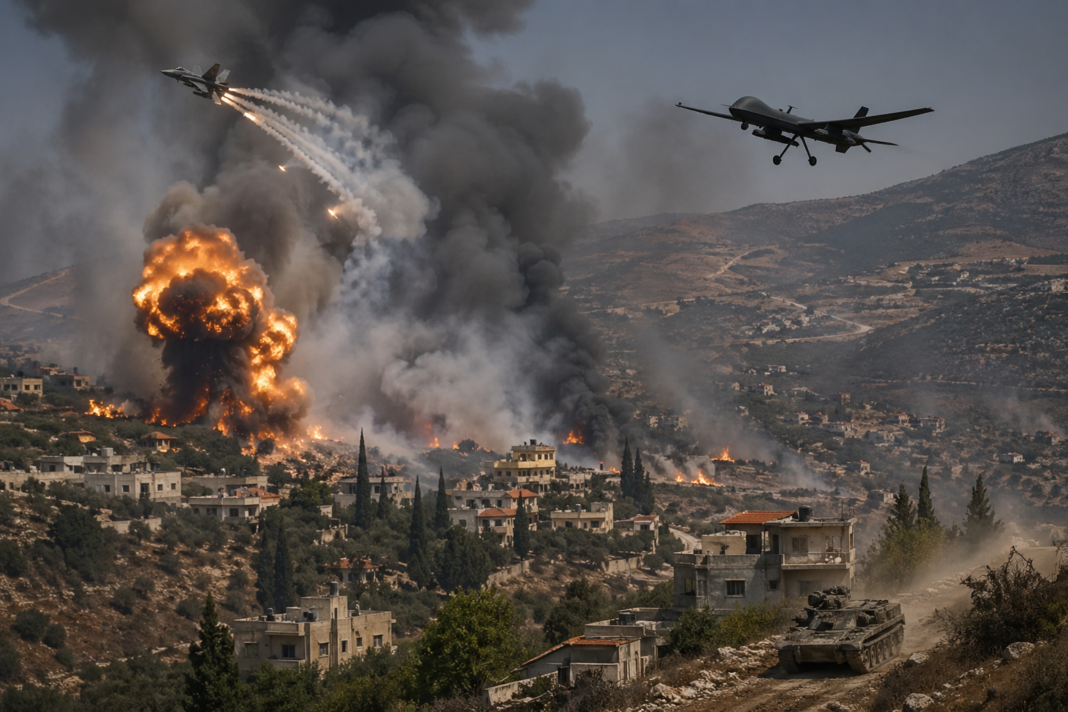

Things are getting worse along the Israel-Lebanon border. There have been reports of airstrikes in southern Lebanon that killed 14 people. After that Hezbollah launched drone attacks towards Israel. This is all happening while Israel is warning people who live north of the Litani River to leave. The Litani River is an area because it is close to where Israel and Hezbollah have been fighting.
The Israel–Lebanon border is, honestly, one of the tensest places in the region. Lately, there’s been nonstop fire between the two sides. Israel keeps hitting southern Lebanon with airstrikes and artillery, while Hezbollah fires back with rockets, anti-tank missiles, and drones aimed at military positions in northern Israel.
These latest attacks are adding to a list of incidents. There have been casualties on both sides. Civilian infrastructure has been hit, which is a concern, for observers. The fighting is affecting peoples lives and homes.
The Litani River area keeps coming up in news reports. It’s a strategic spot in southern Lebanon, and it’s always been sensitive because Hezbollah is entrenched there. Israel sees the land north of the river as risky territory. Recently, Israel has warned people in these areas to evacuate, hoping to disrupt militant activity—but really, that kind of warning just amps up the stress for local residents.
Hezbollah’s switch to drone warfare is hard to ignore. Rockets have always been their bread and butter, but drones are making a splash now. Drones are cheaper and more precise. They can slip past some air defenses. This latest set of drone attacks shows that Hezbollah is adapting and figuring out how to deal with Israels high-tech systems that intercept things. Drones are not just for hitting targets drones are for looking and spying and keeping the enemy on edge. This is a change, in the way that smaller groups fight against nations. Israel has shot down drones before but the threat of drones is not going away and the way people feel about it is getting worse. Drones are still a problem. Israel is still trying to stop them.
Civilians are caught in the middle, as usual. The latest strikes killed 14 people—a tragic reminder of how humans pay the price for military escalations. Details about who was killed aren’t all clear, but history tells us victims include both fighters and ordinary folks. When Israel issues evacuation warnings north of the Litani, it often means more areas are at risk, and people scramble to get out, which messes up local resources and the ability to respond to emergencies. Southern Lebanon is already dealing with damaged infrastructure, families leaving and coming back, and shortages—stuff that keeps happening every time violence flares up.
The fighting is making everyone really nervous, not the people who live near the border. People who know a lot about this stuff are worried that if Israel and Hezbollah do not stop fighting it could get a lot of countries involved and make the situation even worse. Many countries are telling Israel and Hezbollah to calm down they do not want a war.. So far the fighting just keeps going. It is getting harder to make peace. The problems at the border are a small part of a very big problem in the whole region, with a lot of instability and countries not getting along which is making everything more complicated. Israel and Hezbollah are still a concern because their fighting is not going to be easy to stop.
There’s a history here. The group Hezbollah started during Lebanon’s war and grew into a strong political and military force. They are dug in along the border and the big fight in 2006 left scars. Since then things have been tense. Quiet, at times. With regular flare-ups. This current wave feels more serious mostly because attacks are happening often and the weapons being used are getting more advanced.
Looking ahead nobody thinks that the situation will calm down soon. The strikes and counterstrikes are happening every day. This is a problem. There is a risk that the situation with the strikes and counterstrikes will get worse especially if the civilians keep getting hurt or if the fighting, with the strikes and counterstrikes spreads deeper into the towns. Israel’s new warnings north of the Litani might mean a bigger shift in how they approach targets. Hezbollah isn’t backing off either, especially with their drones.
Unless diplomats step in and hammer out some sort of deal, the cycle of violence isn’t ending. If more people are forced to leave home or infrastructure keeps falling apart, the humanitarian crisis will only grow.
For now, the border is unstable as ever, and both sides are geared up for more action. It’s a clear reminder of how quickly local clashes can turn into something far bigger in this volatile corner of the world.