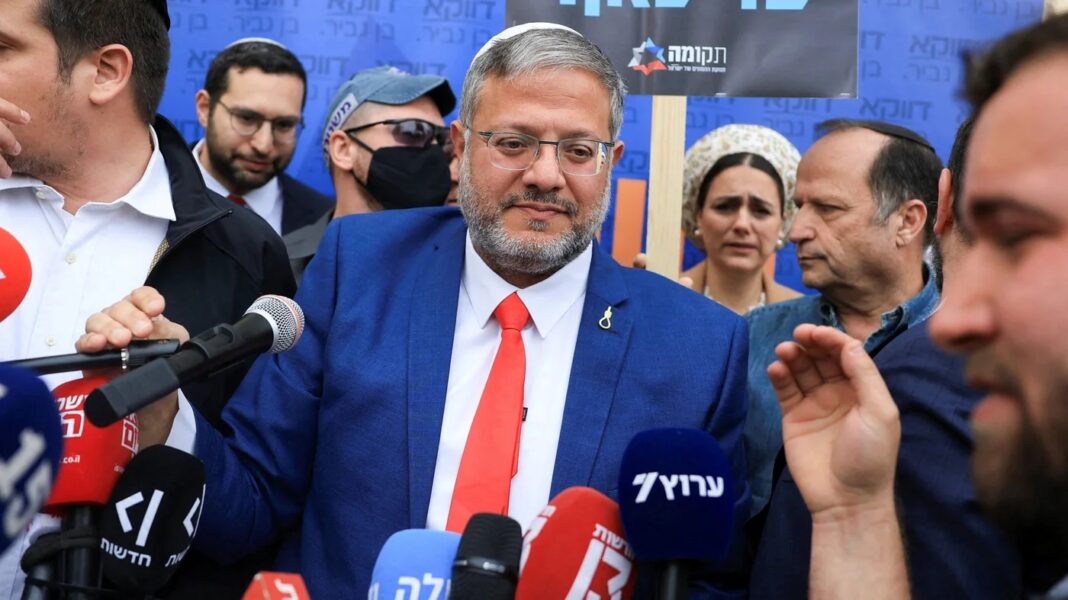

Israeli National Security Minister Itamar Ben Gvir called on Tuesday for the mass detention of Lebanese civilians, including women and young people, as a pressure tactic against Hezbollah. He made the proposal during a security cabinet meeting in Israel, where several officials also backed expanding the military assault on Lebanon.
“Let’s start thinking outside the box about Hezbollah,” Ben Gvir said, according to Middle East Eye. “Conquering territory and killing many terrorists, but also arresting their women and youth and taking them to terrorist prisons. That’s what hurts them the most.”
The proposal goes beyond current Israeli practice — though not by much. Since the 2024 war, Israeli forces have already abducted a number of Lebanese civilians, according to Middle East Eye. Their precise numbers remain unknown.
Those detainees are held alongside 1,316 others — including Palestinians from Gaza and Syrian nationals — under Israel’s “unlawful combatant” law, according to data from the Israeli human rights organisation HaMoked. The law, originally enacted in 2002, allows Israeli authorities to detain individuals not under Israeli jurisdiction for indefinite, renewable periods without formal indictments. Rights groups have described the legislation as a violation of international law, noting that it permits detention without a court order, denies access to legal representation, and allows authorities to withhold information about detainees’ whereabouts and conditions.
Ben Gvir’s remarks came as other cabinet ministers pushed for a broader military escalation. Israeli Minister Yitzhak Wasserlauf called on Finance Minister Bezalel Smotrich to “open his pockets” for the military and its artillery, Middle East Eye reported. Defence Minister Israel Katz endorsed the push, saying: “The prime minister made an important decision to attack, and we must expand the armaments even further.”
The meeting took place against a backdrop of sustained Israeli military action in Lebanon that has continued despite a ceasefire announcement made by the United States on April 17. Lebanese Defence Minister Michel Menassa said earlier this week that Israel has carried out approximately 3,500 attacks and hundreds of controlled explosions since that announcement.
The human cost has been severe. At least 3,637 people have been killed in Lebanon since the latest Israeli assault began in March, including more than 800 deaths since the April 17 ceasefire declaration, according to the Lebanese health ministry. Around 1.2 million people have been displaced nationwide. On the Israeli side, at least 34 people — mostly soldiers — have died from Hezbollah attacks since March, with 18 of those deaths occurring after April 17.
Regional and International Impact
Ben Gvir’s proposal, if acted upon, would dramatically escalate the legal and humanitarian dimensions of the conflict. The deliberate targeting of civilian family members as a coercive strategy against a non-state armed group has no basis in international humanitarian law, which prohibits collective punishment. The suggestion draws attention to an Israeli detention framework that human rights organisations already describe as operating outside international legal norms.
For Lebanon, which is still navigating deep political instability, the prospect of mass civilian detentions would compound a displacement and civilian casualty toll that Lebanese officials have already described as catastrophic. The continued Israeli bombardment since the April ceasefire announcement has also placed the United States in a difficult position, given that Washington publicly brokered that agreement.
Background
Israel launched its latest military campaign against Lebanon in March 2026, citing ongoing Hezbollah rocket and drone attacks on northern Israel. A US-brokered ceasefire was announced on April 17, but Israeli bombing has continued since. The “unlawful combatant” law has been used by Israel since 2002 primarily to detain Lebanese individuals outside Israeli jurisdiction; it has faced sustained criticism from human rights organisations including HaMoked and Amnesty International. Ben Gvir, leader of the far-right Otzma Yehudit party, has consistently advocated for the most aggressive military postures within Prime Minister Benjamin Netanyahu’s coalition government.
What Happens Next
Israel’s security cabinet is expected to continue deliberations on expanding military operations in Lebanon, according to statements made by Defence Minister Katz at the June 9 meeting. Finance Minister Smotrich will face pressure from military officials to increase the defence budget to fund additional artillery and armaments. Lebanese officials have not yet formally responded to Ben Gvir’s detention proposal specifically, though Beirut has condemned the continued Israeli attacks since the April ceasefire. The Lebanese health ministry is expected to continue releasing updated casualty figures as Israeli strikes persist.