
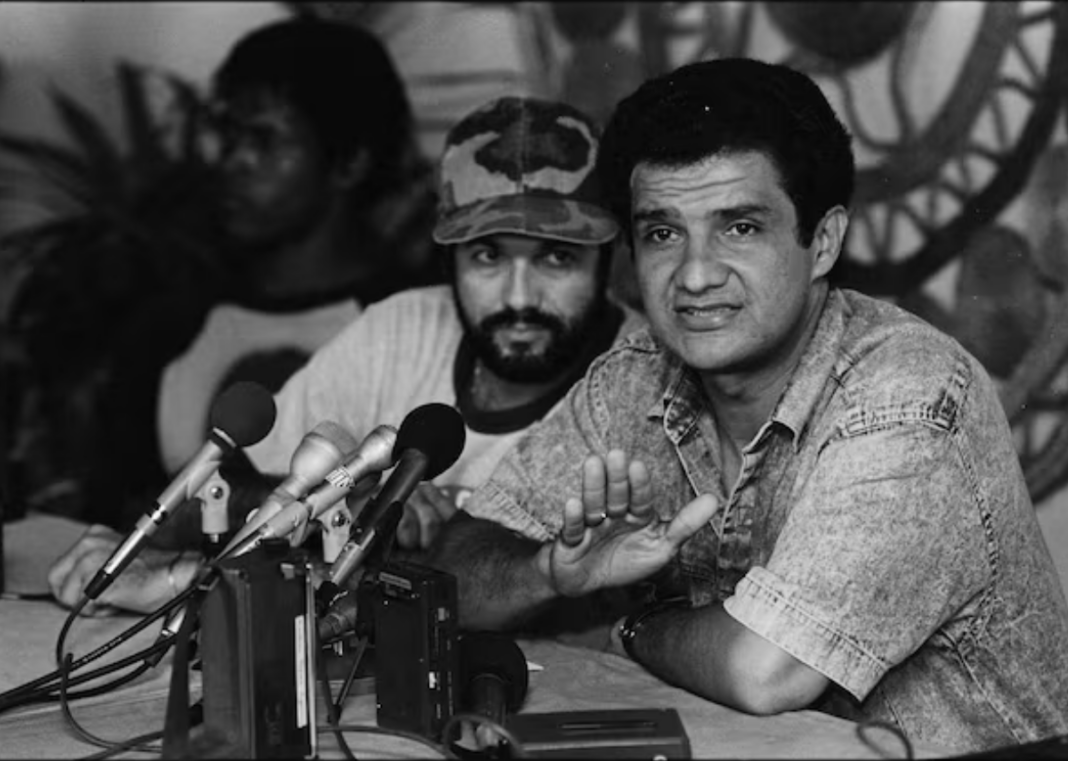

Nicaragua’s Brooklyn Rivera Dies in State Custody After Three Years Without Charge
Brooklyn Rivera, Nicaragua’s most prominent indigenous leader and a former lawmaker who represented the Miskito people, died in state custody on Sunday at the age of 73, just four days after the Nicaraguan government published photographs showing him emaciated, intubated, and connected to a mechanical ventilator in a hospital bed. His death was reported by the Nicaraguan news service 100% Noticias, citing family sources. Rivera had been held without formal charges since September 2023 — a period during which the government repeatedly refused to confirm his whereabouts or allow his family to visit him. Athens Times
Rivera was arrested on September 29, 2023, as part of a government crackdown on political dissent. He was a sitting lawmaker at the time of his arrest. His family said the government never formally admitted he was being held and denied family members visitation rights throughout his detention. Athens Times
The government broke its silence on his condition only after sustained international pressure. On May 1, 2026, United Nations experts urged Nicaraguan authorities to provide immediate proof of life for Rivera and warned that information available to them suggested he may have already died in detention. The UN experts stressed that detention conditions in Nicaragua are inhuman and that in the case of the forcibly disappeared — at least 112 people according to UN figures — many may have been subjected to torture. “Despite repeated requests from family members, police and prison authorities have systematically concealed the fate and whereabouts of these individuals,” they said. Euro Weekly NewsTravel And Tour World
On May 27, the Nicaraguan Interior Ministry released photographs showing Rivera bedridden, visually severely emaciated, and receiving a visit from a former Yatama lawmaker. The ministry described his condition as “delicate, with mechanical ventilation through a tracheotomy and intravenous feeding” owing to “multiple organ failure” and cirrhosis. The photographs were the first images of Rivera released by the government in 970 days of detention. Athens Times
The US government rejected the government’s framing of his condition as pre-existing. The US Bureau of Western Hemisphere Affairs denounced the statement, accusing the Nicaraguan government of attempting to conceal its role in the “cruel treatment and current condition” of Rivera. A coalition of Nicaraguan indigenous groups issued a statement criticising the government for imprisoning Rivera arbitrarily and “distorting the narrative” by claiming he was already in poor health when taken into custody. Athens Timesaol
That concern had been voiced even before Rivera’s condition was confirmed. Ulrich Prado, a representative of a Miskito advocacy group, had called for Rivera’s release and said: “We do feel like Ortega will allow him to die.” That statement was made before Sunday’s confirmed death. U.S. News & World Report
Rivera was arrested in September 2023 after denouncing the situation of indigenous populations during an international conference. His family said he was imprisoned for political reasons and that the government never presented formal charges against him. deccanheraldaol
Regional and Global Impact
Rivera’s death in custody marks one of the most significant fatalities to emerge from Nicaragua’s multi-year political crackdown, which has swept up hundreds of journalists, activists, clergy, and opposition figures. At least a handful of other prisoners have died in Nicaraguan government custody in recent years as the government has imprisoned hundreds of journalists, activists and political opposition members. His death is likely to intensify international pressure on President Daniel Ortega’s government, which is already under UN scrutiny for the disappearance of at least 112 people in detention. The case has drawn particular attention because Rivera was a serving member of the National Assembly at the time of his arrest — a status that provided no protection against detention or disclosure. aol
For the Miskito people of Nicaragua’s Caribbean Coast, Rivera was a defining political figure. His death removes the country’s most internationally recognised indigenous voice at a moment when the government has also moved to exclude his political party, Yatama, from electoral participation.
Background
Rivera had fought against Nicaragua’s first Sandinista government between 1979 and 1990 as a leader of the Misurasata militia, operating alongside the Contra rebels. His political party, Yatama, was initially an opponent of President Daniel Ortega but became an ally after Ortega returned to power in 2007. In October 2023, the Yatama party said the government had banned it from running in elections. The Nicaraguan government said in January that it would release some prisoners, following pressure in the wake of the US military operation to capture Venezuela’s then-President Nicolás Maduro, but Rivera was not among those released. His case had been taken up by Amnesty International, the UN Group of Human Rights Experts on Nicaragua, and the US State Department, all of which had demanded proof of life in the weeks before his death. Athens Times + 2
What Happens Next
Nicaragua’s government had not issued a statement confirming Rivera’s death as of Sunday morning. Reuters reported the death based on the 100% Noticias account, which cited family sources. The UN Group of Human Rights Experts on Nicaragua, which had warned of Rivera’s possible death in detention as recently as May 1, is expected to respond formally. The US Bureau of Western Hemisphere Affairs, which had already accused the Ortega government of concealing its role in Rivera’s deterioration, is likely to issue a further statement. No Nicaraguan government official has addressed the circumstances of his death, the conditions of his imprisonment, or his cause of death. NBC News


