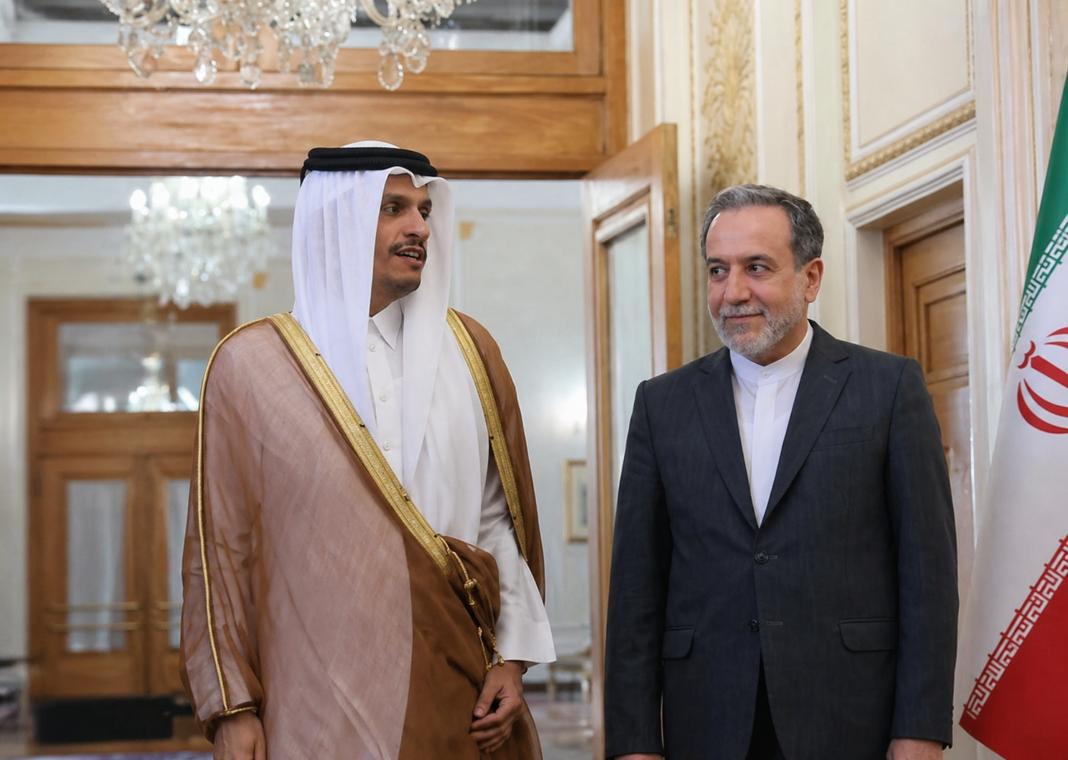

Doha/Tehran, April 26, 2026 — With tensions boiling across the Middle East, Qatar’s Prime Minister and Foreign Minister, Sheikh Mohammed bin Abdulrahman Al Thani, picked up the phone to talk with Iran’s Foreign Minister, Abbas Araghchi. Their focus: looking for any real chance at peace and ways to calm things down in a region deeply on edge.
Official statements say their conversation zeroed in on the latest twists in Middle Eastern politics and security—especially as fighting drags on and peace talks stall. Both leaders sounded the alarm about the need to work together, fast, before things get worse.
Araghchi told Sheikh Mohammed about Irans efforts to make friends with countries. This is what Iran is trying to do to get people to talk to them again. For a time Iran was making a lot of people nervous especially the United States and its friends, in the area.
Iran is saying that they want to talk to people and they want the fighting to stop. Iran wants to make a deal so that the fighting will end.
Sheikh Mohammed, consistent as ever, doubled down on Qatar’s view—talk it out, don’t shoot it out. He pressed for ongoing mediation, emphasizing that long-term peace won’t happen unless everyone sticks to the path of dialogue.
Neither side pretended their worries were just national.The people involved understand that things that happen in Tehran or Doha do not stay in Tehran or Doha. When there is violence and instability it affects the Middle East. The problems that come from this do not stop in the Middle East. They can be felt in other places.
Both of them think that real diplomacy is very important now. Diplomacy matters because it can help prevent problems. The people involved believe that diplomacy is more important now than it has been before.
The timing of their call wasn’t random. Since the start of 2026, conflicts tied to Iran have pulled in neighboring countries and outside powers. Military clashes have driven up the stakes, and previous negotiations have crumbled.
A handful of players—Qatar included—have tried to mediate. But in recent weeks, efforts hit a wall, especially once planned talks with the United States fell apart. Iran, for its part, has reached out again, describing new proposals that it says would “permanently end the war.” So far, progress remains elusive.
Qatar, meanwhile, keeps working the phones and channels behind the scenes. They’ve staked their claim as one of the only actors able to talk to all sides. Sheikh Mohammed told Araghchi that every party needs to genuinely participate, not just posture for headlines. For Qatar, getting to the root of the crisis—rather than just treating symptoms—is the only way out.
These efforts are not about this region. Qatars diplomats say the stakes are high for everyone: if things get worse we could see problems with shipping, energy prices and even food.
This phone call was not a one-time thing. On the day Egypts foreign minister also talked to both Qatar and Iran. This shows that countries in the region are trying to work to stop the crisis from getting out of hand.. It’s not easy. Alliances. There are deep rivalries.
Most experts don’t think one conversation will solve everything.. They do think it’s good that countries are still talking. In the situation that’s something. The push for peace is not talk. It will take a lot of work including negotiations, security fixes and economic deals.
No one thinks peace is coming soon. Previous talks. There are still soldiers on the ground.. If countries like Qatar and Iran keep working at it they might eventually make progress.
The conversation, between Sheikh Mohammed and Abbas Araghchi is a reminder that diplomacy’s important. It’s fragile. Its what can help prevent instability and lead to something better. For now the world is watching to see if these talks lead to progress toward a more stable Middle East.