

South Korea’s President to Attend NATO Summit in Ankara and Make First State Visit to Mongolia in 15 Years
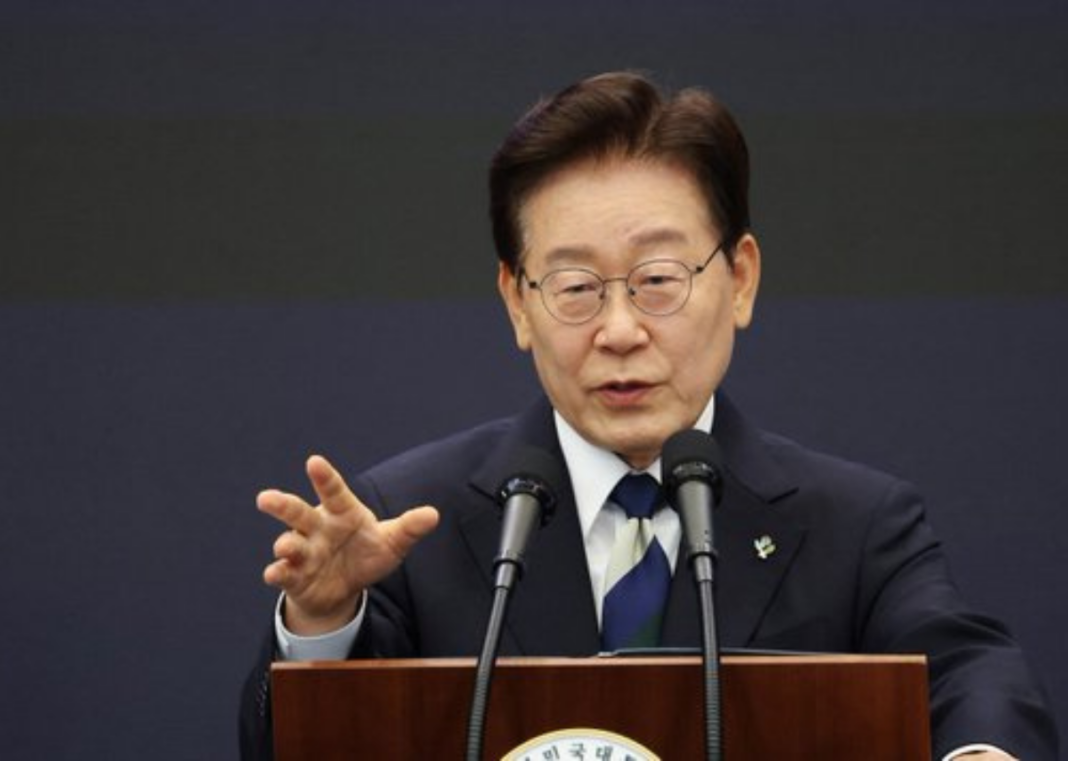
South Korean President Lee Jae Myung will attend the NATO leaders’ summit in Ankara, Turkey, from July 7 to 8, and then travel to Ulaanbaatar for a three-day state visit to Mongolia from July 9 to 11, Seoul’s national security adviser announced on Friday, July 3. The five-day diplomatic tour, Lee’s most ambitious overseas engagement since taking office, encompasses two distinct strategic objectives: deepening South Korea’s defence export partnerships with NATO allies and securing a comprehensive upgrade of relations with Mongolia built around critical minerals and Korean Peninsula diplomacy.
National Security Adviser Wi Sung-lac told a press briefing at the Blue House in Seoul that Lee would meet NATO Secretary General Mark Rutte in Ankara, attend a group summit with Indo-Pacific partner nations including Japan, Australia, and New Zealand, and deliver a keynote address at the NATO Defence Industry Forum on the theme of “Shared Values, a Stronger Industrial Base.” Lee will also attend an official welcome dinner hosted by Turkish President Recep Tayyip Erdoğan on the evening of his arrival.
South Korea’s Defence Export Strategy at the Centre
Wi was direct about the purpose of the NATO visit. “As geopolitical instability deepens, NATO member states are increasing their defence spending and also pursuing efforts to strengthen their own domestic defence production capabilities,” he said. “South Korea, which is not a NATO member, must advance partnerships with NATO based on the alliance’s standards to facilitate exports of defence materials.” Business Recorder
South Korea has emerged as one of the world’s fastest-growing arms exporters over the past three years, leveraging a domestic defence industrial base capable of producing battle-tested artillery, armoured vehicles, fighter jets, and naval vessels at competitive costs and with shorter delivery timelines than traditional Western suppliers. The war in Ukraine, which has demonstrated the operational value of mass-produced conventional munitions and the vulnerability of countries that allowed their defence industrial capacity to atrophy, has created a large and urgent market for South Korean hardware among NATO members seeking to restock depleted inventories and expand domestic production.
“We will directly showcase the excellence and rapid procurement capabilities of the South Korean defence industry to NATO allies and partner nations, while paving the way for cooperation to achieve our goal of becoming one of the world’s top four defence exporters,” Wi said. He added that South Korea intended to strengthen its capabilities in innovative fields including drones and artificial intelligence, areas whose strategic significance had been “proven on the Ukrainian battlefield.” koreajoongangdaily
Wi cited North Korea’s deployment of troops to fight alongside Russian forces in Ukraine as a direct illustration of why broader Indo-Pacific engagement with NATO had become necessary. “North Korean troops fighting for Russia in Ukraine is a striking example,” he said, framing Pyongyang’s military alignment with Moscow as a development that blurs the boundary between European and Indo-Pacific security in ways that make closer Korea-NATO cooperation strategically imperative rather than merely commercially convenient. AL-Monitor
Lee’s attendance at the Ankara summit follows his participation at the G7 summit in France last month as a partner nation, a sequence that signals Seoul’s intent to embed itself more deeply in the institutional architecture of the rules-based international order even without formal membership of either body.
Mongolia: Critical Minerals and Korean Peninsula Diplomacy
The Mongolia leg marks the first state visit to Ulaanbaatar by a South Korean president in 15 years. Wi described Mongolia through two strategic lenses: as a holder of critical mineral reserves essential to South Korea’s technology and clean energy industries, and as a diplomatic interlocutor with North Korea that could potentially contribute to peace and dialogue on the Korean Peninsula. koreajoongangdaily
The two leaders plan to issue a joint declaration on “The Golden Age of South Korea-Mongolia Relations,” outlining a future vision for the bilateral relationship. Lee and Mongolian President Ukhnaagiin Khurelsukh will hold a bilateral summit, issue a joint statement, and sign multiple memorandums of understanding on the first day of the visit, Wi said. A Korea-Mongolia business forum will bring together officials and private sector leaders from both countries to discuss economic cooperation frameworks. koreajoongangdaily
Mongolia holds substantial reserves of copper, coal, fluorspar, and rare earth elements, placing it within a category of resource-rich countries that South Korea and other technology-dependent economies have prioritised for bilateral engagement as competition over critical mineral supply chains has intensified globally. Mongolia’s position as a landlocked nation bordering Russia and China, and maintaining diplomatic ties with North Korea, also gives it a strategic utility as a communication channel that few other countries can replicate.
On Saturday, Lee will attend the opening ceremony of the Naadam Festival, Mongolia’s largest national celebration, as a guest of honour — a first for a South Korean leader. He will also visit the Memorial Hall for independence movement activist Lee Tae-jun, a Korean doctor who practised medicine in Mongolia while supporting Korea’s independence struggle during the Japanese colonial period — a visit that carries symbolic weight for bilateral cultural ties alongside the strategic agenda. koreajoongangdaily
Regional and Global Impact
Lee’s NATO summit attendance illustrates a structural shift in how South Korea conceives of its security relationships. For most of its post-war history, Seoul’s alliance architecture was largely bilateral — centred on the US-South Korea Mutual Defence Treaty — with limited engagement in European or transatlantic security forums. The deepening of the Russia-Ukraine war, North Korea’s military alignment with Moscow, and the growing institutional connection between European and Indo-Pacific security have accelerated Seoul’s engagement with NATO-linked structures, even without formal membership. Lee’s participation in the Defence Industry Forum — where he will speak not as a client of NATO capabilities but as a supplier of them — reflects how fundamentally the balance of that relationship has shifted.
For NATO members, South Korea’s arms export capacity is now a meaningful variable in European defence planning, particularly for countries in Eastern Europe that have drawn down stockpiles to support Ukraine and face long queues for deliveries from traditional Western suppliers. Poland has signed some of the largest defence contracts in history with South Korean manufacturers in recent years, and South Korea’s willingness to deliver at scale and speed has made it a preferred partner for alliance members seeking rapid capability acquisition.
The Mongolia visit, by contrast, is a quieter but strategically significant diplomatic investment in a country whose geographic position, mineral wealth, and diplomatic access to North Korea make it a uniquely valuable partner for Seoul’s multi-layered Korean Peninsula strategy.
Background
South Korea is a founding member of the Korea-NATO Individual Tailored Partnership Programme, which has provided a formal framework for cooperation between Seoul and the alliance since 2023, covering areas including cybersecurity, counter-disinformation, and emerging and disruptive technologies. South Korea has attended NATO summits as a partner nation since 2022 and has deepened its engagement with the alliance’s institutional structures alongside Japan, Australia, and New Zealand as part of what NATO has termed the Indo-Pacific Four partnership format. Lee Jae Myung was elected South Korean president in April 2026, succeeding a period of political crisis following the impeachment of former President Yoon Suk Yeol, and has moved quickly to re-establish South Korea’s multilateral diplomatic engagements after a period of domestic political turbulence. Mongolia and South Korea established diplomatic relations in 1990 and have maintained a generally positive bilateral relationship, though the depth of institutional cooperation has been limited relative to the two countries’ mutual strategic interests.
What Happens Next
Lee departs Seoul on Tuesday, July 7, for Ankara, where the two-day NATO summit will include his bilateral meeting with Secretary General Rutte and the group session with Indo-Pacific partner country leaders. His keynote address at the NATO Defence Industry Forum is expected to formally set out South Korea’s offer as a defence industrial partner and signal which sectors and capability areas Seoul is prioritising for expanded cooperation with NATO members. He arrives in Ulaanbaatar on July 9, with the Korea-Mongolia summit, joint statement, and MOU signing scheduled for that day, followed by business forum engagement on July 10 and the Naadam Festival opening ceremony as guest of honour on July 11.


