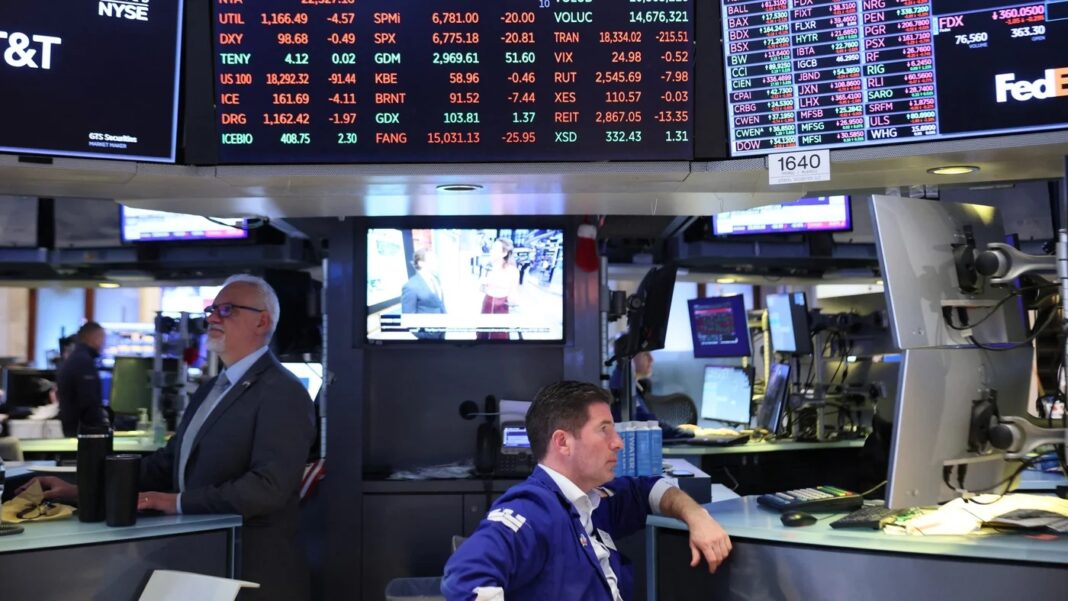

The Iran conflict is a big problem for global financial markets especially for Wall Street. Big banks and trading companies have made money from oil prices and busy markets but experts think the war could hurt the financial sector in the long run. This could affect areas like mergers, investments and corporate deals. Some reports say that Wall Streets short-term gains might not be as good as they seem because the war is causing instability, inflation and uncertainty.
The conflict has been going on for a while now. It has disrupted global energy markets. The Strait of Hormuz which is an important shipping route between Iran and Oman is right in the middle of the trouble. 20 Percent of the worlds oil and gas passes through this narrow waterway and threats blockades and attacks on ships have made people worry about supply shortages.
When oil prices went up during the conflict trading desks at financial institutions made a lot of money. Commodity traders, energy investors and hedge funds did well because of the changes in prices and busy markets. Some oil companies also had quarterly earnings because of high energy prices. However experts think these gains are temporary and might hide economic problems that could come up later.
One of the concerns for Wall Street is the threat to corporate deals. Investment banking, which includes mergers and acquisitions stock offerings and corporate financing needs markets and confident investors. The uncertainty caused by war, inflation and fears of recession makes companies delay or cancel deals. Experts say many companies are already being more careful about expansion plans because the geopolitical situation is getting worse.
Economist Nouriel Roubini, who is known for predicting crises warned that investors might be underestimating the long-term economic risks of the Iran war. He talked about possible scenarios, from a diplomatic settlement to a severe escalation involving attacks on energy infrastructure. In the case oil prices could go above $200 per barrel which could cause a global recession and a long period of stagflation like in the 1970s.
With these warnings stock markets in some countries have been doing surprisingly well. Major indices in the United States, Japan and South Korea recently reached record highs even though the conflict is still going on. Experts say investors are hoping that diplomatic talks might eventually reopen the Strait of Hormuz and stabilize energy markets. However they also warn that this optimism could quickly disappear if the ceasefire fails or military tensions get worse again.
The economic effects of the war are already affecting industries. High fuel prices and supply disruptions have hurt manufacturing, transportation, aviation and consumer goods companies around the world. Toyota said the conflict could cost them billions of dollars because of material costs, shipment delays and low sales in some parts of the Middle East. Clariant, a chemical manufacturer also had profits because of high energy costs and low demand.
The International Energy Agency said that the problem we are having now is a big deal when it comes to energy security. It is one of the problems we have had in a long time. The Strait of Hormuz is closed and not stable so ships are not moving like they should. It is costing more to transport things all around the world.
Countries like the ones in Asia that need oil from the Gulf are in a spot. They will have a lot of problems if things get worse. Experts are warning us that if this keeps going on for a time it will cause prices to go up everywhere and that will slow down the economy. The International Energy Agency and experts are saying that energy security and the current disruption will make things hard for businesses and for people who buy things. The current disruption and energy security issues will be a problem, for a time.
The conflict has also raised concerns about the stability of the economy. Financial institutions need markets, stable trade flows and confident investors. Continued geopolitical instability can weaken lending activity reduce investment and discourage companies from expanding. Experts fear that even if the fighting stops the term economic damage from the conflict could last for years.
Governments and central banks are keeping an eye on what is going on. The cost of energy is very high. That makes it tough to keep inflation under control. The people who make decisions, about the economy are not sure what to do about interest rates and how the economy will grow. Some experts think that central banks might wait to lower interest rates if the prices of oil stay high. Others say that if the economy grows slowly and inflation stays high that could cause something called stagflation which’s something that governments have a lot of trouble dealing with.
There is some hope for a solution. U.S. Officials said Iran might respond to a peace plan on May 8 which could lead to talks. Markets reacted positively to reports of diplomacy with oil prices going down and global stocks going up. However experts warn that if the talks fail market confidence could quickly disappear and fears of a regional conflict could grow.
For Wall Street the Iran war shows a contradiction, in modern financial markets. Short-term volatility can make a lot of money. Long-term geopolitical instability threatens the economy that banks and corporations rely on. While investors might keep making money from energy shocks and market swings the long-term outlook is very uncertain.
As the conflict enters another phase, financial institutions, governments and global businesses are all wondering if diplomacy can restore stability before the economic consequences get much worse.