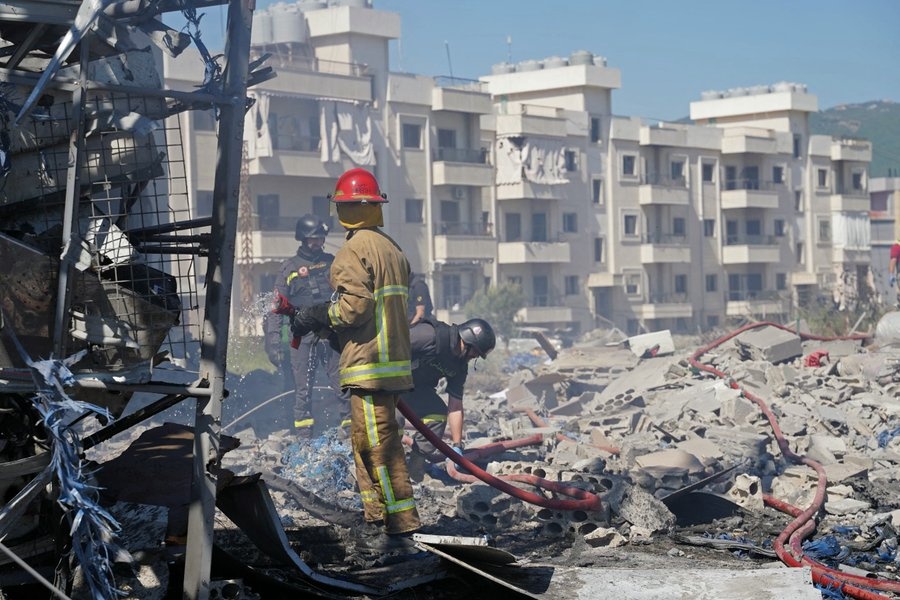

Southern Lebanon is in the news again because of all the fighting that is happening. On Thursday planes from Israel dropped bombs and that killed least five people the news said. These bombs hit areas in the southern part of Lebanon. They hit homes where people live. They also hit farms in the countryside. The people in Southern Lebanon are used to hearing guns and rockets. This is because of the fight, between Israel and Hezbollah.
The situation along the Israel–Lebanon border has been bad for months now. The Israeli military and Hezbollah which is the armed group, in Lebanon have been exchanging fire all the time.
Things got really bad after the Israel–Gaza war started in 2023 and went on into 2024.
The Israel–Lebanon border and southern Lebanon have seen a lot of airstrikes and rockets and the Israeli military and Hezbollah have been firing artillery at each other regularly. The Israel–Lebanon border is still not calm.
Hezbollah says they’re acting in solidarity with Palestinians in Gaza. Israel insists its strikes are about protecting its own northern towns from attack and weakening Hezbollah’s arsenal. Each side blames the other for the spiral.
Early reports, on Thursday showed a bad situation. There were damaged homes, ruined buildings and broken roads. Least five people died, but that number might go up. Emergency teams quickly came in to help people affected by the strikes. Some attacks even hit villages right on the border, places where residents have grown used to packing up and moving out whenever fighting flares.
Israeli officials didn’t say much about these latest strikes. In the past, they’ve claimed these sorts of operations go after Hezbollah’s weapons caches or launch sites but rarely do they share details right away.
For people who’re not fighters and are stuck in the middle of the fighting it is another time of great sadness and fear. Groups that care about people and workers who help others are always saying that the more fighting that happens in towns and cities the more civilians get hurt. And the harder it is for people to stay in their own homes. A lot of people have seen schools and stores shut down for a time and they are living without having power, water or doctors to help them all the time. The hospitals, in Lebanon are very busy and they are having a hard time helping all the people who were wounded in the fighting.
The international community is paying close attention. UNIFIL—the UN peacekeepers stationed near the border—have pleaded for both sides to ease up, worried the conflict could spill over into other parts of the region. Diplomats say if Israel and Hezbollah keep stepping up attacks, the whole region risks getting dragged into a bigger fight.
A handful of countries have pushed for a return to negotiations, hoping to prevent any more civilian deaths and keep things from unraveling further.
This is all part of a struggle that has been going on for a long time since last year. Israel is trying to stop Hezbollah from gaining ground near the border. At the time Hezbollah wants to show that it is still here and it is not going anywhere. Some people have tried to calm things down. So far nothing has worked. Military experts say that if something goes wrong or if there is one strike it could lead to a big conflict.
The airstrikes on Thursday were very deadly. They show us that things are very fragile right now. Israel and Hezbollah are still having problems. People who are not even fighting, like civilians are getting hurt. The whole region feels very tense because of Israel and Hezbollah. Israel and Hezbollah are making things very difficult, for everyone.
The people on both sides need to try to talk to each other and calm things down. If they do not do this the violence will probably keep happening. This will make a situation that’s already very tough even worse. Thursdays deadly airstrikes and the violence that is happening make the situation, with civilians very bad.