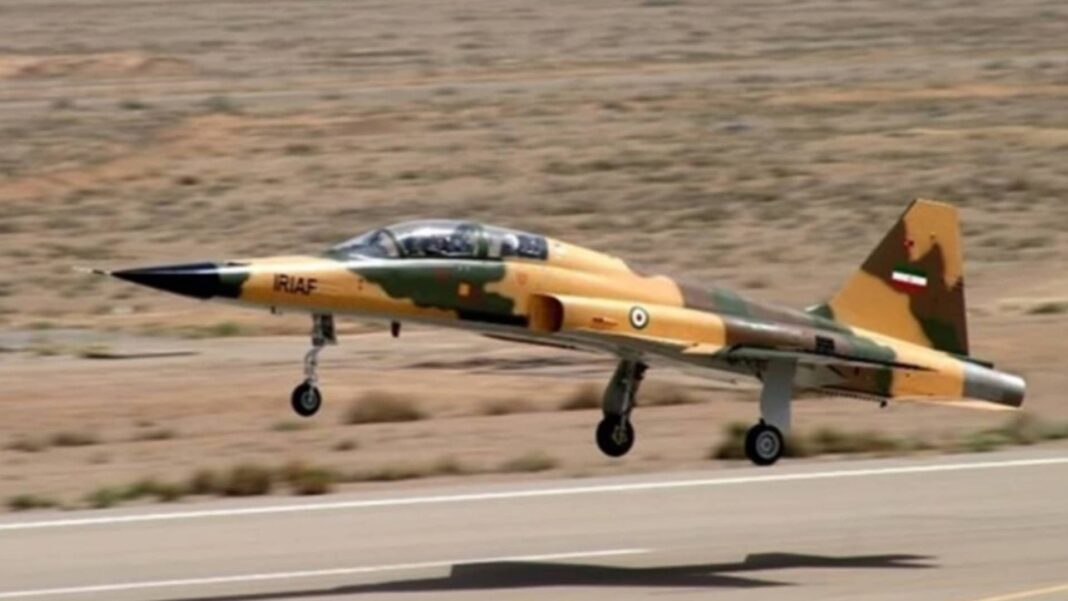

Pakistan’s Ministry of Foreign Affairs on Tuesday officially dismissed allegations that Iranian military aircraft were being secretly positioned or sheltered at Nur Khan Airbase, describing a CBS News report on the issue as “exaggerated” and “deceptive.””
The denial came in an official written statement from the Ministry, which said the narrative pushed by CBS News was designed to destabilise the region and disrupt an active diplomatic process. The aircraft in question, the Ministry said, arrived in Pakistan as part of logistics arrangements for the “Islamabad Talks” — a mediation effort that followed an April 7 ceasefire.
Pakistan’s Ministry of Foreign Affairs said in its statement that “the Iranian aircraft currently parked in Pakistan arrived during the ceasefire period and bear no linkage whatsoever to any military contingency or preservation arrangement.” The Ministry added that it has maintained “full transparency and regular communication with all relevant parties” throughout the process.
The Islamabad Talks brought together Iranian and American delegations for an initial round of negotiations hosted on Pakistani soil. During that period, aircraft from both Iran and the United States were cleared to land at Pakistani facilities to transport high-level diplomatic personnel, security details, administrative staff, and technical teams supporting the mediation track. According to the Ministry, formal negotiations have since hit a temporary impasse, but some aircraft remained in the country to support senior-level exchanges, including visits by Iran’s Foreign Minister.
The CBS News report had raised the possibility that Pakistan was helping Iran shield or preserve aircraft from potential American or Israeli strikes — an allegation Islamabad rejected directly. The Ministry stated that the presence of Iranian aircraft on Pakistani soil is “entirely detached from the tactical military landscape” of what it referred to as the “Third Imposed War,” a term used in the statement to describe the broader Iran conflict.
The Ministry concluded its statement by saying: “Pakistan remains committed to supporting all sincere efforts aimed at promoting dialogue,” reaffirming its position as a neutral facilitator rather than a party aligned with either Washington or Tehran.
Regional and Global Impact
The rejection holds considerable importance at a time when Pakistan is under increasing global pressure to openly state its stance on the intensifying dispute between the United States and Iran. Islamabad has pursued a careful line, hosting talks that included both American and Iranian aircraft on its territory — a posture that has drawn scrutiny from multiple directions.
By maintaining that its role is purely logistical and diplomatic, Pakistan is attempting to preserve its standing as neutral ground for de-escalation. Any perception that Islamabad is providing operational cover to Iranian military assets would risk damaging its relationship with Washington and potentially invite secondary consequences from parties engaged in the conflict. The Ministry’s reference to “full transparency” with “all relevant parties” appears directed at reassuring both sides.
Background
Pakistan has historically positioned itself as a mediator in regional disputes, particularly those involving its neighbours and major powers. The Islamabad Talks, which followed the April 7 ceasefire, represented a significant diplomatic undertaking, drawing participation from both Iranian and American delegations. Nur Khan Airbase, located near Islamabad, serves as a key facility for official and state-level aviation operations. The presence of foreign military and diplomatic aircraft at Pakistani bases is not unprecedented during high-level negotiations. The CBS News report prompted an unusually swift and detailed public rebuttal from Islamabad, reflecting the sensitivity of the allegation.
What Happens Next
Pakistan’s Ministry of Foreign Affairs has signaled it will keep supporting high-level diplomatic discussions between the sides as long as the negotiation process stays ongoing. The Ministry stated its commitment to dialogue but did not announce a date for a resumed round of the Islamabad Talks. Formal negotiations remain at a standstill, according to the Ministry’s own characterization of the current status. How the United States and Iran respond to Pakistan’s public clarification will likely shape whether Islamabad retains its role as a neutral venue for future talks.