
South Korea Vows Immediate FX Action as Won Slides on Middle East War Uncertainty
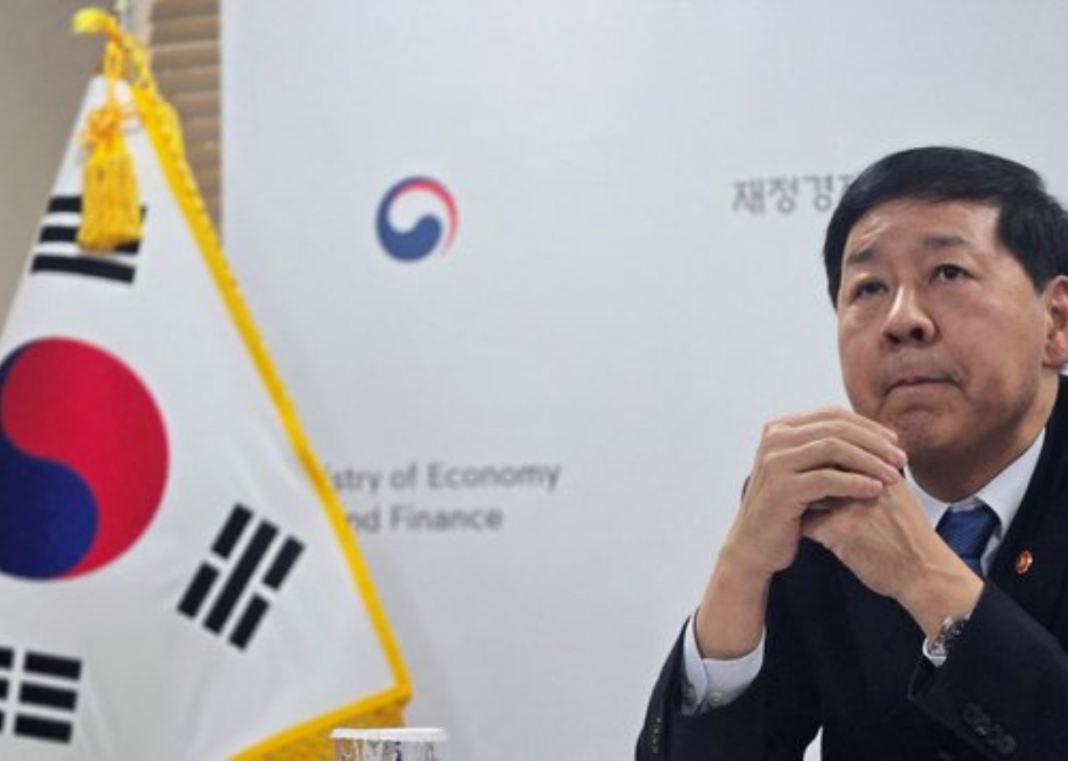
South Korea’s Finance Minister Koo Yun-cheol on Thursday vowed to take “immediate measures” when necessary to address excessive volatility in the foreign exchange market amid the sharp decline of the Korean won against the US dollar. Koo met in Seoul with Bank of Korea Governor Shin Hyun-song, Financial Services Commission Chairman Lee Eog-weon, and Financial Supervisory Service Governor Lee Chan-jin to assess conditions in the currency and capital markets. The meeting comes as the won has spent weeks above the 1,490 level against the dollar — territory last seen during the 2008 global financial crisis — driven largely by the ongoing war in the Middle East. GIS ReportsGIS Reports
What the Minister Said
“The government is currently monitoring the situation with vigilance so that external uncertainties do not lead to growing market anxiety,” Koo said, according to the Ministry of Finance and Economy. “(The government) will take immediate measures when necessary to address excessive market swings,” he added. GIS Reports
Officials at the meeting said the recent volatility followed the Middle East war, along with continued net selling by foreign investors in the stock market. “The recent surge in the local stock market has led to temporary rebalancing by foreign investors as they cash in profits, leading to further volatility,” the finance ministry said in a statement. GIS Reports
The financial officials noted the South Korean economy remains solid, with exports soaring 53.2 percent year-on-year in May and local stock market capitalisation ranking as the world’s sixth largest. The recent increase in margin loans in the stock market, however, may potentially pose risks to the economy, they said, noting the country will closely monitor the trend and make efforts to protect investors. GIS Reports
A Currency Under Sustained Pressure
The won’s weakness is not new, but its persistence stands out. The won-dollar exchange rate has remained above 1,500 won per dollar — a level seen during the IMF crisis or the global financial crisis — for an extended period, dragging the won’s real value down to a 17-year low. globalsecurity
The Korean won weakened sharply against the US dollar in recent sessions amid lingering uncertainties in the Middle East and sharper-than-expected US inflation. The currency has shown heightened volatility due to a lack of progress in Washington-Tehran talks to end the war. newsonair
Experts say a combination of structural factors is at work: increased overseas investment by domestic economic players, changes in exporters’ currency conversion behaviour, and foreign outflows from the bond market. The cumulative current account surplus in the first quarter reached $85 billion (seasonally adjusted), up 133 percent from the previous quarter. The paradox of a strong current account position alongside a weak currency has drawn attention from market analysts, who point to the won’s unusual decoupling from South Korea’s economic fundamentals. globalsecurity
The Middle East War and South Korea’s Exposure
The war’s origin lies in a US-Israeli military campaign against Iran that began in early 2026. The KOSPI, South Korea’s main stock index, suffered its largest-ever decline when markets opened after the war began, falling a total of 18 percent over the first two days. The KOSPI has since partially recovered but remained 13 percent below its pre-war value in its fourth week. Center for Strategic and International Studies
Concerns about the broader impact on the Korean economy drove the won to levels not seen since the Global Financial Crisis, hovering around 1,500 won to the US dollar. Center for Strategic and International Studies
South Korea imports 62 percent of its energy from the Middle East region, making it acutely sensitive to disruptions around the Strait of Hormuz. The Bank of Korea cautioned that the conflict could amplify inflation, slow growth and heighten foreign exchange volatility, signalling policy caution and suggesting rates may remain at 2.50 percent at least through August. Center for Strategic and International Studiesaol
The longer the war continues, the greater the risk that the South Korean economy enters a period of stagflation. An extended conflict could push South Korea’s growth rate to zero. Center for Strategic and International Studies
The KOSPI Boom and the Margin Loan Risk
Despite the currency headwinds, South Korea’s stock market has delivered extraordinary returns in 2026. The KOSPI closed above the 8,800 level earlier this week, rising 30.60 percent over the past month. The rally has helped South Korea emerge as the world’s sixth-largest stock market, with the combined market capitalisation of Korea-listed companies surpassing $5 trillion. U.S. News & World Report
Samsung Electronics and SK Hynix, newly minted members of the $1 trillion valuation club, have powered Korea’s equity surge. South Korea’s market has successively overtaken Canada, Germany, the United Kingdom and France this year. Wikipedia
SK Hynix, a leading high-bandwidth memory supplier to Nvidia, saw its stock soar over 1,000 percent in the past year. The AI-driven semiconductor boom has fuelled retail investor enthusiasm, and with it, a sharp rise in margin borrowing — the practice of taking out loans to buy shares — which regulators flagged on Thursday as a potential systemic risk. The National
Officials said the country will closely monitor margin loan trends and make efforts to protect investors. GIS Reports
Background
While the Middle East only accounts for roughly 3 percent of South Korea’s exports, the region is a significant market for certain firms, and slowing global economic growth is reducing demand for South Korean exports more broadly. The United States also launched a Section 301 investigation into South Korea, China, Japan and several other economies earlier this year to examine alleged unfair trade practices tied to excess manufacturing capacity. The probe could lead to new tariffs on export-heavy sectors such as electronics, automobiles, machinery, steel and shipbuilding. West Texas Intermediate crude oil crossed the $100-per-barrel mark in late March 2026 as the Middle East conflict intensified. South Korea’s exports surged 53.2 percent year-on-year in May to a record $87.75 billion, marking the 12th consecutive month of growth and the strongest annual increase in that period. Center for Strategic and International Studies + 3
What Happens Next
The South Korean government said it will continue closely monitoring foreign exchange market conditions and stands ready to deploy stabilising measures if volatility worsens. The Bank of Korea has signalled that interest rates are likely to remain at 2.50 percent at least through August, with policymakers keeping options open depending on how the Middle East situation evolves. Authorities have committed to monitoring margin loan growth in the stock market and implementing investor protection steps if the trend accelerates. Should the Middle East conflict persist for a full year, analysts project South Korea’s growth rate would likely fall to zero — a scenario that would substantially expand the pressure on the government to deploy additional fiscal and monetary measures beyond the FX interventions signalled on Thursday. GIS Reports + 2